

Ford Escape Catalytic Converter Guide (2001-2009): Replacing Manifold and Underbody Cats
Don't let a P0420 code sideline your 2001-2009 Ford Escape; here's what you need to know before you buy a new catalytic converter.
- Your 3.0L V6 Escape has three converters; identify which one is bad (Bank 1/firewall, Bank 2/radiator, or underbody) before ordering.
- Always fix the root cause of failure (like engine misfires from bad coils/plugs) or your new converter will be ruined quickly.
- You MUST buy a converter that is legal for your state (Federal/EPA vs. CARB). Check your state's laws before buying.
- The manifold converters on the V6 engine are very difficult to replace, especially the one on the firewall side, making professional installation highly recommended.
Why Catalytic Converters Fail on the 2001-2009 Ford Escape

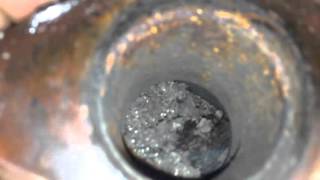
A catalytic converter should last a long time, but it often fails because of another problem with your Escape. The most common cause of failure is an engine misfire. When a cylinder misfires, it sends unburned gasoline into the hot converter, which can superheat and melt the internal ceramic honeycomb, causing a blockage. Other causes include oil or coolant leaks contaminating the converter, or physical damage from road debris. On V6 models, it's common for one of the front manifold converters (pre-cats) to break apart and send debris downstream, which then clogs and destroys the main underbody converter.
Choosing the Right Aftermarket Converter: V6 vs. I4 and Location

Before you buy, you must know your engine and which converter has failed. This is the most common mistake owners make.
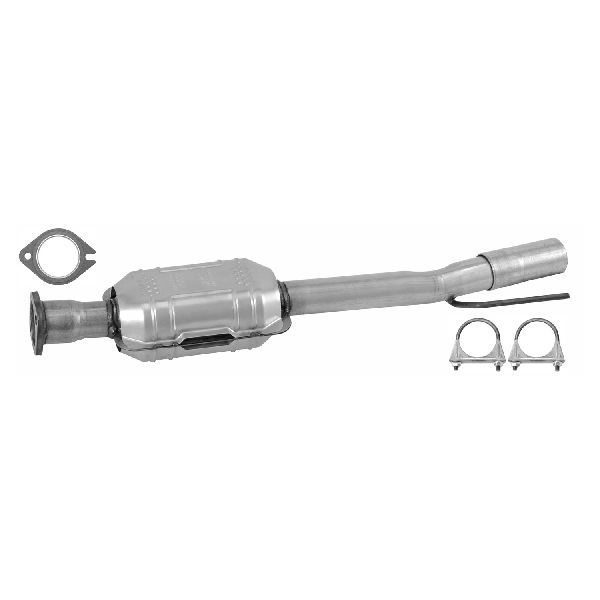
- 3.0L V6 Models: These Escapes have three catalytic converters. Two are called manifold converters (or pre-cats) because they are bolted directly to the engine's exhaust manifolds—one on the radiator side (Bank 2) and one on the firewall side (Bank 1). The third is a larger converter located under the car, after the first two combine into a Y-pipe. A P0420 code points to the firewall side (Bank 1), while a P0430 code points to the radiator side (Bank 2). The firewall-side converter is known for being very difficult to replace due to tight access.
- 2.0L & 2.3L 4-Cylinder Models: These typically have a single manifold converter that is easier to identify and replace.
EPA (Federal) vs. CARB: A Critical Choice
You must buy a converter that is legal in your state. Using the wrong one will cause you to fail an emissions test.
- EPA/Federal: These are legal in most states. They are less expensive because they have fewer precious metals inside.
- CARB-Compliant: These are required for all vehicles registered in California, Colorado, New York, and Maine. They are built to a higher standard with more precious metals to meet stricter emissions rules and have a longer warranty. Even if you don't live in a CARB state, if your Escape was originally built to California emissions standards (check the sticker under your hood), a CARB-compliant converter is the best choice to ensure the check engine light stays off.
Aftermarket Brand Quality Tiers

OEM converters from Ford are very expensive. Aftermarket brands offer a wide range of quality and price.
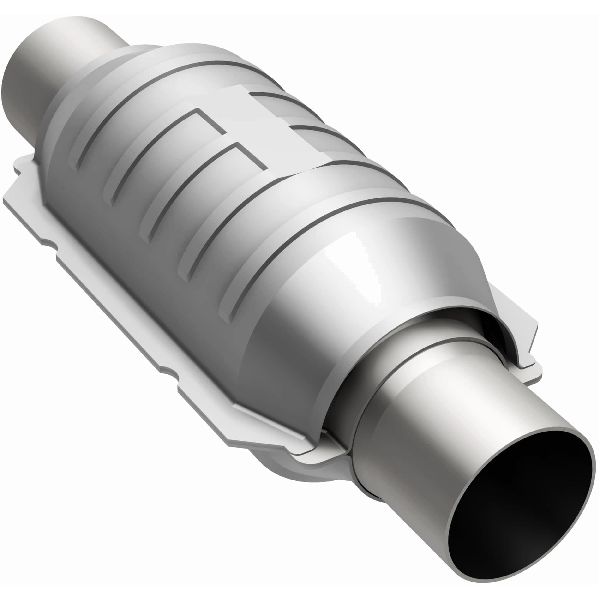
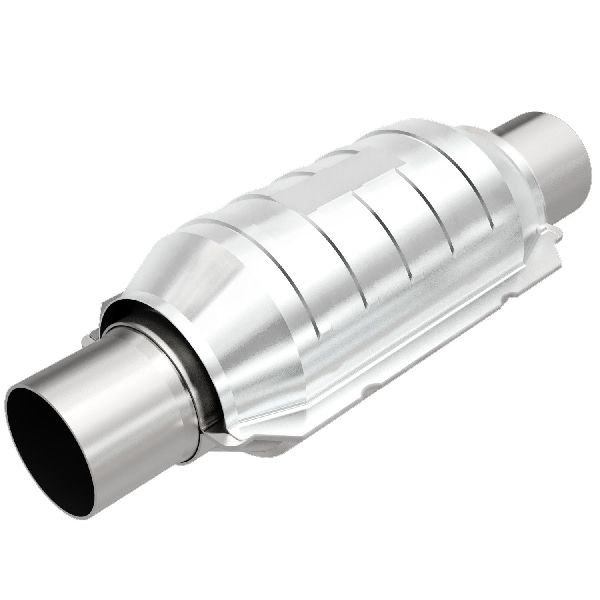
- Tier 1 (High Quality & Performance): MagnaFlow and Walker are well-regarded brands that focus on proper fit and emissions performance. MagnaFlow is often seen as a premium or performance-focused brand, while Walker is known for reliable, OE-style replacements that balance cost and quality. These are your best bet to avoid check engine light issues.
- Tier 2 (Mid-Grade & OE-Style): Brands like Dorman, AP Exhaust, and Eastern Catalytic offer direct-fit replacements that are a step up from the cheapest options. They provide a good balance of value and function for daily drivers. Note that AP Exhaust and Eastern Catalytic are often the same product in a different box.
- Tier 3 (Budget): Brands like Evan Fischer and Davico are typically the most affordable. While tempting on price, they may have a shorter lifespan or be more likely to cause a P0420 code to return, especially on sensitive vehicles. They are best for those on a strict budget who need to pass an emissions test in a non-CARB state.
| Item | Estimated Cost |
|---|---|
| New Aftermarket Converter (Federal/EPA) | $140 - $750 per part |
| New Aftermarket Converter (CARB) | $540 - $1050 per part |
| New OEM Converter | $1,300+ per part |
| Shop Labor (Underbody Cat) | $150 - $300 |
| Shop Labor (Manifold Cat) | $350 - $600+ |
Pro Tip: Always fix the root cause of the failure (like spark plugs, ignition coils, or oil leaks) before installing a new converter. If you don't, the new part will fail quickly, and the warranty will not cover it.
Frequently Asked Questions

Why does my V6 Escape have three catalytic converters?
The V6 engine has two cylinder banks, and each gets its own small converter (manifold converter) to clean exhaust gases right as they leave the engine. This helps the system heat up and work faster. A third, main converter is located downstream to clean up any remaining pollutants.
What is a P0420 code and how do I fix it?
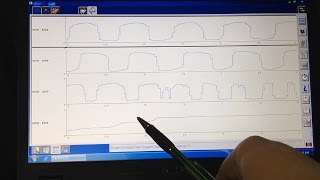
P0420 means "Catalyst System Efficiency Below Threshold (Bank 1)." On a V6 Escape, Bank 1 is the cylinder bank against the firewall. The code means the oxygen sensors are detecting that the converter is no longer cleaning the exhaust properly. While this often means the converter is bad, you should first rule out exhaust leaks and failing oxygen sensors.
Can I just replace the one bad converter on my V6?
Yes, but with a warning. If one of the front manifold converters has failed, it's crucial to inspect the main underbody converter for blockage from debris. Many mechanics recommend replacing both the failed manifold converter and the main converter at the same time to prevent a comeback. If the main converter fails, it's less likely to have damaged the upstream ones.
Will a cheap aftermarket converter keep the check engine light off?
It's a gamble. Cheaper converters use a smaller amount of the precious metals needed for the chemical reaction. While it might be enough to pass an emissions test, the vehicle's computer may still detect the lower efficiency and turn the light back on. Spending more on a quality brand like MagnaFlow or Walker, or a CARB-compliant unit, gives you a much better chance of the light staying off.
Helpful Videos
Technical Specifications
OEM Part Numbers: YF11-20-500F YF20-20-500E YF20-20-500F YF20-20-500G AJ03-20-600G AJ26-20-600 AJ42-20-600 2L8Z5G232AA 5L8Z5G232CA 5L8Z5G232EA
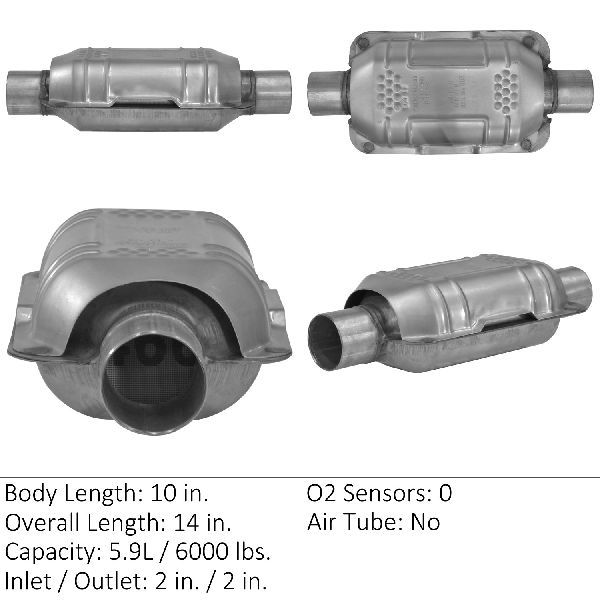
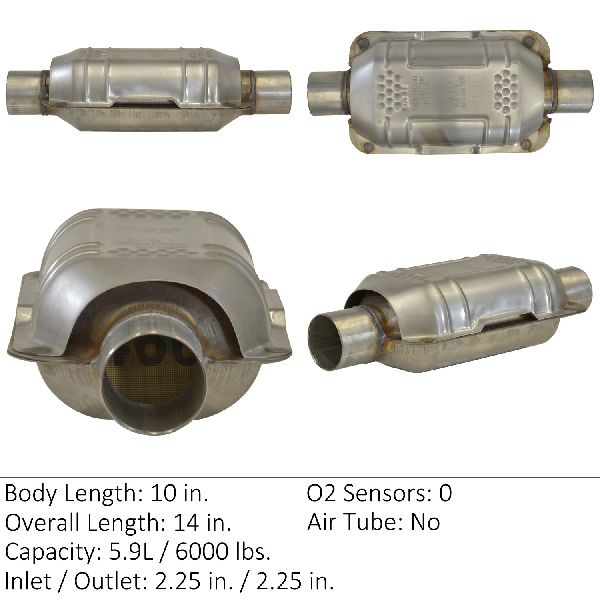
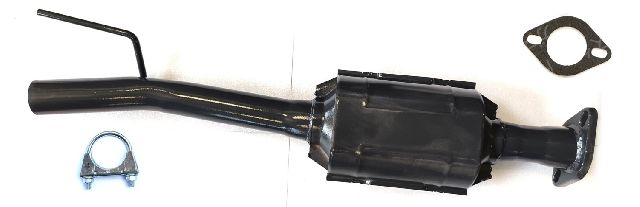
Configuration varies by engine. 3.0L V6 models use three converters (two manifold-integrated, one underbody). 2.0L and 2.3L I4 models use a single manifold-integrated converter. Available in Federal (EPA) and California (CARB) emissions compliance levels. Direct-fit replacements are recommended; universal converters require welding.
We Have This Part in Stock

The information in this article is provided for general reference and educational purposes only. Vehicle specifications, procedures, and part compatibility can vary by production date, trim level, and region. Always consult your vehicle's factory service manual and verify part numbers before purchasing or performing repairs. Safety-critical components such as airbags, seat belts, and braking systems should be installed by a qualified professional.
- Ford Escape: