

Choosing the Right Disc Brake Pads for Your 2001-2010 BMW 525i
Stop the guesswork and find the best brake pads for your E39 or E60 generation 525i.
- First, identify your 525i generation: E39 (2001-2003) or E60 (2004-2010), as the parts are different.
- OE brands like ATE, Textar, and Pagid offer factory performance but create significant dust.
- For less dust, choose a ceramic pad like Akebono EURO, a popular choice for BMW owners.
- Always replace the brake wear sensor with your pads; it is a one-time-use part.
- For best performance and safety, replace brake rotors at the same time as the pads.
Understanding Your BMW 525i's Brakes: E39 vs. E60
Before buying brake pads, you must know which BMW 525i you own. The 2001-2010 model years span two different vehicle generations, and the parts are not interchangeable.
- E39 Generation (2001-2003): The earlier models in this range. They have a distinct brake system from the later cars. 🎬 Watch: Step-by-step front brake pad replacement for E39 models
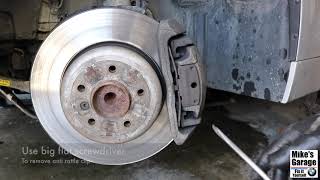
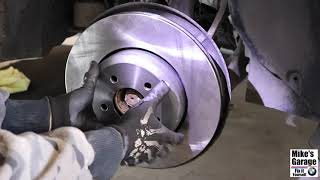
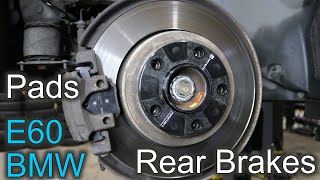
- E60 Generation (2004-2010): The later models, which feature a completely different chassis and updated brake components. 🎬 See this DIY walkthrough for E60 front pad and rotor replacement
Always verify your vehicle's year and generation before ordering. Buying pads for the wrong generation is a common and frustrating mistake.
OEM Quality vs. Aftermarket: What's Best for Your 525i?
BMW does not manufacture its own brake pads. Instead, it relies on trusted Original Equipment (OE) suppliers. Brands like Textar, Pagid, Jurid, and ATE are common OE suppliers for BMW. Choosing one of these brands in the aftermarket often gets you the exact same part that came from the factory, without the dealership price tag. These pads are designed to provide the specific bite, feel, and performance characteristics that BMW intended. The main downside is that they tend to produce a lot of brake dust.
Choosing the Right Aftermarket Brake Pads
Aftermarket pads offer a wide range of options, from low-dust ceramics to high-performance compounds. Here’s how to choose.
Tier 1: OE-Equivalent Brands
For drivers who want to maintain the original factory braking feel and performance.
- ATE: A primary OE supplier for BMW, their pads are a direct replacement for the factory parts.
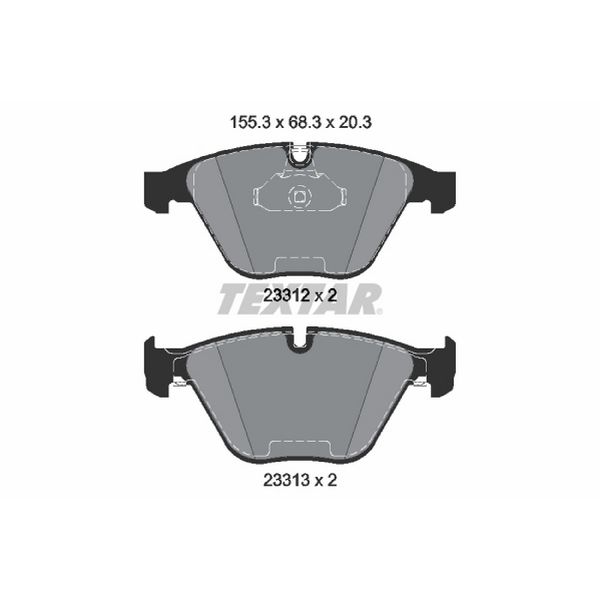
- Pagid & Textar: Also confirmed OE suppliers, known for their excellent initial bite but also for producing significant brake dust.
- Brembo: While famous for high-performance big brake kits, their standard replacement pads are high-quality, OE-spec options.
Tier 2: Low-Dust & Daily Driving Upgrades
For drivers tired of constantly cleaning their wheels. These pads trade a small amount of initial bite for significantly less dust and noise.
- Akebono EURO: A very popular choice among BMW owners for their extremely low dust output and quiet operation. They may have a slightly less aggressive initial bite than stock pads, but overall stopping power is excellent for street use.
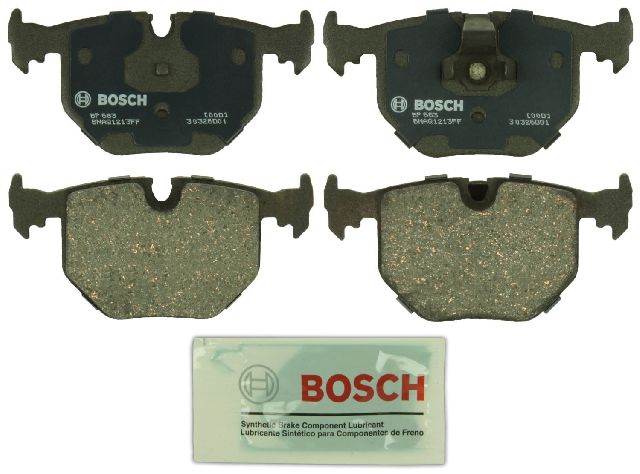
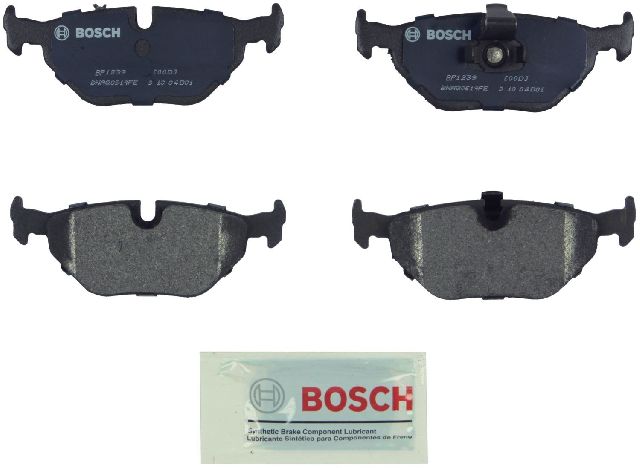
- Bosch QuietCast: A quality ceramic option that balances performance, low noise, and reduced dust.
- Centric Posi-Quiet: Another reliable choice for a quiet, clean, and smooth-stopping daily driver.
Tier 3: Performance & High-Performance Street
For the enthusiast who wants more stopping power for spirited driving. Be prepared for more dust and potential for noise compared to stock.
- Hawk Performance (HPS, 5.0): Known for a strong initial bite and improved fade resistance. A good step up from stock for performance driving.
- EBC Brakes (Redstuff, Yellowstuff): EBC Redstuff offers a low-dust performance ceramic option, while Yellowstuff provides a more aggressive compound for street and occasional track use.
- StopTech Street: A well-regarded performance pad that offers a good balance of stopping power and street manners, though they can be dusty.
- PowerStop (Z23, Z26): Often sold in kits with rotors, these pads provide a performance upgrade with good heat dissipation, especially when paired with their drilled and slotted rotors.
Aftermarket Brand Comparison
| Brand Tier | Brands | Best For | Pros | Cons |
|---|---|---|---|---|
| OE-Equivalent | ATE, Pagid, Textar, Brembo | Restoring factory performance | Correct pedal feel, OEM-spec bite | Often creates a lot of brake dust |
| Low-Dust / Daily | Akebono, Bosch, Centric | Clean wheels and quiet operation | Very low dust, long pad life | Slightly less initial bite than OEM |
| Performance Street | Hawk, EBC, StopTech, PowerStop | Spirited driving | Higher friction, improved fade resistance | More dust and potential for noise |
Known Issues, Recalls, and Service Bulletins
Searches for the 2001-2010 BMW 525i did not reveal any specific recalls on the NHTSA database for the disc brake pads themselves. However, there have been broader BMW recalls for brake system components, like the power braking assist system, on other models and years. Some owners report squeaking or humming noises, which can sometimes be addressed by proper bedding-in procedures or, in some cases, are considered a normal characteristic of high-performance pads. BMW has issued technical service bulletins (TSBs) for other models regarding brake noise, often attributing it to pad material or unfavorable tolerances.
Pro Tip: Don't Forget the Sensor!
Your BMW 525i uses electronic brake wear sensors on the front-left and right-rear wheels. When the brake pads wear down to a certain point, the sensor makes contact with the rotor, completes a circuit, and illuminates the brake warning light on your dash. You MUST replace the sensor along with your brake pads. The old sensor is destroyed in the process and cannot be reused.
Frequently Asked Questions (FAQ)
What's the difference between ceramic and semi-metallic pads?
Ceramic pads (like Akebono) are known for being quiet, producing very little light-colored dust, and offering long life. Semi-metallic pads (like many OEM Textar pads) offer a stronger initial bite and better heat dissipation for performance driving, but they are dustier and can be noisier.
Do I need to replace my brake rotors with the pads?
It is highly recommended. BMW rotors are generally considered a wear item, just like pads. Installing new pads on old, worn, or warped rotors will lead to poor performance, noise, and accelerated pad wear. For best results, always replace pads and rotors at the same time.
Why are my new brakes making noise?
New brakes can sometimes squeak or grind for a few reasons. One common cause is not performing a proper "bed-in" procedure, which helps mate the new pads to the rotors. Another cause can be leftover residue or not using brake grease on contact points. Sometimes, high-performance pads are inherently noisier, which is a trade-off for better stopping power.
What is a brake pad bed-in procedure?
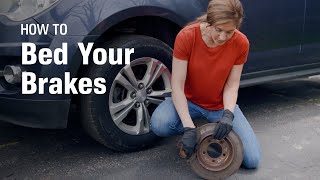
Bedding-in is the process of transferring an even layer of friction material from the new pads onto the rotors. This is typically done by performing a series of hard stops from a moderate speed (e.g., 7-10 stops from 60mph down to 15mph) without coming to a complete stop or activating ABS. This process heats the pads and rotors, ensuring smooth, quiet, and powerful braking. Always follow the specific instructions provided by the pad manufacturer.
🎬 Watch: How and why to properly bed in your new brakesHelpful Videos
Technical Specifications
OEM Part Numbers: 34116761280 (Front, E39) 34216761281 (Rear, E39) 34116794916 (Front, E60) 34116763617 (Front, E60) 34216763043 (Rear, E60)
The 2001-2010 BMW 525i uses a hydraulic disc brake system on all four wheels with an integrated electronic brake wear sensor system. The system includes one sensor for the front axle and one for the rear axle.
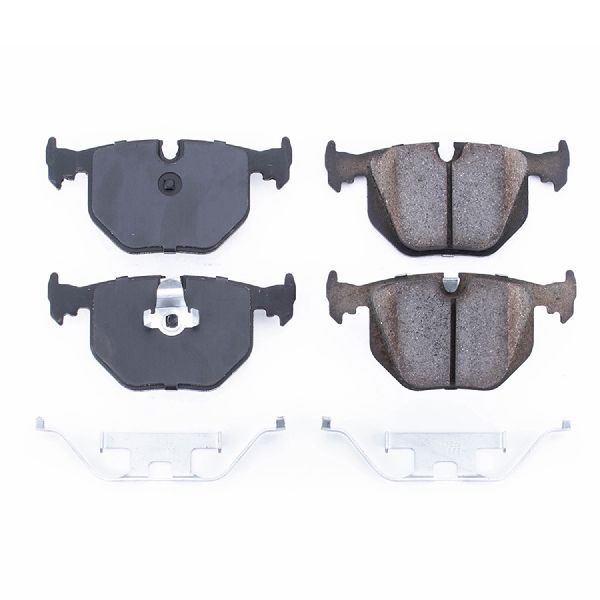
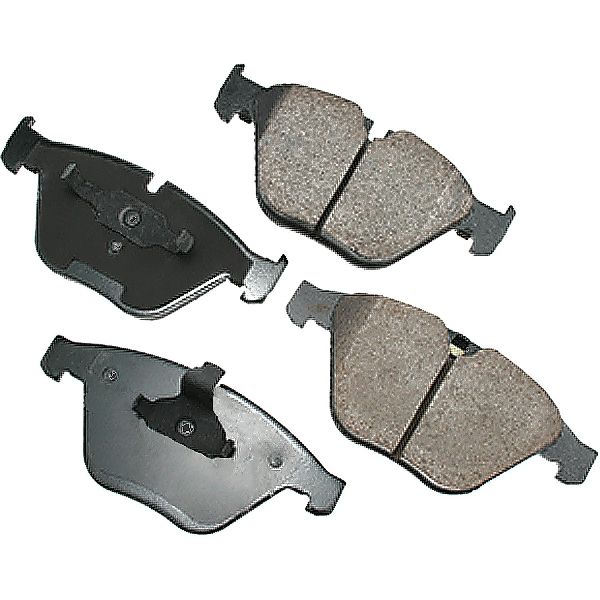
We Have This Part in Stock

The information in this article is provided for general reference and educational purposes only. Vehicle specifications, procedures, and part compatibility can vary by production date, trim level, and region. Always consult your vehicle's factory service manual and verify part numbers before purchasing or performing repairs. Safety-critical components such as airbags, seat belts, and braking systems should be installed by a qualified professional.
- BMW 525i:
- 🎬 Helpful Videos
- 🛍️ Shop This Part
- Understanding Your BMW 525i's Brakes: E39 vs. E60
- OEM Quality vs. Aftermarket: What's Best for Your 525i?
- Choosing the Right Aftermarket Brake Pads
- Tier 1: OE-Equivalent Brands
- Tier 2: Low-Dust & Daily Driving Upgrades
- Tier 3: Performance & High-Performance Street
- Aftermarket Brand Comparison
- Known Issues, Recalls, and Service Bulletins
- Pro Tip: Don't Forget the Sensor!
- Frequently Asked Questions (FAQ)
- 🎟️ Get 5% Off