

A Guide to Disc Brake Pads for the 2002-2006 BMW 5-Series (E39 & E60)
Understanding the right brake pads for your E39 or E60 5-Series is key to stopping power and keeping your wheels clean.
- First, confirm if you have an E39 (2002-2003) or E60 (2004-2006) 5-Series, as the brake pads and service procedures are different.
- OEM-style pads (like Textar) provide excellent bite but create heavy brake dust; ceramic pads (like Akebono) are a very popular upgrade for low dust on a daily driver.
- You must replace the brake pad wear sensor if the dashboard warning light is on; it's best practice to replace it with every brake job regardless.
- Resetting the brake service light is a required step after the job and is performed differently on E39 and E60 models.
First: Identify Your 5-Series Generation
Before buying any parts, it's essential to know which car you have. The "2002-2006 BMW 528i" was not a model sold in the North American market. Instead, this period covers two different generations of the 5-Series, the E39 and the E60. It is critical to identify which one you own, as their brake systems and parts are not interchangeable.
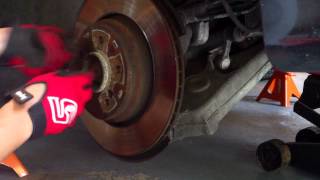
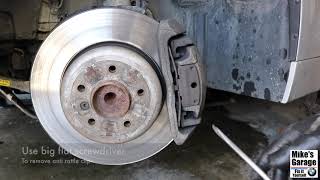
- E39 5-Series (2002-2003 models): These are the final years of the fourth-generation 5-Series. Models in this range include the 525i and 530i. 🎬 See how to replace rear brake pads and rotors on E39 models.
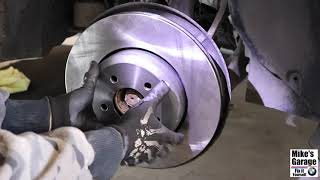
- E60 5-Series (2004-2006 models): This is the fifth-generation 5-Series, which introduced a completely new design and technology. Models in this range include the 525i, 530i, and 545i. 🎬 Watch this DIY guide for E60 front brake and rotor replacement.
Check your vehicle's registration or VIN to confirm the model year and specific model (e.g., 2003 530i or 2005 530i) before shopping.
Symptoms of Worn Brake Pads
Your BMW is designed to tell you when its brake pads are low. The most obvious sign is the brake warning light on your dashboard. Other symptoms include:
- Squealing or screeching sounds: This often happens during braking and can be a sign that the pads are getting thin.
- Grinding noise: A loud, metallic grinding sound means the pads are completely worn away, and metal is grinding against metal. Stop driving immediately if you hear this.
- Longer stopping distances: If you notice the car takes longer to stop than it used to, your pads may be worn out.
- Spongy or soft brake pedal: While this can point to other issues like air in the brake lines, it can also be related to a worn braking system.
Pro Tip: The Brake Pad Wear Sensor
Your BMW has brake pad wear sensors, typically on the front-left and rear-right wheels. These are single-use items. If your brake warning light is on, the sensor has been tripped and must be replaced along with the pads. It's best practice to replace them with every brake job, even if the light isn't on, as the plastic can become brittle and break during removal.
Choosing the Right Aftermarket Brake Pads
One of the most common complaints from BMW owners about the original factory (OEM) brake pads is the excessive amount of brake dust that quickly makes wheels look dirty. Aftermarket pads offer solutions to this and can be broken down into a few categories.
OEM-Equivalent (Semi-Metallic)
These pads are designed to mimic the performance of the original pads that came on your car. Brands like Textar, Jurid, and Pagid are often the original manufacturers for BMW.
- Pros: Excellent initial bite (the feeling of the brakes grabbing as soon as you touch the pedal), strong stopping power.
- Cons: They produce a lot of brake dust, just like the original pads.
Low-Dust Ceramic
This is the most popular aftermarket upgrade for a daily-driven 5-Series. They are made from a ceramic compound that produces a light-colored, fine dust that is far less noticeable.
- Popular Brands: Akebono EURO, EBC Redstuff, Hawk Performance Ceramic.
- Pros: Significantly less brake dust, quiet operation.
- Cons: Some drivers feel they have slightly less initial bite compared to semi-metallic pads, especially when cold. However, for street driving, their overall stopping power is excellent.
Performance Street
For those who want more aggressive stopping power than stock for spirited driving.
- Popular Brands: Hawk HPS 5.0, StopTech Street.
- Pros: Higher fade resistance and stronger bite than stock.
- Cons: Can produce more dust and noise than ceramic pads.
Known Issue: Brake Booster Recall (E60 V8 Models)
Certain 2004-2010 E60 models with V8 engines (like the 545i and 550i) were part of a recall for a potential leak in the brake vacuum pump, which could lead to a loss of power braking assistance, making the pedal very hard to press. While this doesn't involve the brake pads themselves, it's a critical safety item to be aware of for the E60 generation.
Cost Comparison for a Disc Brake Pad Set (Per Axle)
| Category | Estimated Cost |
|---|---|
| New OEM-Equivalent Pads (e.g., Textar) | $70 - $130 |
| New Aftermarket Ceramic Pads (e.g., Akebono) | $80 - $150 |
| Brake Pad Wear Sensor (Each) | $15 - $30 |
| Shop Labor (Pads & Sensors Only) | $153 - $225 |
Frequently Asked Questions (FAQ)
Do I need to replace my rotors at the same time?
It is highly recommended. Brake pads and rotors wear together. Installing new pads on a worn, uneven rotor surface can cause noise, vibration, and reduced pad life. For best performance and safety, replace pads and rotors as a set.
How do I reset the brake service light after replacement?
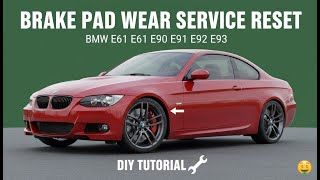
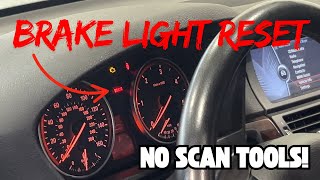
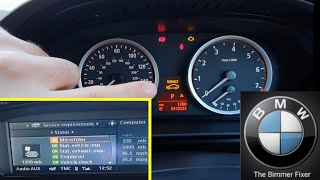
This procedure is different for each generation. For the E39, it is a manual reset process involving the diagnostic port under the hood or a specific sequence with the ignition and instrument cluster buttons. For the E60, the reset is done through the on-board computer using the trip reset button on the instrument cluster to navigate a service menu. 🎬 Watch: How to reset the E60 brake service light manually. You must perform this reset after changing the pads and sensor, or the light will stay on.
What does "bedding in" new brakes mean?
Bedding-in is the process of transferring a thin, even layer of friction material from the new brake pads onto the new rotors. This is done by performing a series of controlled stops from moderate speeds. Following the manufacturer's specific bedding-in procedure ensures quiet operation, good bite, and long life for your new brakes.
Can I reuse my old brake pad wear sensors?
It is not recommended. If your brake warning light is on, the sensor is destroyed and must be replaced. Even if the light is not on, the plastic sensor housing becomes brittle with age and heat and often breaks when you try to remove it from the old pad. Given their low cost, it's always best to install new sensors with new pads.
Helpful Videos


Technical Specifications
OEM Part Numbers: E39 Front Wear Sensor: 34351163065 E39 Rear Wear Sensor: 34351163066 E60 Front Wear Sensor: 34356789439 E60 Rear Wear Sensor: 34356789445
The key difference lies in the vehicle generation. The E39 (2002-2003) and E60 (2004-2006) use different calipers, pads, rotors, and wear sensors. Part numbers are not interchangeable between generations. Always verify fitment by your specific year and model (e.g., 525i, 530i).

The information in this article is provided for general reference and educational purposes only. Vehicle specifications, procedures, and part compatibility can vary by production date, trim level, and region. Always consult your vehicle's factory service manual and verify part numbers before purchasing or performing repairs. Safety-critical components such as airbags, seat belts, and braking systems should be installed by a qualified professional.
- BMW 528i:
- 🎬 Helpful Videos
- First: Identify Your 5-Series Generation
- Symptoms of Worn Brake Pads
- Pro Tip: The Brake Pad Wear Sensor
- Choosing the Right Aftermarket Brake Pads
- OEM-Equivalent (Semi-Metallic)
- Low-Dust Ceramic
- Performance Street
- Known Issue: Brake Booster Recall (E60 V8 Models)
- Cost Comparison for a Disc Brake Pad Set (Per Axle)
- Frequently Asked Questions (FAQ)
- 🎟️ Get 5% Off