

Jeep Grand Cherokee 2002-2006 Engine Crankshaft Position Sensor Guide
Stalling or no-start problems in your Jeep are often caused by a failing crankshaft position sensor.
- A failing crankshaft sensor is a very common cause of stalling and no-start issues, especially when the engine is hot.
- Due to high failure rates of budget parts, it is strongly recommended to use an OEM Mopar or high-quality aftermarket brand like NTK.
- Replacement is a difficult job due to the sensor's tight location on the transmission bell housing, often requiring special tool setups.
- A recall was issued for some 2004 4.0L models for this exact issue, highlighting the part's importance and tendency to fail.
Identifying a Failing Crankshaft Position Sensor
A bad crankshaft position sensor in a 2002-2006 Grand Cherokee will usually make itself known through obvious engine problems. The most common issue is the engine stalling once it gets warm, then refusing to restart until it cools down. This is a common problem known as "heat soak." It happens because heat increases the sensor's internal resistance, causing the signal to become weak or disappear entirely until it cools off. You might also experience a long crank time before the engine starts, a check engine light, and an engine that runs rough or misfires. In many cases, the tachometer will drop to zero when the engine stalls, which is a strong indicator of a failed crankshaft sensor signal.
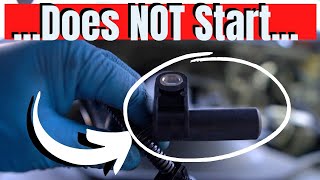
🎬 Watch this guide to test your sensor for failure.Critical Part Warning
The crankshaft position sensor is one of the most critical sensors on your engine. When it fails, it can leave you stranded without warning. Many owners report that cheap, no-name aftermarket sensors fail quickly or don't work at all right out of the box. It is highly recommended to use a quality part to avoid being stranded and repeating a difficult installation.
Choosing the Right Aftermarket Sensor
When it comes to this specific sensor for your Jeep, not all aftermarket parts are created equal. Many experienced Jeep owners and mechanics strongly recommend using an original Mopar part. However, if you choose an aftermarket brand, it's best to stick to well-known, high-quality options. Forum discussions frequently mention NTK (a brand of NGK) as being the original equipment manufacturer (OEM) for Mopar, making it a trusted alternative. Brands like Bosch and Delphi are also generally considered reliable choices. Avoid low-cost, unbranded sensors, as they have a high failure rate and can cause more headaches than they are worth.
Known Issues, Recalls, and TSBs
There was a safety recall for some 2004 Jeep Grand Cherokee models with the 4.0L engine. The recall (NHTSA ID: 04V092000) addressed wiring insulation that could crack, exposing the wires to moisture and causing the engine to stall without warning. The remedy was to replace the crankshaft position sensor. While this recall was specific to 2004 models, the symptoms are identical to failures seen across the 2002-2006 year range, highlighting the part's tendency to fail.
Installation Pro-Tip
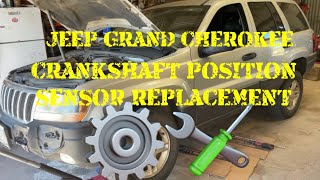
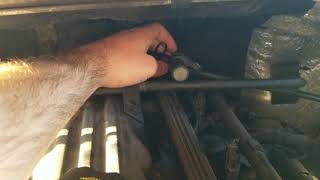
Replacing the crankshaft sensor on the 4.0L I6 engine is known to be a difficult job due to its location on the upper driver's side of the transmission bell housing. Access is extremely tight. Mechanics and DIYers often use a combination of very long extensions (3 feet or more) with a swivel socket to reach the bolt from behind the transmission crossmember. 🎬 Video tutorial on accessing the sensor with long extensions. Some owners have even found it easier to access the bolt from inside the vehicle by removing the instrument cluster trim panels.
Cost of Replacing the Crankshaft Position Sensor
| Part Type | Estimated Cost |
|---|---|
| New OEM (Mopar) | $90 - $120 |
| New Aftermarket (Quality) | $40 - $60 |
| Shop Labor | $140 - $250 |
Frequently Asked Questions (FAQ)
What are the main symptoms of a bad crankshaft sensor on a 2002-2006 Grand Cherokee?
The most common symptoms are the engine cranking but not starting, or stalling suddenly while driving, especially when hot. You may also notice a rough idle, engine misfires, and a check engine light with codes like P0335 or P0320.
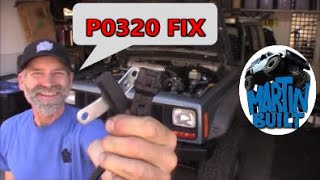
🎬 See how to replace the sensor and clear P0320 codes.Can I drive my Jeep with a failing crankshaft position sensor?
It is not recommended. A failing sensor can cause the engine to stall at any time, including at high speeds, which is a serious safety risk. If you suspect the sensor is failing, you should get it replaced as soon as possible.
Why do so many people recommend using a Mopar or NTK sensor?
Jeep engine management systems can be very sensitive to the signals from the crankshaft position sensor. Many owners have experienced issues with budget aftermarket sensors failing shortly after installation or not working correctly out of the box. Using an OEM Mopar or a high-quality equivalent like NTK is strongly recommended to ensure reliability and avoid having to do the difficult replacement job a second time.
Is replacing the crankshaft sensor a DIY job?
It can be, but it is considered difficult for beginners. The sensor's location on the bell housing is very hard to reach, requiring long extensions and swivel sockets. While the part itself is only held by one or two bolts, accessing them is the main challenge. Expect to spend 1-3 hours on the job.
Helpful Videos
Technical Specifications
OEM Part Numbers: 56027866AB 56027866AC 56041584AF
This is a Hall-effect sensor that reads notches on the engine's flexplate to determine crankshaft speed and position. It is located on the transmission bell housing.

The information in this article is provided for general reference and educational purposes only. Vehicle specifications, procedures, and part compatibility can vary by production date, trim level, and region. Always consult your vehicle's factory service manual and verify part numbers before purchasing or performing repairs. Safety-critical components such as airbags, seat belts, and braking systems should be installed by a qualified professional.
- Jeep Wagoneer: