

A Guide to the Throttle Position Sensor for the 2002-2010 Ford Explorer
Fix your Explorer's hesitation, stalling, and poor shifting by understanding its throttle position sensor.
- Verify your Explorer's year: 2002-2005 models use a separate TPS, while 2006-2010 models require replacing the entire throttle body assembly.
- Key symptoms of failure include dangerous hesitation, stalling, poor shifting, and a check engine light.
- For best results and reliability, using the OEM Motorcraft part is highly recommended by experienced owners.
- If you have a 2004-2005 model with code P2135, be aware of TSB 05-14-4, which recommends a new sensor and a computer re-program.
A Critical Difference: 2002-2005 vs. 2006-2010 Models

Before buying a part, you must know which Ford Explorer generation you have. The part you need is different depending on the year.
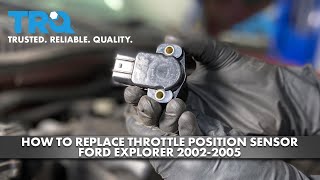
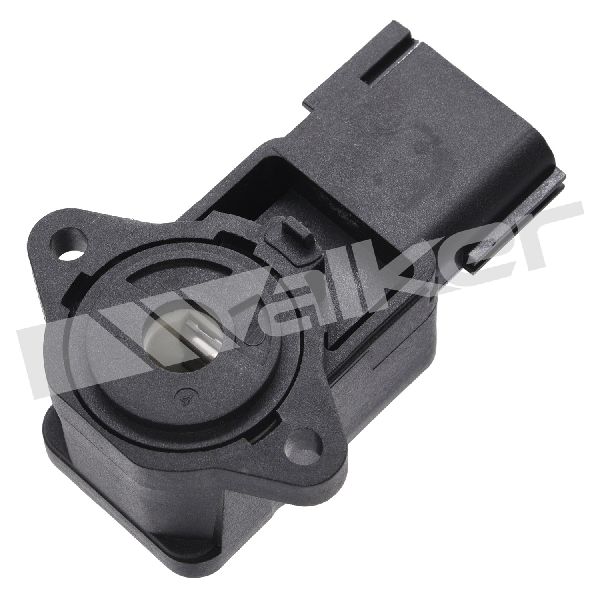
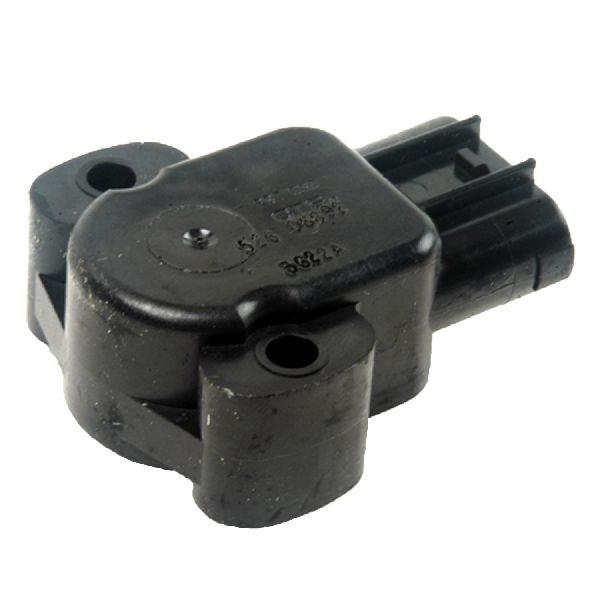
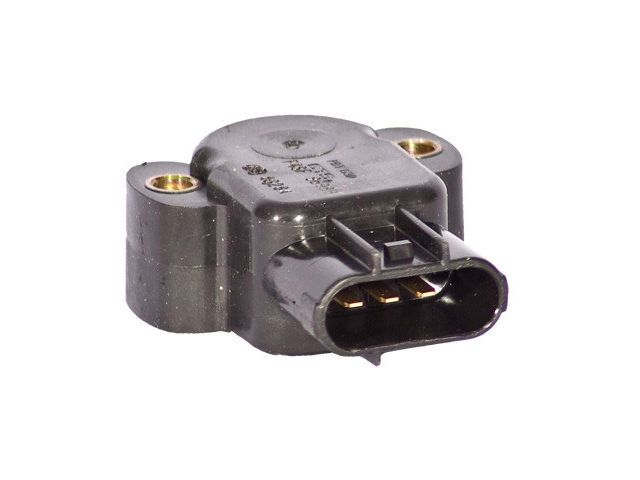
- 2002-2005 Ford Explorer: On these models (including the 4.0L V6), the Throttle Position Sensor (TPS) is a small, separate sensor that can be unbolted from the side of the throttle body. It is a simple and relatively inexpensive part to replace on its own.
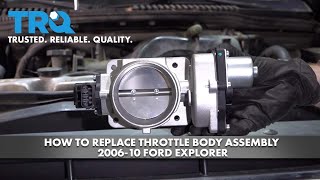
- 2006-2010 Ford Explorer: These later models use a modern Electronic Throttle Body (ETB), also called "drive-by-wire". For these vehicles, the TPS is built into the throttle body assembly. It is not sold or serviced as a separate part. If the sensor fails, you must replace the entire throttle body assembly.
Symptoms of a Failing Throttle Position Sensor

A bad TPS can cause serious drivability problems. Your truck's computer gets bad information and can't control the engine or transmission properly. Watch for these common signs:
- Hesitation or No Throttle Response: This is a classic symptom. You press the gas pedal, but the engine doesn't respond, or there's a long delay. This can be dangerous when merging into traffic.
- Stalling and Rough Idle: The engine may stall when you come to a stop, idle very roughly, or surge unexpectedly.
- Poor Shifting: The automatic transmission may shift hard, at the wrong times, or seem to hunt for the right gear.
- Check Engine Light: A failing TPS will almost always trigger the Check Engine Light. Common trouble codes include P0122 (low voltage), P0123 (high voltage), and P2135 (sensor correlation error).
- Lack of Power: The vehicle may feel sluggish and have trouble accelerating because the computer can't provide the right fuel mixture for the amount of air coming in.
Known Issue for 2004-2005 Models
Ford issued Technical Service Bulletin (TSB) 05-14-4 for some 2004-2005 Explorer models that show a wrench light on the dash and store the trouble code P2135. The official repair is to replace the throttle position sensor with an updated kit and reprogram the vehicle's main computer (PCM).
Choosing the Right Aftermarket Part

When it comes to electronic sensors, quality matters. While budget parts are available, they can fail early or not perform to original specifications, causing the same problems to return. For this specific part on the Explorer, owner feedback often suggests that paying more for a quality part saves trouble later.
- OEM (Motorcraft): This is the original part your Explorer was built with. It is widely considered the most reliable option, especially for the complete electronic throttle body assembly on 2006-2010 models. Many experienced owners and mechanics recommend using Motorcraft to ensure compatibility and long life.
- Premium Aftermarket (Delphi, NGK/NTK): Brands like Delphi and NTK are often original equipment suppliers to many car manufacturers. They design their parts to meet or exceed OE standards and are an excellent alternative to the dealer part.
- Standard Aftermarket (Standard Ignition, Walker Products): These are reputable brands that offer a good balance of quality and value. They are a solid choice for owners on a budget who still want a reliable part.
- Economy Brands (Replacement, URO Parts, etc.): These are the most budget-friendly options. While they can get your truck back on the road, their long-term durability and performance may not match that of premium brands.
Pro Tip: Check the Connector
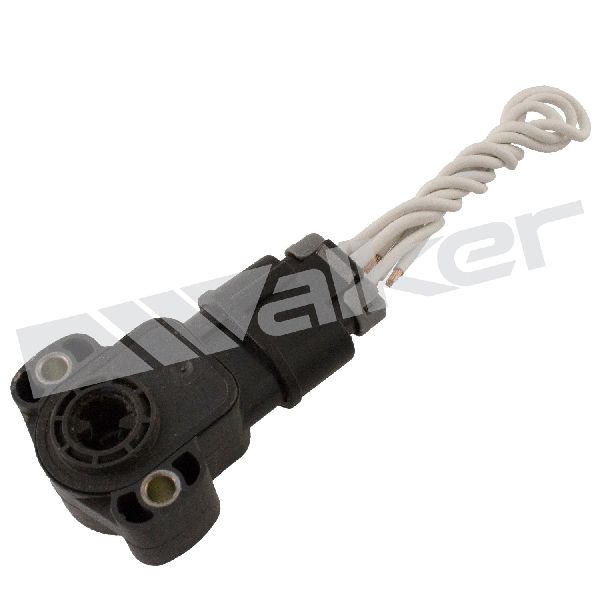
Sometimes the problem isn't the sensor itself, but the wiring connector (pigtail) that attaches to it. Wires can become brittle and break over time. If you replace the sensor and the problem persists, inspect the wiring and consider replacing the pigtail connector.
Cost to Replace a Ford Explorer Throttle Position Sensor

| Part Type | Estimated Cost |
|---|---|
| New OEM (Motorcraft) | $78 - $120 (Sensor only, 2002-05) / $150+ (Throttle Body, 2006-10) |
| New Aftermarket | $34.32 - $111.65 (Sensor only, 2002-05) / $120 - $250+ (Throttle Body, 2006-10) |
| Shop Labor | $50 - $75 |
Cost estimates are approximate and can vary by location and vehicle specifics. The 2006-2010 models require a full throttle body replacement, which is a more expensive part.
Frequently Asked Questions
Can I just clean the throttle position sensor?
No. The TPS is a sealed electronic sensor. While cleaning the throttle body itself is good maintenance, you cannot clean the internal parts of the sensor. If the sensor is faulty, it must be replaced.
Do I need to reset the computer after installing a new TPS?
It is a good practice to perform a throttle relearn procedure. After installing the new part and reconnecting the battery, turn the key to the 'On' position (without starting) for a few minutes, then turn it off. Then, start the engine and let it idle for 10-15 minutes to allow the computer to recalibrate to the new sensor's readings.
Is the TPS the same as the accelerator pedal sensor?
No. On drive-by-wire vehicles (2006-2010), there is also a sensor on the accelerator pedal inside the cabin. The pedal sensor reads your foot's input and tells the computer, which then commands the throttle body (with its integrated TPS) to open. While they work together, they are two separate parts.
Why is the replacement for a 2008 Explorer so different from a 2004?
The 2004 model has a throttle cable that physically connects the gas pedal to the throttle body, with a separate TPS attached. The 2008 model uses an electronic throttle body where an electric motor opens the throttle plate based on signals from the gas pedal sensor. In this newer design, the TPS is integrated directly into the assembly and cannot be replaced separately.
Helpful Videos

Technical Specifications
OEM Part Numbers: DY-968
For 2002-2005 models, the part is a separate, 3-pin rotary sensor. For 2006-2010 models, the sensor is integrated into the electronic throttle body assembly.
We Have This Part in Stock


The information in this article is provided for general reference and educational purposes only. Vehicle specifications, procedures, and part compatibility can vary by production date, trim level, and region. Always consult your vehicle's factory service manual and verify part numbers before purchasing or performing repairs. Safety-critical components such as airbags, seat belts, and braking systems should be installed by a qualified professional.
- Ford Explorer:
- 🎬 Helpful Videos
- 🛍️ Shop This Part
- A Critical Difference: 2002-2005 vs. 2006-2010 Models
- Symptoms of a Failing Throttle Position Sensor
- Known Issue for 2004-2005 Models
- Choosing the Right Aftermarket Part
- Pro Tip: Check the Connector
- Cost to Replace a Ford Explorer Throttle Position Sensor
- Frequently Asked Questions
- 🎟️ Get 5% Off