

Ford Explorer Crankshaft Position Sensor Guide (2002-2011)
Solve stalling and no-start problems by choosing the right crankshaft position sensor for your Explorer.
- A failing crankshaft sensor can cause critical issues like no-starts or sudden stalling in traffic.
- The most common sign is a Check Engine Light with code P0335.
- Replacement is a DIY-friendly job, located at the front-passenger side of the engine near the main pulley.
- For reliability, choose an OEM (Motorcraft) or a premium aftermarket brand like Delphi, Denso, or NGK.
Is Your Explorer's Crankshaft Sensor Failing?

A bad crankshaft position sensor in a 2002-2011 Ford Explorer can cause some very noticeable and frustrating problems. Because the sensor is vital for engine timing, a faulty one can make your vehicle unreliable. Symptoms often start small but can get worse, potentially leaving you stranded. 🎬 Watch: 7 common symptoms of a failing crankshaft sensor One of the most common signs is the Check Engine Light turning on, often with the code P0335, which points directly to a problem in the crankshaft position sensor circuit.
Do Not Ignore These Symptoms
Driving with a failing crankshaft sensor can be dangerous. The engine could stall suddenly in traffic, increasing the risk of an accident. It's best to address the issue as soon as symptoms appear.
Choosing the Right Aftermarket Sensor

When replacing the crankshaft sensor on your Explorer, you have a choice between OEM (Motorcraft) and various aftermarket brands. While Motorcraft is the original part and a safe bet, high-quality aftermarket sensors can offer similar performance for less money.
Brand Quality Tiers
- OEM / Premium Aftermarket (e.g., Motorcraft, Delphi, Denso, NGK/NTK, Hitachi): These brands are often original equipment manufacturers for Ford or other automakers. They are known for their reliability and are generally considered the best choice for critical sensors like the CKP. Forum users and mechanics often recommend sticking to OEM or top-tier aftermarket brands to avoid issues.
- Quality Mid-Range (e.g., Standard Ignition (SMP), Walker Products): These brands are well-established in the aftermarket and can be a good balance of price and quality. They are a reliable option if a premium brand isn't in the budget.
- Economy Brands (e.g., Dorman, Prenco, True Tech): These brands offer the lowest price point. While they can be a solution for a tight budget, some forum discussions mention inconsistent quality with economy sensors, sometimes leading to failure soon after installation. For a critical part like the crankshaft sensor, it's often worth spending a little more for a more reliable brand.
Pro Tip: For a part this critical to your engine's operation, choosing a premium or quality mid-range brand is highly recommended. The small extra cost can save you from the headache of a repeat repair and the danger of unexpected stalling.
How Much Does a Replacement Cost?
The cost to replace the crankshaft position sensor on a 2002-2011 Ford Explorer depends on whether you do it yourself or hire a shop, and the brand of part you choose.
| Part/Service | Estimated Cost |
|---|---|
| New Aftermarket Sensor | $21 - $50 |
| New OEM (Motorcraft) Sensor | $45 - $80 |
| Shop Labor | $80 - $150 |
| Total (Shop Installed) | $101 - $230 |
Frequently Asked Questions
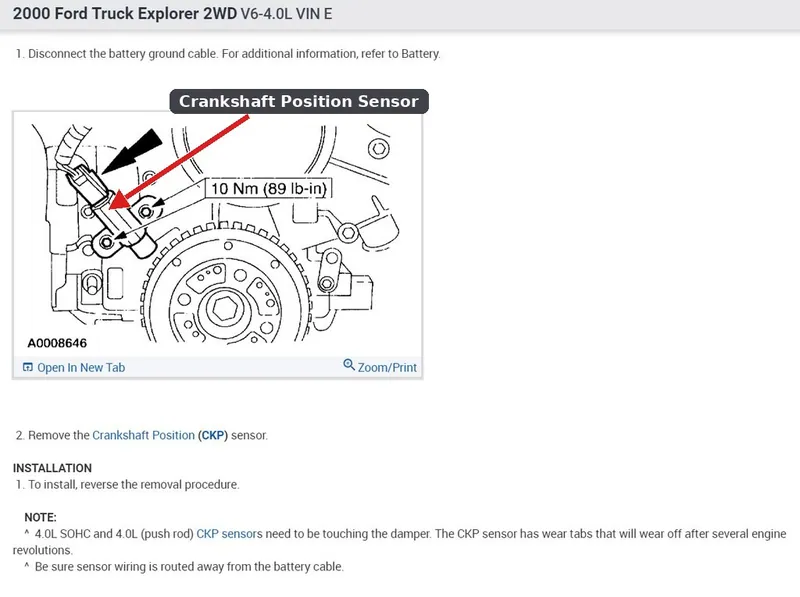
Where is the crankshaft position sensor located on a 2002-2011 Ford Explorer?
On most 2002-2011 Ford Explorers (both V6 and V8 models), the crankshaft position sensor is located at the front of the engine, on the passenger side, near the main crankshaft pulley. You will need to get underneath the vehicle to see and access it. It is typically held in place by two 8mm bolts.
Can I replace the Explorer's crankshaft sensor myself?
Yes, this is a DIY-feasible job for someone with basic mechanical skills. Access can be tight, but it only requires simple hand tools like a ratchet and an 8mm socket. The main steps involve safely raising the vehicle, disconnecting the electrical connector, removing two bolts, swapping the sensor, and reassembling.
🎬 See this step-by-step replacement walkthrough for 2006-2010 modelsAre there any recalls for the crankshaft sensor on this Explorer?
A search of the National Highway Traffic Safety Administration (NHTSA) database did not show any specific recalls for the crankshaft position sensor on the 2002-2011 Ford Explorer. Recalls found were for different model years or different components.
What is the most common trouble code for a bad crankshaft sensor?
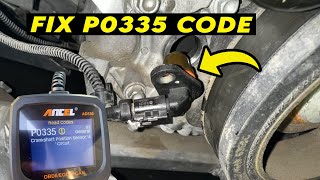
The most common diagnostic trouble code (DTC) for a failing crankshaft position sensor is P0335, which means "Crankshaft Position 'A' Circuit Malfunction." This code is set when the vehicle's computer (PCM) does not receive a signal from the sensor.
🎬 Learn more about P0335 causes and DIY fixesHelpful Videos

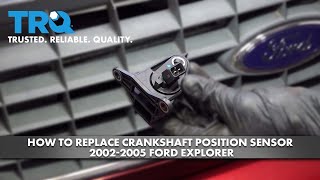
Technical Specifications
OEM Part Numbers: 3C3Z-6C315-AA DY-985
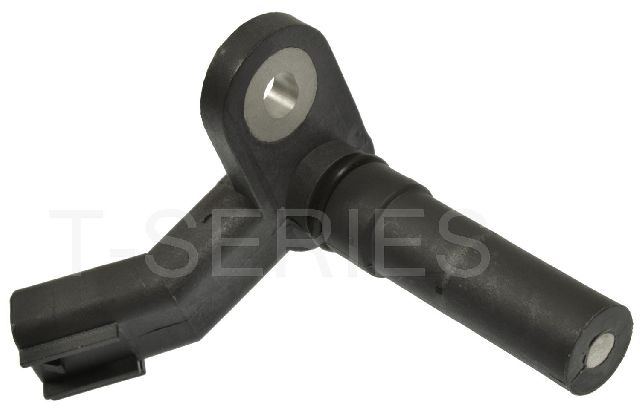
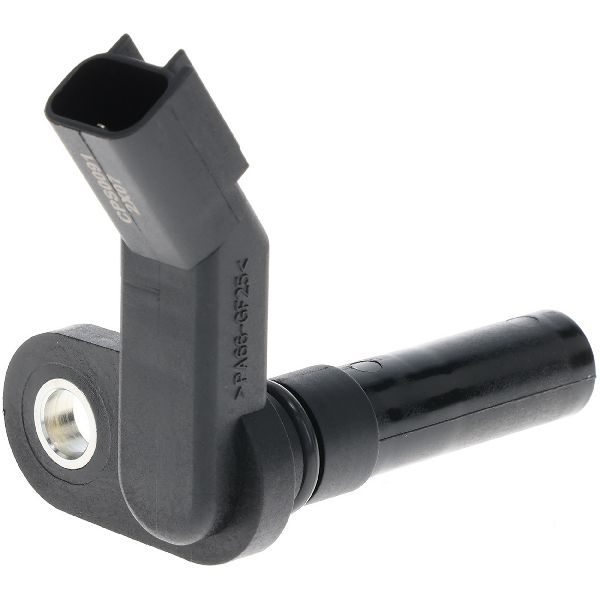
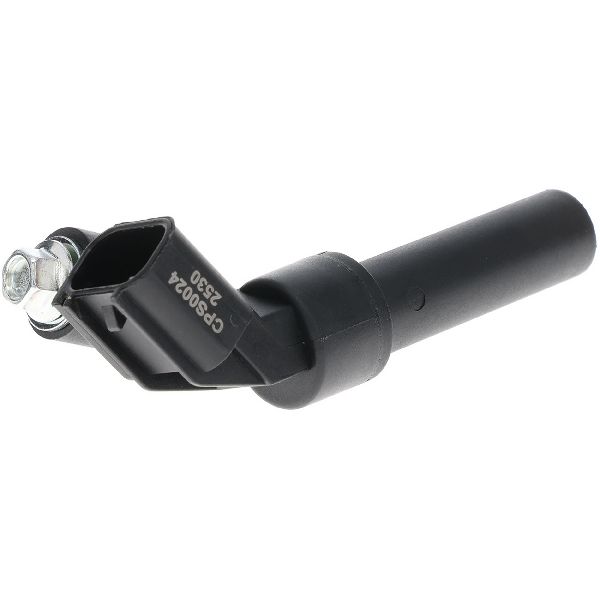
The crankshaft position sensor for the 2002-2011 Ford Explorer is a magnetic hall-effect sensor that reads the teeth on the crankshaft's reluctor wheel. It typically has a 2-wire or 3-wire connector and is mounted to the engine block with two 8mm bolts.
We Have This Part in Stock


The information in this article is provided for general reference and educational purposes only. Vehicle specifications, procedures, and part compatibility can vary by production date, trim level, and region. Always consult your vehicle's factory service manual and verify part numbers before purchasing or performing repairs. Safety-critical components such as airbags, seat belts, and braking systems should be installed by a qualified professional.
- Ford Explorer: