

Nissan Altima Speed Sensor Guide for 2002-2013 Models
Experiencing shifting problems or a faulty speedometer? Your Altima's speed sensor might be the culprit.
- A bad speed sensor on an Altima primarily causes erratic shifting and a dead speedometer.
- Error codes like P0500, P0720, and P0725 are strong indicators of a speed sensor issue.
- For electronic parts like sensors, OEM or high-quality aftermarket brands are often recommended for reliability.
- Driving with a faulty speed sensor is not advised due to unpredictable transmission behavior and potential ABS malfunction.
Understanding Speed Sensor Failure in Your Altima

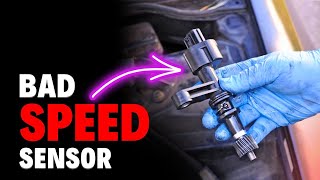
A failing speed sensor on a 2002-2013 Nissan Altima can cause a range of noticeable problems. Because the sensor's data is used by the transmission, a bad sensor often leads to poor shifting performance. You might experience harsh or delayed shifts, or the transmission may feel like it's slipping. In Altimas equipped with a CVT, this can be particularly noticeable and may even cause the car to go into a "limp mode" with reduced power. Another very common sign is an erratic or completely dead speedometer. 🎬 Watch a breakdown of common transmission speed sensor symptoms. Since the cruise control system also relies on this speed data, you'll likely find that it no longer works when the sensor fails. Finally, a faulty speed sensor will almost always trigger the Check Engine Light on your dashboard.
Input vs. Output vs. Wheel Speed Sensors
Your Altima has different types of speed sensors. Transmission Input/Output Sensors (often called Vehicle Speed Sensors or VSS) are mounted on the transmission and measure its internal speed. ABS/Wheel Speed Sensors are located at each wheel hub. While they all measure speed, they serve different primary functions. Transmission-related symptoms often point to the input/output sensors, while ABS and traction control warnings often point to a wheel sensor. This guide focuses on the transmission speed sensors.
Choosing the Right Aftermarket Speed Sensor

When replacing a speed sensor, you have the choice between Original Equipment Manufacturer (OEM) parts from a Nissan dealer and aftermarket parts. For critical electronic sensors like the speed sensor, many mechanics and experienced owners lean towards OEM. This is because OEM sensors are guaranteed to match the vehicle's original specifications, reducing the risk of compatibility issues. However, aftermarket sensors can offer significant cost savings. If you choose an aftermarket part, consider it a trade-off between price and potential longevity. 🎬 Learn more about the differences between OEM and aftermarket sensors. For a part that can be difficult to access, spending more on an OEM or a top-tier aftermarket brand may be worth it to avoid doing the job twice. Cheaper, entry-level aftermarket sensors might be a viable option if the sensor is easy to replace and you are comfortable with the possibility of a shorter lifespan.
Pro Tip: When a speed sensor code like P0725 is present, it can sometimes be caused by a failing crankshaft position sensor, not the speed sensor itself. It's wise to diagnose the issue properly or check for other codes before replacing parts.
Known Issues, Recalls, and Service Bulletins
While there are no widespread recalls specifically for the speed sensors on 2002-2013 Altimas, Nissan has issued Technical Service Bulletins (TSBs) related to the systems they affect. For example, TSB NTB-10-102-A provides diagnostic assistance for wheel speed sensor error codes (C1101-C1108). Another TSB, NTB16-031, addresses a check engine light with code P0116, which is unrelated but shows how bulletins are used. There have been other recalls and investigations for this Altima generation, such as for airbag sensors and hood latches, but none directly target the transmission speed sensors. Always have a mechanic check for active TSBs, as they provide factory-approved repair procedures.
| Part/Service | Estimated Cost |
|---|---|
| New Aftermarket Speed Sensor | $25.44 - $39.06 |
| New OEM Speed Sensor | $70 - $220 |
| Shop Labor | $95 - $150 |
| Total (Aftermarket Part + Labor) | $120 - $190 |
| Total (OEM Part + Labor) | $165 - $370 |
Frequently Asked Questions

Where are the speed sensors located on a 2002-2013 Altima?
The transmission speed sensors are mounted directly on the transmission housing. For the 2002-2006 generation, one sensor (output/revolution sensor) is accessible from the driver's side wheel well, while another may be under the air intake manifold. On later models like the 2013 Altima, one sensor may be located under the starter, with another lower down on the transmission. Locations can vary based on the engine (2.5L vs. 3.5L) and transmission type.
What are common error codes for a bad speed sensor?
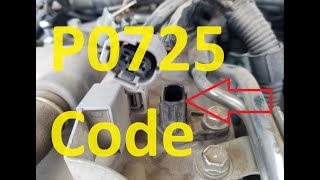
A failing vehicle speed sensor can trigger several OBD-II codes. The most common are P0500 (Vehicle Speed Sensor 'A' Malfunction) and P0720 (Output Speed Sensor Circuit Malfunction). Another related code is P0725 (Engine Speed Input Circuit Malfunction), which indicates the transmission control module isn't receiving a correct engine speed signal. This code can sometimes be triggered by a bad crankshaft sensor, so proper diagnosis is key.
Can I replace the speed sensor myself?
For a DIYer with some experience, this is often a manageable job. The difficulty depends on the sensor's location. Some are easily accessed after removing a wheel and fender liner, while others may require removing the air intake box or even the starter. The sensor is typically held in by a single 10mm bolt. Ensure you clean the area around the old sensor before removing it to prevent dirt from falling into the transmission.
🎬 See how to replace a Nissan Altima transmission speed sensor.Is it safe to drive with a bad speed sensor?
It is not recommended. A faulty speed sensor can cause erratic shifting, which can be unpredictable and unsafe in traffic. It also affects the anti-lock braking system (ABS), potentially reducing braking performance. It's best to get the sensor replaced as soon as possible to avoid safety risks and potential damage to the transmission.
Helpful Videos


Technical Specifications
OEM Part Numbers: 31935-8E006 31935-8E007 31935-1XF00
Typically a 2-wire or 3-wire Hall effect sensor, held in place by a single 10mm bolt. The part may be an input or output sensor, which can be physically identical but have different part numbers.

The information in this article is provided for general reference and educational purposes only. Vehicle specifications, procedures, and part compatibility can vary by production date, trim level, and region. Always consult your vehicle's factory service manual and verify part numbers before purchasing or performing repairs. Safety-critical components such as airbags, seat belts, and braking systems should be installed by a qualified professional.
- Nissan Altima: