

Ford E-150 (2002-2014) Engine Coolant Thermostat: A Comprehensive Guide
Understand the signs of a failing thermostat in your Ford E-150 and how to choose the right replacement part to prevent engine damage.
- The most common failure is a stuck-open thermostat, which will cause a P0128 check engine light code and poor heater performance.
- Always replace the thermostat gasket or O-ring to prevent leaks.
- For the V8 engines in the E-150, the thermostat is located at the front top of the engine, following the upper radiator hose, making it relatively easy to access.
- While replacing the thermostat, inspect the plastic housing for cracks, as they are a common point of failure.
Is Your Ford E-150 Thermostat Failing?
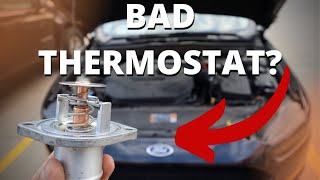
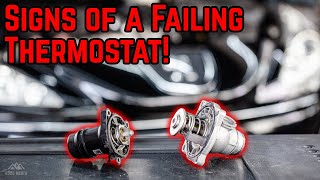
A faulty thermostat can cause serious engine problems, but the signs are usually clear. The most common failure is the thermostat getting stuck open. This is safer than it getting stuck closed, but it still needs to be fixed. When stuck open, your engine will take a very long time to warm up, your heater may not blow hot air, and your check engine light might come on with a P0128 code. A thermostat stuck closed is much more dangerous; it will cause the engine to overheat quickly 🎬 Watch this video to learn more about bad thermostat symptoms., which can lead to severe damage like a cracked cylinder head.
Stuck Closed vs. Stuck Open
A thermostat stuck closed will cause rapid overheating. Pull over immediately and turn off the engine to prevent catastrophic damage. A thermostat stuck open is less critical; the engine runs too cool. You can usually drive, but you should get it repaired soon to avoid poor fuel economy and long-term engine wear.
Choosing a New Aftermarket Thermostat
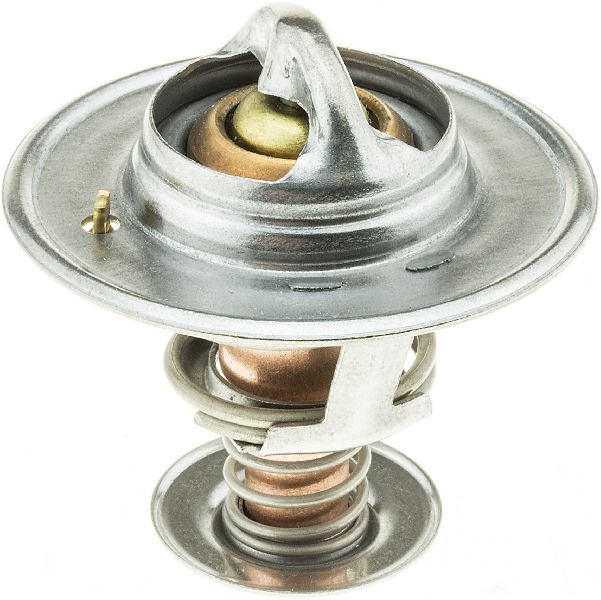
For the 2002-2014 Ford E-150, the original Motorcraft thermostat is a reliable choice, but quality aftermarket options can offer significant savings. The key is to choose a reputable brand and ensure you get the correct temperature rating, which is typically 195°F for these vans.
Brand Quality Tiers
- OEM-Equivalent Quality (Gates, Calorstat): Gates is a well-known and respected brand in cooling system components. Many professionals trust Gates to meet or exceed OEM standards. While less common in the US, Calorstat is another brand often considered to be of OEM quality.
- Standard Aftermarket (Motorad): Motorad is a very common aftermarket brand that manufactures thermostats for many other companies, including some that are boxed as Gates or Stant. Quality can be inconsistent according to some user reviews, with some experiencing early failures, while others have no issues. They are generally a budget-friendly option that meets basic requirements.
- Performance (Mishimoto): Mishimoto is known for performance-oriented cooling parts. While they may offer thermostats for Ford V8 engines, they are often designed for lower opening temperatures (e.g., 170°F). For a stock E-150 used for daily driving or work, it's best to stick with the OEM-specified temperature to ensure proper engine management and efficiency.
Pro Tip: Many modern thermostats, including those for your E-150, are sold with a new gasket or O-ring. Always use the new seal to prevent leaks. It's also wise to inspect the thermostat housing for cracks or corrosion, especially if it's the original plastic one, and replace it if necessary.
Replacement Cost
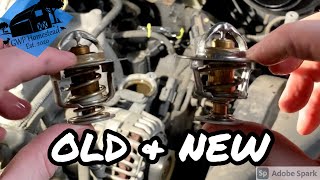
Replacing the thermostat on a Ford E-150 is a relatively straightforward job. 🎬 See how to replace the thermostat on a Ford V8 engine. The part itself is inexpensive, but labor costs can vary. Some estimates show a large price discrepancy, which may be due to including the cost of the entire thermostat housing assembly, not just the thermostat itself.
| Part/Service | Estimated Cost |
|---|---|
| New Aftermarket Thermostat | $12 - $70 |
| New OEM (Motorcraft) Thermostat | $30 - $50 |
| Shop Labor | $98 - $143 |
| Total Professional Replacement | $110 - $213+ (Thermostat only) |
Frequently Asked Questions (FAQ)
What temperature thermostat do I need for my E-150?
For most 4.6L and 5.4L V8 engines in the 2002-2014 E-150, the original equipment specified temperature is 195°F (90°C). Using a thermostat with a different temperature can affect engine performance, fuel economy, and emissions.
Can I just remove the thermostat if it's stuck?
No. Removing the thermostat entirely will cause the coolant to flow constantly, preventing the engine from ever reaching its proper operating temperature. This leads to poor performance, bad fuel economy, increased engine wear, and can trigger a check engine light (P0128).
Should I replace the thermostat housing 🎬 Watch a step-by-step guide for replacing the thermostat and housing. at the same time?
It's a good idea to inspect the housing carefully. On the 4.6L and 5.4L engines, the thermostat housing is often made of plastic and can become brittle and crack over time, leading to coolant leaks. If it shows any signs of cracking, warping, or heavy corrosion, it should be replaced. Since you already have the cooling system partially drained and disassembled, replacing the housing at the same time is cost-effective.
Are there any recalls or TSBs for the E-150 thermostat?
Searches for recalls and Technical Service Bulletins (TSBs) specifically for the thermostat on 2002-2014 Ford E-150 models did not yield any direct results. There was a recall (17S09) related to potential cylinder head cracking from overheating, which led Ford to install a coolant level sensor, but this was not a recall on the thermostat itself. Always check for the latest information using your vehicle's VIN.
Helpful Videos
![Ford P0128 5.4L [EASY] V8 | 97 - 14 E & F SERIES | 150 250 350 450 THERMOSTAT 4.6L](https://img.youtube.com/vi/yvcQe8TjlVg/mqdefault.jpg)
Technical Specifications
OEM Part Numbers: F65Z-8592-BD RT-1121
Standard Temperature: 195°F (90°C). Location: Top front of engine, where the upper radiator hose connects to the engine block.
We Have This Part in Stock


The information in this article is provided for general reference and educational purposes only. Vehicle specifications, procedures, and part compatibility can vary by production date, trim level, and region. Always consult your vehicle's factory service manual and verify part numbers before purchasing or performing repairs. Safety-critical components such as airbags, seat belts, and braking systems should be installed by a qualified professional.
- Ford E-150: