

A Guide to CV Axle Shafts for the 2003-2008 Mazda 6
Understand the clicks, vibrations, and replacement options for your first-generation Mazda 6's CV axles.
- A clicking noise when turning is the #1 symptom of a bad outer CV joint.
- Vibration that only happens during acceleration points to a failing inner CV joint.
- Always verify the correct axle for your Mazda 6's specific engine (4-cyl vs V6) and transmission (Auto vs Manual).
- The axle nut must be torqued to 202 ft-lbs with a torque wrench to avoid damaging the wheel bearing.
Is Your Mazda 6 Making Strange Noises? It Could Be a CV Axle.


If you own a 2003-2008 Mazda 6, you're driving a car that has reached an age where certain wear-and-tear parts, like the CV axle shafts, are due for replacement. These axles are essential for moving your car, but they don't last forever. The flexible joints wear out, especially once the protective rubber boot breaks. This guide will help you understand the symptoms, choose the right replacement part, and know what to expect during the repair.
Don't Ignore the Symptoms
While you can drive for a short time with a failing CV axle, a complete failure will leave you stranded. If the joint breaks apart while driving, it can cause a loss of control or damage other parts of your suspension. It's safer and often cheaper to address the issue early.
Common Symptoms of a Bad CV Axle on a Mazda 6

Listen and feel for these common signs of CV axle failure:
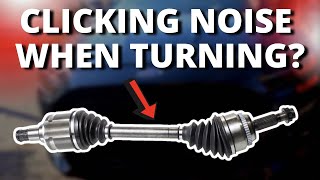
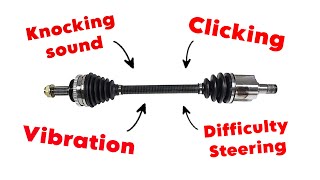
🎬 Watch: A quick guide to common CV axle failure symptoms.- Clicking or Popping When Turning: This is the most classic symptom. If you hear a rhythmic clicking that gets faster as you accelerate through a turn (like in a parking lot), the outer CV joint is likely worn out.
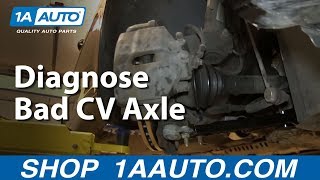
- Vibration When Accelerating: A shudder or vibration that you feel in the floor or seat, which appears when you step on the gas and goes away when you coast, points to a bad inner CV joint. Other issues can cause vibrations, but one that is specific to acceleration is a strong clue for the inner joint. 🎬 See how to professionally diagnose a bad axle on your car.
- Clunking or Knocking: A 'clunk' sound when you shift from Drive to Reverse or when you get on or off the gas can mean there's too much play in a worn joint.
- Grease on the Inside of Your Wheel: If the rubber CV boot tears, it will sling grease. You might see dark, heavy grease on the inside of your wheel, on the suspension components, or in the fender well. This is a sure sign the joint is losing its vital lubrication and is exposed to damaging dirt and water.
Choosing the Right Aftermarket Axle

For a vehicle like the first-generation Mazda 6, replacing a failed CV axle with a new aftermarket unit is a common and cost-effective choice. The original OEM axles are expensive, and quality aftermarket options provide a good balance of price and performance.
When shopping for brands like DSS or Surtrak, you are generally getting a new part that is designed to meet or exceed the original specifications. Most aftermarket axles are sold as complete assemblies, which is the recommended way to perform the repair. It's almost always more efficient to replace the entire shaft rather than trying to replace just a single joint or boot. Pay attention to the details:
- Boot Material: Look for axles with boots made of high-quality neoprene, which is durable and resistant to cracking.
- Warranty: A lifetime warranty provides peace of mind, suggesting the manufacturer is confident in their product's durability.
- Correct Fitment: The 2003-2008 Mazda 6 was available with a 4-cylinder or V6 engine, and with manual or automatic transmissions. Axles are often specific to these combinations, as well as to the driver or passenger side. Double-check that you are ordering the exact part for your car's configuration.
Pro Tip: Replace in Pairs?
You only need to replace the axle that has failed. However, since both axles have been on the car for the same amount of time and under the same conditions, it's not uncommon for the other side to fail soon after. If your budget allows, replacing both at the same time can save you a future trip to the shop.
Known Issues, Recalls, and Bulletins
Searches of the NHTSA database and other sources did not find any recalls or common Technical Service Bulletins (TSBs) specifically for CV axle failure on the 2003-2008 Mazda 6. However, a recall (NHTSA Campaign 18V-631, expanded by 19V-323) was issued for corrosion of the front cross member on 2009-2013 models in states that use road salt. While this doesn't directly involve the CV axle, it highlights the potential for corrosion on underbody components in certain climates, which can make repairs more difficult.
Cost to Replace a Mazda 6 CV Axle
| Item | Estimated Cost |
|---|---|
| New Aftermarket CV Axle (DSS, Surtrak) | $82 - $169 |
| New OEM Mazda CV Axle | $600+ |
| Shop Labor (per side) | $150 - $250 |
| Total Professional Replacement (Aftermarket Part) | $232 - $419 |
Frequently Asked Questions
Can I replace just the torn boot?
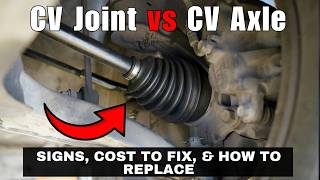
If you catch a torn boot very early before the joint starts making noise, you can sometimes just replace the boot and repack the joint with grease. However, this is labor-intensive. Since the dirt and water have likely already contaminated the joint, and complete new aftermarket axles are affordable, it is almost always better to replace the entire axle assembly.
Is this a good DIY job?
Replacing a CV axle is considered an intermediate-level job. It requires safely lifting and supporting the car on jack stands, and you'll need a good set of tools, including a large 32mm socket for the axle nut and a torque wrench. The axle nut is tightened to a very high torque (around 202 ft-lbs), so a long breaker bar is essential for removal. If you are comfortable with suspension work, it is a feasible DIY project.
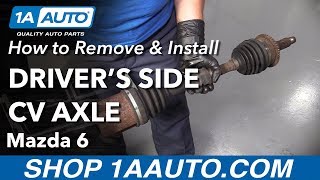
🎬 Watch this step-by-step walkthrough for replacing the driver's side axle.Do I need a wheel alignment after replacing a CV axle?
It is highly recommended. The replacement process involves disconnecting suspension components like the upper control arm or tie rod end. While you might be able to put everything back without significantly affecting the alignment, the only way to be sure and prevent uneven tire wear is to have a professional alignment performed afterward.
What is the big nut in the center of the wheel?
That is the axle nut. For the 2003-2008 Mazda 6, it is typically a 32mm nut. It must be torqued to the correct specification (202 ft-lbs) during installation to prevent damage to the wheel bearing. Do not use an impact wrench to tighten the new axle nut.
Helpful Videos
Technical Specifications
OEM Part Numbers: GG46-25-600C GA29-25-700B
Axle Nut Size: 32mm. Axle Nut Torque: 202 ft-lbs.
We Have This Part in Stock


The information in this article is provided for general reference and educational purposes only. Vehicle specifications, procedures, and part compatibility can vary by production date, trim level, and region. Always consult your vehicle's factory service manual and verify part numbers before purchasing or performing repairs. Safety-critical components such as airbags, seat belts, and braking systems should be installed by a qualified professional.
- Mazda 6:
- 🎬 Helpful Videos
- 🛍️ Shop This Part
- Is Your Mazda 6 Making Strange Noises? It Could Be a CV Axle.
- Don't Ignore the Symptoms
- Common Symptoms of a Bad CV Axle on a Mazda 6
- Choosing the Right Aftermarket Axle
- Pro Tip: Replace in Pairs?
- Known Issues, Recalls, and Bulletins
- Cost to Replace a Mazda 6 CV Axle
- Frequently Asked Questions
- 🎟️ Get 5% Off