

Ford E-150 Engine Intake Manifold Gasket and Manifold Issues (2003-2014)
Fixing coolant leaks and rough running on your Ford van often starts here.
- The original plastic intake manifold is prone to cracking; inspect it carefully and plan to replace the entire manifold, not just the gaskets.
- The most common symptoms are coolant leaks from the front of the engine and a rough idle with lean codes (P0171, P0174).
- This is a labor-intensive job due to tight engine access in a van; professional installation is recommended.
- While replacing the manifold, it is highly recommended to also replace the spark plugs and ignition coils.
Is It the Gasket or the Manifold?
For 2003-2014 Ford E-150 vans with the 4.6L or 5.4L Triton V8, the most common problem is not just the gasket, but the original composite plastic intake manifold itself. These manifolds are known to crack, especially at the front coolant crossover passage. This cracking is a frequent cause of coolant leaks. When you see symptoms, it's important to inspect the manifold for cracks before deciding to replace only the gaskets. Often, the best long-term repair is to replace the entire intake manifold with an updated aftermarket assembly that includes new gaskets.
Symptoms of a Failing Intake Manifold or Gasket
A bad intake manifold or gasket can cause several noticeable problems. Catching them early can prevent more serious engine damage.
- Coolant Leaks: This is the most common sign. You might see coolant dripping from the front of the engine or find coolant pooled in the engine valley under the manifold.
- Engine Overheating: A significant coolant leak will cause the engine to run low on coolant and overheat. This is a serious condition that can lead to major engine damage.
- Rough Idle and Misfires: A vacuum leak from a bad gasket lets extra air into the engine. This creates a lean fuel mixture, resulting in a rough idle, poor acceleration, and engine misfire codes (P0300-P0308).
- Check Engine Light: A vacuum leak will often trigger the Check Engine Light with lean condition codes like P0171 and P0174.
Choosing the Right Aftermarket Gasket Set
If your manifold is in good shape and you only need gaskets, quality matters. The original plastic-carrier gaskets can become brittle. Aftermarket brands offer different levels of quality.
- Premium Brands (Fel-Pro, Victor Reinz, Cometic): Brands like Fel-Pro offer updated designs, such as gaskets with a metal carrier (like part MS98008T) that are far more durable than the plastic originals. Victor Reinz is a well-respected OE and aftermarket supplier known for quality materials that resist modern coolants. Cometic specializes in high-performance gaskets that offer maximum durability.
- Mid-Tier/OE-Style Brands (Dorman, Apex): Dorman is a major aftermarket supplier. Their gaskets are standard quality and are often included with their popular replacement intake manifolds. Apex provides a wide range of gaskets for a value-conscious repair.
- Value Brands (DNJ Engine Components): These brands offer a cost-effective solution that meets basic requirements but may not feature the advanced materials of premium lines.
Pro Tip: Replace the Whole Manifold
If your E-150 still has its original plastic intake manifold, seriously consider replacing the entire assembly. Aftermarket manifolds from brands like Dorman are redesigned to fix the original flaws, such as replacing the plastic coolant crossover with aluminum. This is often a more reliable and permanent repair than just replacing the gaskets on a failure-prone original manifold.
Replacement Cost
Replacing the intake manifold gasket on an E-150 is labor-intensive due to poor engine access. Expect labor to be the largest part of the cost.
| Part/Service | Estimated Cost |
|---|---|
| Aftermarket Gasket Set | $40 - $199 |
| Aftermarket Intake Manifold Assembly (with gaskets) | $245 - $590 |
| Shop Labor | $526 - $772 |
| Total Professional Replacement | $891 - $1,137+ |
Frequently Asked Questions
Are there any recalls for the intake manifold on the Ford E-150?
No, there are no specific recalls from Ford or the NHTSA for the cracking plastic intake manifold or failing gaskets on the 2003-2014 E-150, despite it being a well-known issue.
Do I need to use sealant on the new gaskets?
Generally, no. Modern gaskets are designed to be installed dry. However, it is standard practice to apply a small dab of RTV silicone at the corners where the cylinder heads meet the engine block to seal the joints. Always follow the instructions provided with your specific gasket set.
Should I replace my spark plugs and coils at the same time?
Yes, this is an excellent time to do it. The intake manifold removal provides much easier access to the ignition coils and spark plugs. If coolant has been leaking, it can damage the coils and boots, making replacement necessary anyway.
Can I just use a stop-leak product?
It is not recommended. Stop-leak products are a temporary fix at best and can cause much bigger problems by clogging the radiator, heater core, and small coolant passages inside the engine. The only correct repair is to replace the faulty parts.
Technical Specifications
OEM Part Numbers: 9C2Z9424AA AC2Z9424A 4C2Z9424CA 5C2Z9424AA
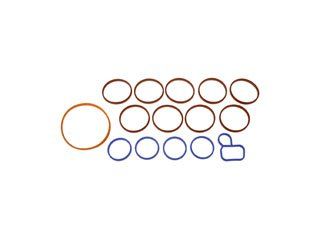
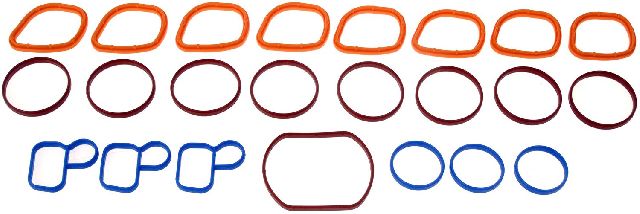
The gasket set must match your specific engine (4.6L or 5.4L V8), as the port shapes and coolant passages differ. High-quality aftermarket gaskets are typically made from molded rubber or silicone on a polymer or metal carrier, which is an improvement over the original design.
We Have This Part in Stock


The information in this article is provided for general reference and educational purposes only. Vehicle specifications, procedures, and part compatibility can vary by production date, trim level, and region. Always consult your vehicle's factory service manual and verify part numbers before purchasing or performing repairs. Safety-critical components such as airbags, seat belts, and braking systems should be installed by a qualified professional.
- Ford E-150: