

Ford E-250 Ignition Coil Guide for 2003-2014 Models
If your E-250 work van is running rough, hesitating, or losing power, a bad ignition coil is a likely culprit.
- A flashing check engine light means pull over immediately to prevent expensive catalytic converter damage.
- For reliability in a work van, choose OEM (Motorcraft) or high-quality aftermarket brands like Denso.
- Always replace spark plugs with the ignition coils to prevent premature failure of the new coils.
- Check for water in the spark plug wells, a common issue on E-250s that causes coils to fail.
Is Your E-250 Running Rough? It Could Be an Ignition Coil
A failing ignition coil is a very common issue on the Ford 4.6L and 5.4L V8 engines used in these vans. When a coil starts to go bad, it can't produce a strong enough spark, leading to an engine misfire. You'll feel this as a shudder, hesitation, or rough idle, especially when stopped or under acceleration. Ignoring a misfire can lead to more expensive problems, like a damaged catalytic converter, because unburned fuel gets dumped into the exhaust.
Flashing Check Engine Light? Pull Over Safely.
If your check engine light is flashing, it signals a severe misfire that can quickly destroy your catalytic converter. To prevent costly damage, it's best to stop driving as soon as it is safe to do so.
Choosing the Right Aftermarket Ignition Coil
When replacing ignition coils on your E-250, quality matters. While Ford's Motorcraft brand is the original equipment, several aftermarket brands offer a reliable alternative, often at a better price. Forum discussions among Ford truck and van owners consistently show that sticking to reputable brands is key to avoiding premature failure.
- Tier 1 (OEM Equivalent): Brands like Denso are often the original equipment manufacturer for Ford. Choosing Denso is essentially getting the OEM part without the Motorcraft box. They provide excellent reliability and are a trusted choice.
- Tier 2 (Quality Aftermarket): Brands like Hella and MSD (known for performance) are solid choices. MSD is often seen as a performance upgrade, though for a stock work van, the benefits may not be noticeable compared to a quality standard replacement. Forum users have mixed, but generally positive, experiences with these brands.
- Tier 3 (Budget-Friendly): Accel and other value-oriented brands can be a good option if budget is the primary concern. However, forum discussions show mixed reviews, with some users experiencing higher failure rates compared to OEM or Tier 1 brands. For a work vehicle where reliability is critical, it's often recommended to invest in a higher-tier brand.
Pro Tip: Replace Plugs and Coils Together
It is highly recommended to replace the spark plugs at the same time as the ignition coils. Worn spark plugs have a larger gap, which forces the coil to work harder to create a spark. This extra strain can cause even new coils to fail prematurely. Given the labor involved in accessing the rear cylinders on a van, doing both jobs at once is efficient.
Common Ordering Mistakes & Known Issues
A well-known issue on these Ford vans is water leaking past the cowl seals and dripping onto the engine, particularly on the passenger side. This moisture can pool in the spark plug wells, shorting out the ignition coil and causing it to fail. When you replace a coil, always inspect the well for water or corrosion. Applying dielectric grease inside the new coil boot helps seal out moisture.
| Part Type | Price Range |
|---|---|
| New Aftermarket | $39.29 - $110.73 |
| New OEM (Motorcraft) | $50 - $90 |
| Shop Labor (Per Hour) | $100 - $250 |
Frequently Asked Questions
How do I know which ignition coil is bad?
When a coil fails, the check engine light will illuminate. Use an OBD-II scanner to read the trouble code. Codes P0301 through P0308 indicate a misfire on a specific cylinder (e.g., P0304 is cylinder 4). You may also see a P035x code, which points directly to a fault in the coil's circuit. A common diagnostic trick is to swap the suspected bad coil with one from a known good cylinder. Clear the codes and run the engine. If the misfire code follows the coil to the new cylinder, you've confirmed the coil is faulty.
Is replacing an E-250 ignition coil a DIY job?
Yes, for most people with basic tools. The coils are on top of the engine, held by a single 7mm bolt. The front coils are easy to access. The rear coils are more difficult because they are under the interior engine cover, often called the "doghouse". Removing the doghouse provides the necessary access, but it can be a tight workspace.
Should I replace all 8 ignition coils at once?
It's a good practice, especially on a high-mileage vehicle. Ignition coils are exposed to the same heat and vibration, so they tend to fail around the same time. If one has failed, others may not be far behind. Replacing them all at once, along with the spark plugs, can save you from repeated repairs down the road.
What is dielectric grease and do I need it?
Yes, you should use it. Dielectric grease is a non-conductive, silicone-based grease that you apply to the inside of the ignition coil boot before installing it on the spark plug. It helps seal out moisture, prevents corrosion, and makes it easier to remove the coil in the future. It does not improve the electrical connection, but it protects it.
Technical Specifications
OEM Part Numbers: DG-508 3L3Z12029BA
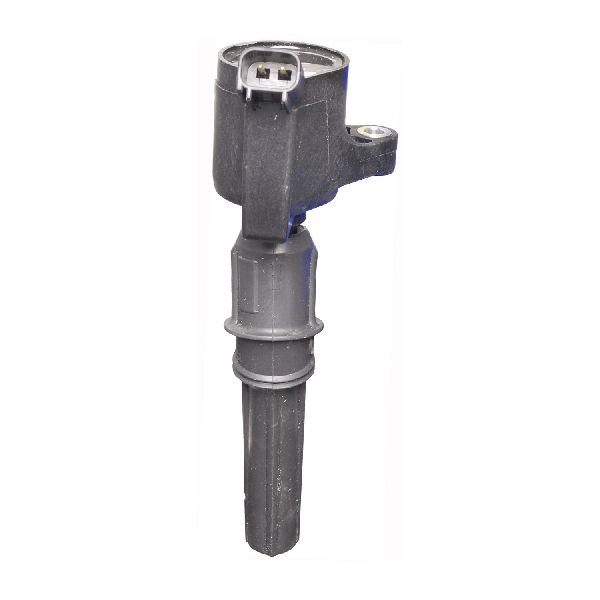
This is a Coil-on-Plug (COP) system. Each coil is held down by a single 7mm bolt. The electrical connector has 2 pins.
We Have This Part in Stock

The information in this article is provided for general reference and educational purposes only. Vehicle specifications, procedures, and part compatibility can vary by production date, trim level, and region. Always consult your vehicle's factory service manual and verify part numbers before purchasing or performing repairs. Safety-critical components such as airbags, seat belts, and braking systems should be installed by a qualified professional.
- Ford E-250: