

Volvo XC70 (2003-2016) Fuel Pressure Sensor: A Comprehensive Guide
Having starting issues or a check engine light on your XC70? Your fuel pressure sensor might be the culprit.
- A failing fuel pressure sensor is a common problem on 2003-2016 XC70s, causing starting issues, poor performance, and a Check Engine Light.
- Bosch is the recommended aftermarket brand as it is often the Original Equipment Manufacturer (OEM) for Volvo.
- DIY replacement is feasible for many owners, requiring basic tools like a T25 Torx bit and proper safety precautions for handling fuel.
- Check for active recalls on 2003-2004 models and a warranty extension on 2015-2016 models before purchasing a new part.
Is Your XC70's Fuel Pressure Sensor Failing?

A failing fuel pressure sensor is a common issue on many Volvo models, including the P2 (2003-2007) and P3 (2008-2016) generation XC70s. When this sensor sends incorrect signals, or no signal at all, it can cause a variety of noticeable problems. Your car's computer won't know how much fuel the engine actually needs.
Key Symptoms of a Bad Fuel Pressure Sensor:
- Check Engine Light: This is often the first sign. You may see codes like P0193, P0089, P018C, ECM-280B, or ECM-280C.
- Starting Problems: The engine may take longer than usual to start (long crank) or fail to start at all.
- Poor Engine Performance: You might experience hesitation when you accelerate, a general loss of power, or even stalling.
- Rough Idle: The engine may run unevenly or roughly when the car is stopped.
- Reduced Fuel Economy: If the sensor causes the engine to run rich, you'll notice you're filling up the gas tank more often.
Known Issues, Recalls, and Warranty Extensions
Recall (2003-2004 Models): Volvo issued a safety recall (NHTSA ID: 07V226000, Volvo Recall #R181) for some 2003-2004 V70 and S60 models, which share a platform with the XC70. The original fuel pressure sensor could crack, leading to incorrect signals, a check engine light, and potential loss of power. While this recall specifically names the V70/S60, the parts are often identical for the XC70 of the same era.
Extended Warranty (2015-2016 Models): Volvo created a warranty extension (TSB PB23-P29929-2019) for the low-pressure fuel sensor on certain 2015-2016 models, including the XC70. This extended the warranty for this specific part to 8 years or 80,000 miles due to potential internal damage causing a Check Engine Light with code ECM-P018C00.
Choosing the Right Aftermarket Fuel Pressure Sensor

When replacing the fuel pressure sensor, you have several options. Since Bosch was the original equipment manufacturer (OEM) for many of these vehicles, choosing a Bosch aftermarket part is often the safest bet for quality and fit.
| Brand Tier | Brands | General Assessment |
|---|---|---|
| Premium / OEM Equivalent | Bosch | Often the original part manufacturer for Volvo. Widely considered the most reliable choice for a direct replacement, ensuring proper function without issues. |
| Mid-Grade Aftermarket | Standard Ignition, Vemo | These brands are established aftermarket manufacturers. Vemo is often considered a good alternative to the original part. Standard Ignition (Standard Motor Products) is also a reputable name in the industry. These can be good cost-saving options but may not have the same long-term track record as Bosch for this specific part. |
| Value / Budget | URO Parts, Replacement | URO Parts offers parts for European cars at a lower price point, but quality can be inconsistent depending on the specific component; some users report issues with their electronic parts. 'Replacement' branded parts are typically the most budget-friendly option but may have a shorter lifespan. |
DIY Replacement: What to Expect

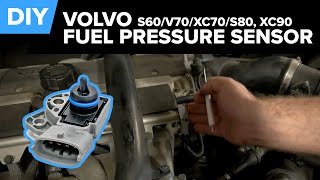
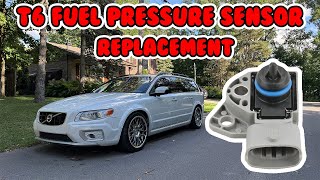
Replacing the fuel pressure sensor is a task many XC70 owners can do at home with basic tools, saving on labor costs. The sensor is located at the end of the fuel rail and is typically held in by a single T25 Torx screw.
🎬 Watch: This easy DIY walkthrough shows the sensor replacement process.Safety First! You are working with the fuel system. Before you begin, you must relieve the pressure from the fuel rail. This is usually done by pulling the fuel pump fuse and running the engine until it stalls. Always work in a well-ventilated area with a cold engine and have a rag ready to catch any small amount of spilled fuel.
Frequently Asked Questions

Where is the fuel pressure sensor located on my XC70?
The fuel pressure sensor is located on the end of the fuel rail. The fuel rail is a metal pipe that runs along the top of the engine, supplying fuel to the injectors. You will likely need to remove the plastic engine cover to see it.
🎬 See how to access the sensor on 3.2L inline-six engines.Do I need a special tool to replace the sensor?
For most 2003-2016 XC70 models, the primary tool needed is a T25 Torx bit or screwdriver to remove the single screw holding the sensor in place. Depending on the engine and year, access might be tight, so a small ratchet or wrench for the Torx bit can be helpful.
Is a Bosch sensor really better than other brands?
For many European cars like Volvo, Bosch was the original equipment manufacturer (OEM) for this part. This means a Bosch aftermarket sensor is often identical to the part that came from the factory. While other brands can work, choosing Bosch provides the highest confidence in fit, function, and longevity.
My check engine light is on for code P0089. Is it the sensor?
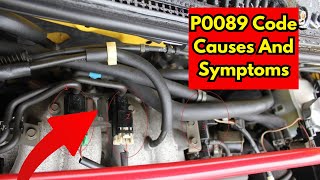
Code P0089 (Fuel Pressure Regulator Performance) can be caused by a faulty fuel pressure sensor. However, it can also be caused by a clogged fuel filter, a failing fuel pump, or an issue with the pump's control module (PEM). While the sensor is a common culprit and a good place to start, further diagnosis may be needed if replacing it doesn't solve the problem.
🎬 Watch this guide to diagnose P0089 and ECM-2900 codes properly.Helpful Videos

Technical Specifications
OEM Part Numbers: 31272732 31272730 32242867 31432653
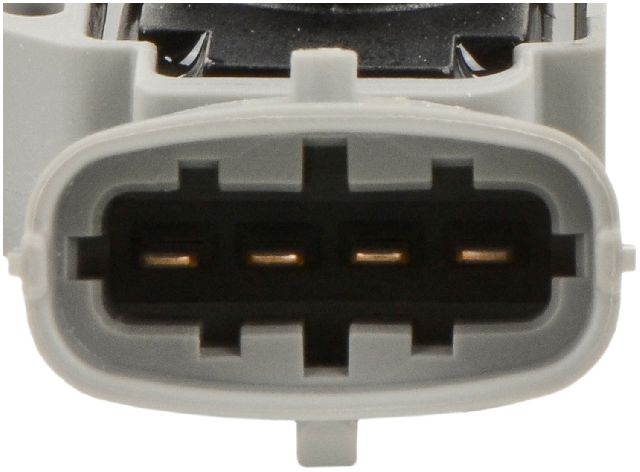
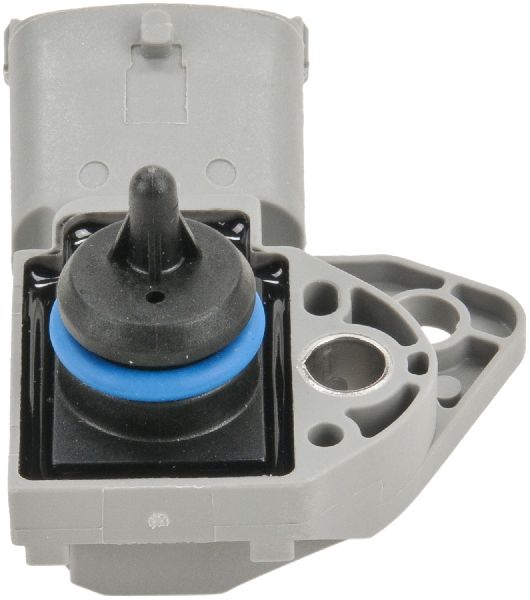
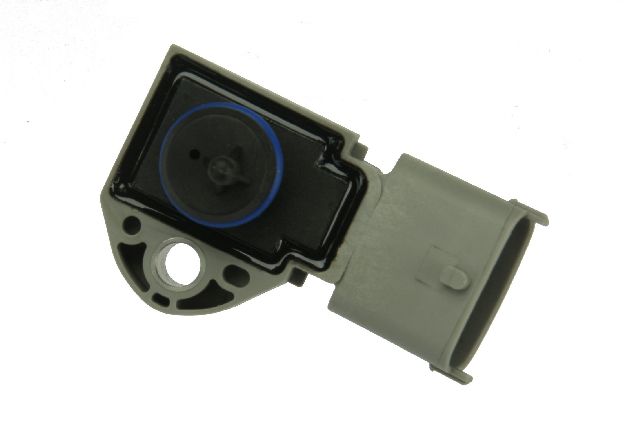
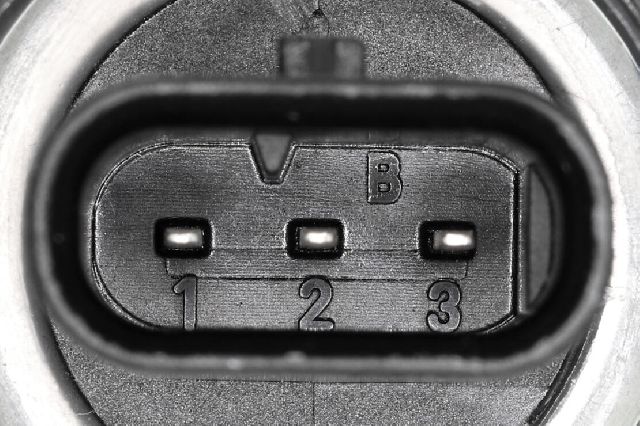
The sensor is typically located on the end of the fuel rail and secured with a T25 Torx screw. It uses an O-ring to seal against the fuel rail.
We Have This Part in Stock


The information in this article is provided for general reference and educational purposes only. Vehicle specifications, procedures, and part compatibility can vary by production date, trim level, and region. Always consult your vehicle's factory service manual and verify part numbers before purchasing or performing repairs. Safety-critical components such as airbags, seat belts, and braking systems should be installed by a qualified professional.
- Volvo XC70: