

GMC Canyon Engine Camshaft Position Sensor Guide (2004-2008)
Fixing hard starts, stalling, and rough idling on your 2004-2008 GMC Canyon starts here.
- Your 2004-2008 Canyon has two camshaft sensors; consider replacing both at the same time.
- Stick with trusted brands like ACDelco or Delphi for this critical sensor to ensure reliability.
- Symptoms include a P0340 code, hard starting, stalling, and rough running.
- This is an easy DIY replacement that requires only basic tools and about 30 minutes.
Is Your Canyon Running Rough? It Could Be the Camshaft Sensor

A failing camshaft position sensor is a common issue that can cause a number of frustrating engine problems. Because this sensor is so important for engine timing, a bad signal can make your truck difficult to drive or even leave you stranded. Recognizing the symptoms early can save you from a bigger headache down the road.
Key Failure Symptoms
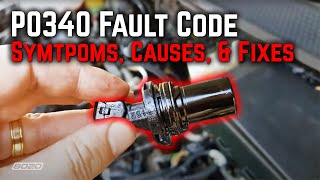
- Check Engine Light: This is often the first sign. The most common trouble code associated with this part is P0340, which points to a problem in the camshaft position sensor circuit. 🎬 Watch this guide on how to fix the P0340 code.
- Engine Won't Start: The engine may crank but fail to start, or take much longer than usual to fire up. This happens because the ECM doesn't know when to send spark and fuel.
- Stalling: The engine may suddenly shut off while you're driving, especially at low speeds or when idling.
- Rough Idle and Misfires: Your truck may shake or vibrate at a stop, and you might feel the engine stumbling or misfiring.
- Reduced Power: You'll notice poor acceleration and a general lack of engine power. The truck might feel sluggish and may enter a reduced-power "limp mode" as a safety measure.
No Recalls, But a Common Failure
There are no active recalls or widespread Technical Service Bulletins (TSBs) from GM for the camshaft position sensor on the 2004-2008 GMC Canyon. However, failure of these sensors is a common problem due to age and constant exposure to engine heat.
Choosing the Right Aftermarket Sensor

When it comes to electronic sensors, not all brands are created equal. For a critical part like the camshaft position sensor, choosing a quality brand is important to avoid having to do the job twice.
Tier 1: OEM and OEM-Equivalent Brands
These are your best bet for reliability and a perfect fit. They are manufactured to the same standards as the original part that came in your truck.
- ACDelco: As the original equipment manufacturer for GM, ACDelco is the go-to choice. Their "Professional" line of aftermarket parts offers OE quality.
- Delphi: Delphi is another major OEM supplier that produces high-quality sensors trusted by many manufacturers and mechanics.
Tier 2: Reputable Aftermarket Brands
These brands can offer good value, but quality can sometimes be inconsistent compared to OEM suppliers.
- NGK/NTK: Known for their ignition components, NTK (the sensor division of NGK) is a solid choice.
- Standard Ignition (SMP): A long-standing aftermarket brand that offers a reliable product.
- Hitachi: An OEM for many Japanese brands, Hitachi also makes quality sensors for domestic applications.
Tier 3: Budget Brands
While the low price is tempting, budget brands often have a higher failure rate for electronic sensors. Forum discussions frequently mention issues with brands like Dorman for this specific type of part, often leading to failure shortly after installation. It is generally recommended to invest a little more in a Tier 1 or Tier 2 brand for this critical component.
Pro Tip: Replace in Pairs?
Your Canyon has two camshaft sensors. If one fails, the other may not be far behind due to similar age and wear. Since the part is relatively inexpensive and the replacement is simple, many mechanics recommend replacing both the intake and exhaust sensors at the same time to prevent a future breakdown.
Typical Replacement Costs
The cost to replace a camshaft position sensor can vary depending on whether you do it yourself or take it to a shop.
| Item | Estimated Cost (per sensor) |
|---|---|
| New Aftermarket Part | $21 - $80 |
| New OEM Part (ACDelco) | $40 - $65 |
| Shop Labor | $50 - $100 |
| Total (DIY) | $21 - $80 |
| Total (at a shop) | $71 - $180 |
Simple DIY Installation

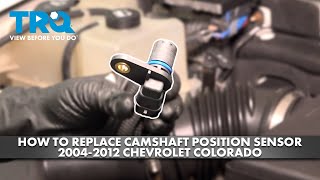
Replacing the camshaft position sensors on a 2004-2008 Canyon is a beginner-friendly job that requires basic tools. Both sensors are easily accessible 🎬 Follow this step-by-step walkthrough to replace your sensors. on the top of the engine's cylinder head.
- Locate the Sensors: You'll find one on the driver's side (intake) and one on the passenger's side (exhaust) of the cylinder head.
- Disconnect the Connector: Carefully unplug the electrical harness from the sensor.
- Remove the Bolt: Use a ratchet with a 10mm socket to remove the single bolt holding the sensor in place.
- Remove the Old Sensor: Gently twist and pull the sensor out of the cylinder head. Make sure the old O-ring comes out with it.
- Install the New Sensor: Lightly lubricate the new O-ring with clean engine oil and install the new sensor, making sure it's fully seated.
- Reinstall the Bolt: Tighten the 10mm bolt. The torque spec is 89 lb-in (about 7.4 lb-ft), so just snug is sufficient.
- Reconnect and Test: Plug the electrical connector back in, reconnect your battery if you disconnected it, and start the engine. The check engine light may need to be cleared with a scan tool.
Frequently Asked Questions
How many camshaft sensors does my 2006 GMC Canyon have?
The 2004-2008 GMC Canyon with either the 2.8L I4 or 3.5L I5 engine is equipped with two camshaft position sensors: one for the intake cam and one for the exhaust cam.
🎬 See this video to locate the sensors on your engine.What does the P0340 code mean?
P0340 is a generic OBD-II code that means "Camshaft Position Sensor 'A' Circuit Malfunction." This indicates that the ECM has detected a problem with the sensor's signal or the circuit itself, which could be the sensor, the wiring, or the connector.
Can I just replace the one bad sensor?
Yes, you can replace only the sensor that has failed. However, since both sensors have been exposed to the same conditions for the same amount of time, the other one may fail soon. Because the part is affordable and easy to access, replacing both at once is often recommended as preventative maintenance.
Is a "relearn" procedure required after replacement?
No, a specific relearn procedure is not typically required for replacing the camshaft position sensors on this vehicle. This is sometimes confused with the crankshaft position sensor, which can require a relearn procedure on some GM vehicles. After installation, you should clear the trouble codes with a scan tool.
Helpful Videos
Technical Specifications
OEM Part Numbers: 12585545 12568983
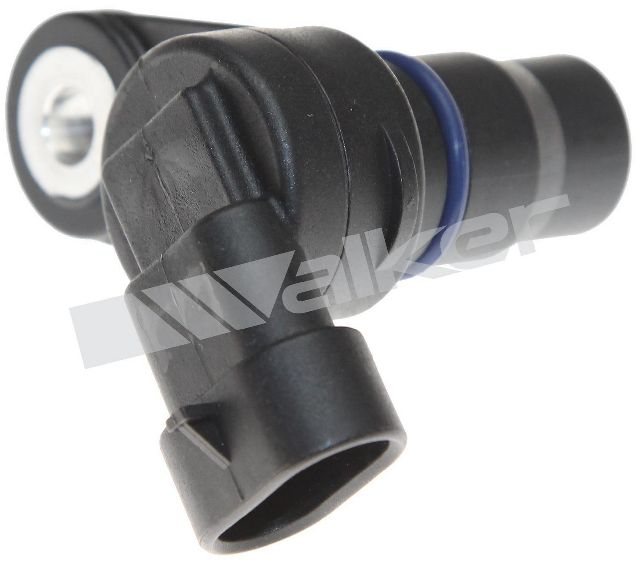
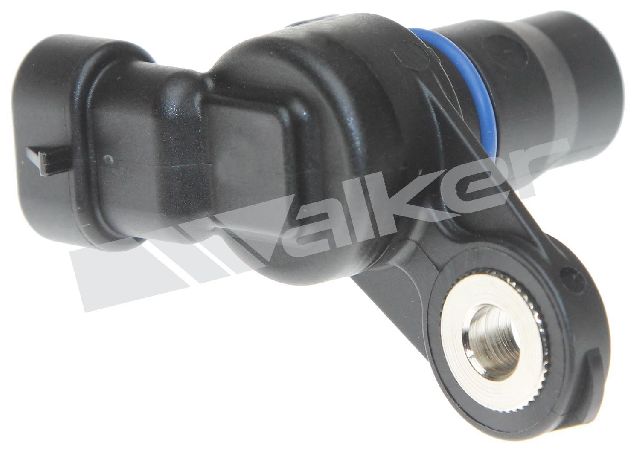
The 2004-2008 GMC Canyon uses two camshaft position sensors, one for the intake and one for the exhaust camshaft. They are held in by a single 10mm bolt and use a 3-pin electrical connector.
We Have This Part in Stock


The information in this article is provided for general reference and educational purposes only. Vehicle specifications, procedures, and part compatibility can vary by production date, trim level, and region. Always consult your vehicle's factory service manual and verify part numbers before purchasing or performing repairs. Safety-critical components such as airbags, seat belts, and braking systems should be installed by a qualified professional.
- GMC Canyon:
- 🎬 Helpful Videos
- 🛍️ Shop This Part
- Is Your Canyon Running Rough? It Could Be the Camshaft Sensor
- Key Failure Symptoms
- No Recalls, But a Common Failure
- Choosing the Right Aftermarket Sensor
- Pro Tip: Replace in Pairs?
- Typical Replacement Costs
- Simple DIY Installation
- Frequently Asked Questions
- 🎟️ Get 5% Off