

A Guide to the Engine Intake Manifold Gasket Set for the 2004-2010 Dodge Durango
Leaking coolant or a rough idle on your Durango could point to a bad intake manifold gasket.
- Fitment is engine-specific; you must buy the gasket set for your 3.7L, 4.7L, or 5.7L engine.
- Symptoms differ based on failure: vacuum leaks cause rough running, while coolant leaks cause overheating.
- Check your oil for a 'milky' appearance. If you see it, stop driving immediately to prevent engine destruction.
- Aftermarket quality varies, with brands like Victor Reinz offering OEM-level performance and Cometic providing a high-performance option.
Is Your Durango's Intake Manifold Gasket Failing?
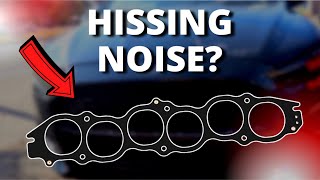
A bad intake manifold gasket can cause a range of problems, from annoying to engine-threatening. The symptoms you experience depend on what part of the gasket has failed. 🎬 Watch: A detailed breakdown of common intake manifold gasket symptoms. It can cause either a vacuum leak or a coolant leak.
Symptoms of a Vacuum Leak
- Rough or Unstable Idle: The engine may shake or vibrate at a stop.
- Hissing or Whistling Sound: You might hear a distinct sucking sound from the engine bay, especially during acceleration. 🎬 See how to quickly test for a vacuum leak yourself.
- Check Engine Light: A vacuum leak often triggers lean condition codes like P0171 and P0174, or a random misfire code like P0300.
- Poor Performance & Fuel Economy: The engine struggles to perform correctly because the air-fuel ratio is wrong.
Symptoms of a Coolant Leak
- Engine Overheating: A loss of coolant will cause the engine temperature to climb, especially under load.
- Visible Coolant Leak: You may see coolant dripping from the top of the engine, near where the intake manifold meets the cylinder heads.
- Low Coolant Level: You might find yourself repeatedly topping off the coolant reservoir with no obvious hose leak.
- White Exhaust Smoke: Sweet-smelling white smoke from the tailpipe indicates coolant is being burned in the combustion chamber.
CRITICAL WARNING: Milky Engine Oil
If you check your oil dipstick or oil cap and find a milky, frothy, or coffee-like sludge, this is a sign of a severe internal coolant leak. Coolant is mixing with your engine oil, which can quickly destroy engine bearings. Do not continue to drive the vehicle. This requires immediate repair.
Choosing the Right Aftermarket Gasket Set
For the 2004-2010 Dodge Durango, you have several good aftermarket options. The most important factor is buying the correct set for your specific engine (3.7L, 4.7L, or 5.7L HEMI). They are not interchangeable. Here’s how the available brands generally stack up in terms of quality and price.
| Brand Tier | Brand(s) | Best For |
|---|---|---|
| Good | Apex | Budget-conscious repairs where standard, OE-style performance is sufficient. A functional replacement for a daily driver. |
| Better | Victor Gaskets (Reinz) | Durango owners looking for OEM quality or better. Victor Reinz is a well-respected brand and often an original equipment supplier to many automakers. |
| Best / High-Performance | Cometic Gasket | High-performance builds, heavy towing, or owners who want the most robust seal available. Cometic is known for its high-strength materials, but is often the most expensive option and may be overkill for a stock vehicle. |
Pro Tip: Check the Kit Contents
When ordering, verify the kit includes all the necessary seals for your job. Some comprehensive kits may include throttle body gaskets, EGR seals, and injector O-rings, while basic kits may only contain the main manifold-to-head gaskets. Replacing all related seals while the manifold is off is a smart move.
Frequently Asked Questions
Do I need to use sealant on the new gaskets?
Generally, no. Modern molded rubber gaskets like those used on the Durango are designed to be installed dry. However, you should always follow the specific instructions included with your gasket set. Some procedures may call for a small dab of RTV sealant at the corners where engine block and cylinder head surfaces meet.
How do I know which engine my 2004-2010 Durango has?
The easiest way is to check the VIN (Vehicle Identification Number). The 8th character of your VIN identifies the engine. You can also check the emissions label under the hood, which will state the engine displacement (e.g., 3.7L, 4.7L, or 5.7L).
Are there any recalls for the intake manifold gasket on this Durango?
No. Searches of the National Highway Traffic Safety Administration (NHTSA) database show no specific recalls or widespread technical service bulletins (TSBs) for intake manifold gasket failure on the 2004-2010 Dodge Durango. Failures are typically due to age, heat cycles, and material degradation.
Should I replace the intake manifold bolts?
The intake manifold bolts on these engines are typically not torque-to-yield and can be reused. However, it is critical to clean the threads and tighten them to the manufacturer's specified torque sequence and value to ensure the new gasket seals evenly. A torque wrench is required for this job.
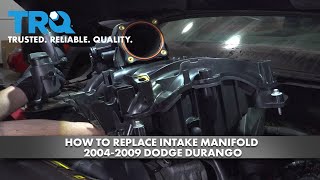
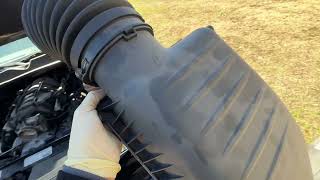
🎬 Watch: Detailed 5.7 Hemi intake manifold removal and gasket replacement.Helpful Videos
Technical Specifications
Fitment is specific to engine size: 3.7L V6, 4.7L V8, or 5.7L HEMI V8. Gasket materials are typically molded rubber on a carrier frame.
We Have This Part in Stock



The information in this article is provided for general reference and educational purposes only. Vehicle specifications, procedures, and part compatibility can vary by production date, trim level, and region. Always consult your vehicle's factory service manual and verify part numbers before purchasing or performing repairs. Safety-critical components such as airbags, seat belts, and braking systems should be installed by a qualified professional.
- Dodge Durango: