

Ford F-150 (2004-2010) Throttle Position Sensor Replacement and Diagnosis
Understanding common throttle position sensor issues in your 2004-2010 F-150 and how to choose the right replacement part.
- Symptoms like stalling and limp mode are common and can be dangerous.
- Replacing only the sensor is possible and much cheaper than a full throttle body replacement.
- The factory mounting screws are prone to breaking; heating them with a soldering iron is a common trick for safe removal.
- A 'relearn' procedure is mandatory after installation to ensure proper idle and performance.
Is it the Throttle Position Sensor or the Whole Throttle Body?
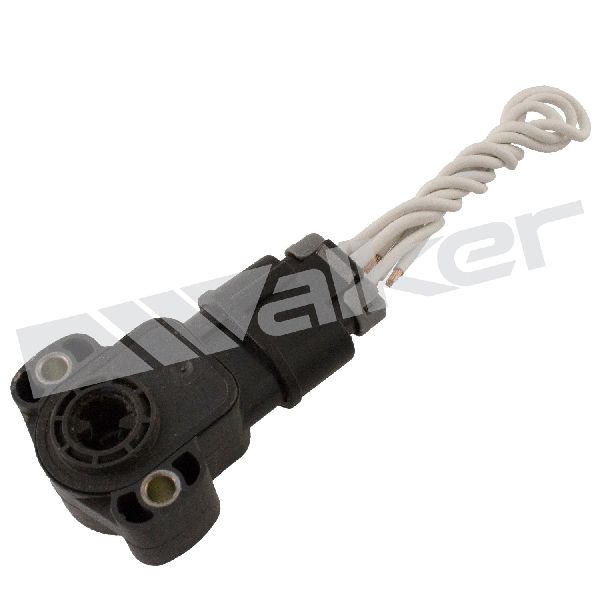
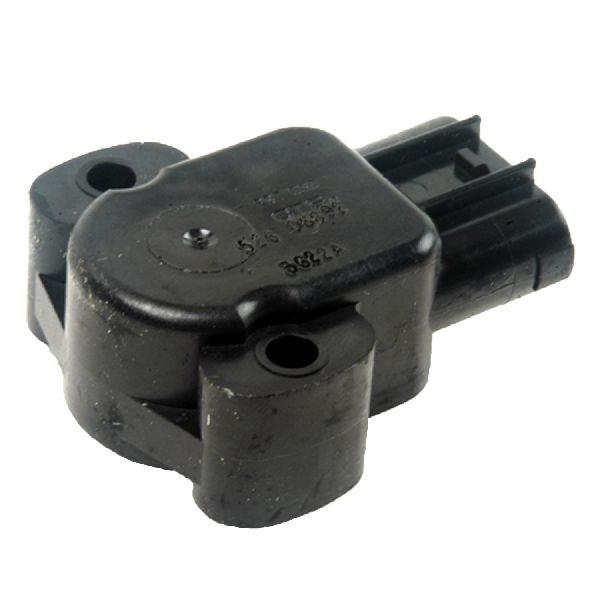
On the 2004-2010 F-150, the Throttle Position Sensor (TPS) is mounted directly to the throttle body. While Ford dealers might have once recommended replacing the entire throttle body assembly, the aftermarket provides the standalone TPS, which is a common and much more affordable repair. Forum discussions confirm that many owners successfully replace only the sensor. However, be aware that symptoms of a bad TPS can be identical to a failing electronic throttle body, so proper diagnosis is key.
Symptoms of a Failing Throttle Position Sensor
A bad TPS can make your truck feel unpredictable and unsafe to drive. Here are the most common signs F-150 owners report:
🎬 Watch a breakdown of common symptoms and replacement costs.- Sudden Stalling or Shutting Off: The engine may stall unexpectedly while driving or at a stop light.
- Limp Mode: The truck may enter a reduced power mode, where the throttle pedal does nothing, often accompanied by a wrench light on the dash.
- Hesitation and Poor Acceleration: When you press the gas, the truck may hesitate, buck, or accelerate slowly.
- Rough or Surging Idle: The engine idle may be unstable, fluctuating up and down.
- Sudden Surges in Speed: The truck might unexpectedly speed up without you pressing the pedal further.
- Check Engine Light: A failing TPS will often trigger the check engine light with codes like P2135, P0121, P2104, or P2106.
Choosing the Right Aftermarket TPS Brand
When replacing your TPS, you have several options. The quality can vary, so it's important to choose wisely. Going with a well-known, reputable brand often leads to a more reliable, longer-lasting repair.
| Brand Tier | Brands | General Assessment |
|---|---|---|
| Premium Brands | Delphi, NGK (NTK), Motorcraft | Often considered OEM-quality or equivalent. These brands have a strong reputation for reliability and are a preferred choice for many mechanics and knowledgeable owners. Delphi and NTK are well-regarded sensor manufacturers. |
| Standard Aftermarket | Dorman, Standard Ignition (SMP), Walker Products | These are well-known aftermarket brands that offer a balance of quality and value. Dorman is known for providing solutions to common OEM problems, while SMP and Walker are established names in engine management parts. |
| Economy Options | Replacement, True Tech, Global Parts, URO Parts | These brands typically offer the lowest price point. While they can be a budget-friendly solution, their long-term durability and sensor accuracy may not match that of premium or standard brands. |
Installation and Relearn Procedure
Replacing the TPS is a DIY-friendly job that takes less than an hour. The main challenge is that the factory screws are often secured with a strong threadlocker, making them difficult to remove without stripping. Many DIYers recommend using a soldering iron to heat the screw heads for about a minute, which loosens the threadlocker and allows for easy removal. After installing the new sensor, you must perform a throttle body relearn procedure. This allows the truck's computer to calibrate to the new sensor. A common method involves disconnecting the battery, touching the negative and positive cables together to drain the system's memory, and then letting the engine idle for a set period to relearn its parameters.
🎬 Follow this video to perform a proper throttle relearn procedure.Frequently Asked Questions (FAQ)
Do I need to replace the whole throttle body?
Not usually. For the 2004-2010 F-150, aftermarket throttle position sensors are available separately. Replacing only the sensor is a common and cost-effective repair, although symptoms can sometimes be caused by the throttle body itself.
What tools do I need to replace the TPS?
You'll typically need basic hand tools like a socket set (8mm, 10mm), a T20 Torx bit, and screwdrivers. A soldering iron is highly recommended to heat the mounting screws and avoid breaking them.
🎬 See a step-by-step guide to replacing the sensor yourself.What is a throttle relearn and is it necessary?
A throttle relearn procedure is essential after replacing the TPS. It resets the computer's memory and allows it to learn the new sensor's idle and range values. Skipping this step can lead to a rough idle, stalling, and poor performance. The process typically involves disconnecting the battery and following a specific sequence of key cycles and idling.
Are there any recalls for the F-150 throttle position sensor?
There are no specific recalls for the throttle position sensor itself on the 2004-2010 F-150. However, there have been investigations and recalls on related components for other model years concerning issues like stuck throttles due to speed control cables, but not for the electronic TPS failing. No relevant TSBs were found specifically for TPS failure on this generation, though general throttle body issues are widely discussed by owners.
Helpful Videos


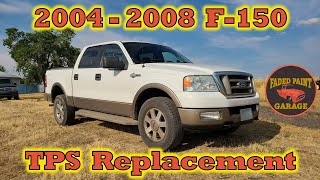
Technical Specifications
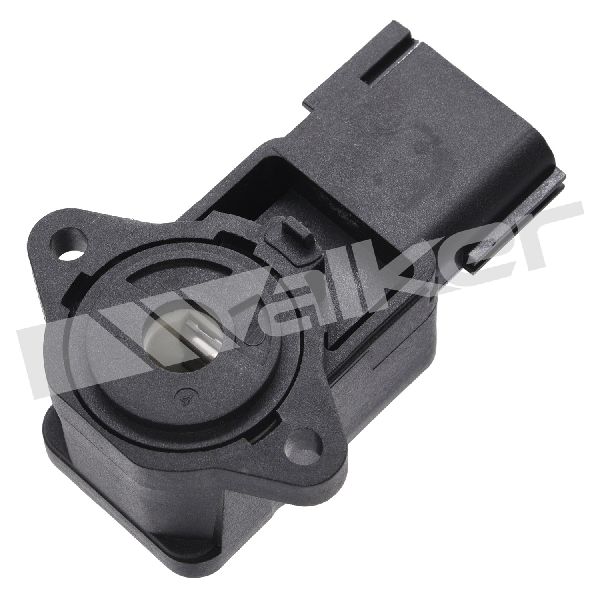
OEM Part Numbers: 6L2Z-9B989-D 3L5Z-9B989-AA 4W4Z-9B989-AA 6L2Z-9B989-A 6L2Z-9B989-B
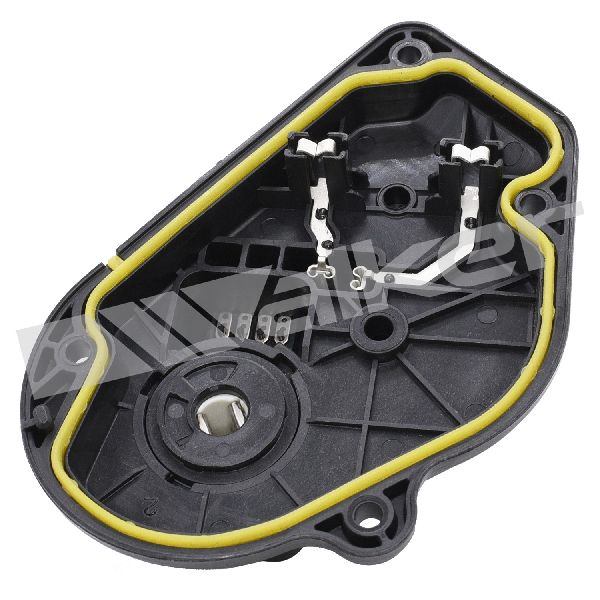
The sensor is a bolt-on, 4-blade terminal potentiometer mounted to the throttle body. It provides a variable voltage signal to the PCM corresponding to the throttle plate's angle.
We Have This Part in Stock


The information in this article is provided for general reference and educational purposes only. Vehicle specifications, procedures, and part compatibility can vary by production date, trim level, and region. Always consult your vehicle's factory service manual and verify part numbers before purchasing or performing repairs. Safety-critical components such as airbags, seat belts, and braking systems should be installed by a qualified professional.
- Ford F-150: