

Ford F-150 Throttle Body Guide for 2004-2017 Models
Understanding common throttle body problems on your F-150 and how to choose the right aftermarket replacement.
- Sudden power loss ('limp mode') is a classic sign of a failing electronic throttle body on 2004-2017 F-150s.
- Ford acknowledged widespread issues with a Customer Satisfaction Program (16B32) for some 2015-16 models.
- An aftermarket replacement is a cost-effective solution; even original parts were prone to failure.
- A 'relearn' procedure is required after installation to ensure proper idle and performance.
Is Your F-150 Stalling or Losing Power? It Could Be the Throttle Body

If you own a 2004-2017 Ford F-150, you might experience sudden power loss, a rough idle, or the truck going into "limp mode." These are common signs of a failing electronic throttle body (ETB). This issue was so widespread that Ford issued a Customer Satisfaction Program (16B32) for certain 2015-2016 F-150s to replace the throttle body due to contamination of internal motor contacts. When this part fails, it can be a major safety concern, especially if it happens in traffic.
Limp Mode: A Common F-150 Throttle Body Symptom
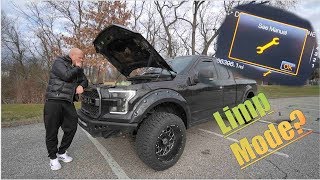
A failing throttle body can trigger the powertrain control module (PCM) to enter a Failure Mode Effects Management (FMEM), often called "limp mode." You'll notice a wrench icon on the dash, a sudden loss of acceleration, and the engine will run at a fixed, low RPM. While power steering and brakes will still work, the truck will have severely limited power, just enough to pull over safely. 🎬 Watch: Why your F-150 keeps going into limp mode Restarting the truck can sometimes temporarily clear the issue, but it will likely return until the throttle body is repaired or replaced.
Known Issues, TSBs, and Recalls
While not a formal recall for all years, Ford acknowledged issues with the ETB across many models. Customer Satisfaction Program 16B32 specifically addressed 2015-2016 F-150s, among other Ford vehicles, for ETBs that could develop internal electrical resistance. This would cause the malfunction indicator lamp to light up, set diagnostic trouble codes (DTCs) like P2111 and P2112, and put the vehicle into limp mode. Forum discussions among owners of F-150s from various years within the 2004-2017 range confirm that these symptoms are very common.
Choosing an Aftermarket Replacement

When your F-150's throttle body fails, you have a choice between an original equipment manufacturer (OEM) part from Ford and an aftermarket part. Aftermarket parts are often more affordable than their OEM counterparts. For a part like the electronic throttle body, where even the original parts had known issues, a quality aftermarket replacement can be a reliable and cost-effective solution. Brands like Dorman and the "Replacement" brand engineer their parts to meet or exceed original specifications. Many owners have successfully fixed their truck's issues using readily available aftermarket options.
Don't Forget the Relearn Procedure
After replacing the throttle body or even just disconnecting the battery, a "relearn" procedure is necessary. This allows your truck's computer to calibrate itself to the new part and learn the new idle and throttle positions. Skipping this step can lead to a rough idle, poor performance, and incorrect shifting. The procedure is simple and can be done without special tools.
| Part Type | Estimated Cost |
|---|---|
| New OEM | $371 - $421 |
| New Aftermarket (Replacement Brand) | $98 - $122 |
| Shop Labor | $81 - $140 |
Frequently Asked Questions

Can I just clean my F-150's throttle body?
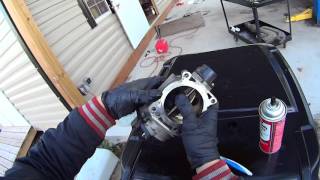
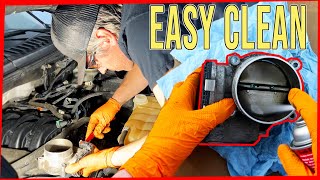
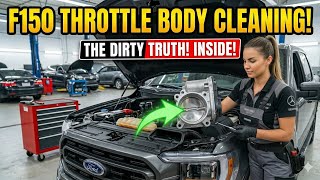
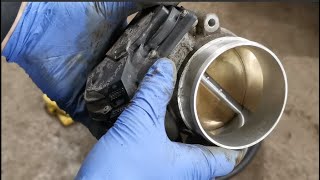
Sometimes, cleaning carbon buildup from the throttle body can resolve minor issues like a rough or sticky idle. However, if the problem is electrical, which is common in these F-150s, cleaning will not fix it and replacement is necessary. If you do clean it, you must remove it from the vehicle first; do not spray cleaner directly into it while it's installed, as this can damage the electronics.
🎬 See how to clean your throttle body in under 45 minutesWhat is the throttle body "relearn" procedure?
After installing a new throttle body, you need to help the truck's computer adapt. A common method involves disconnecting the battery for several minutes to clear the computer's memory. After reconnecting, start the engine and let it idle for several minutes to reach operating temperature. Then, let it idle for another minute with the A/C on, and another minute in Drive (with your foot on the brake). Finally, drive the vehicle for about 10 miles to complete the process.
🎬 Watch this step-by-step electronic throttle body calibration procedureIs an aftermarket throttle body as good as the Ford OEM part?
Quality aftermarket brands are designed to be as durable as OEM parts but are typically more affordable. Given the known failure rates of the original Ford electronic throttle bodies from this era, a reputable aftermarket part is a very practical choice for repair. Many owners report success with aftermarket brands, fixing common issues like limp mode and rough idling.
What are the main differences between F-150 generations in this range?
The electronic throttle body was introduced on the F-150 with the 2004 model year and its 5.4L 3-valve engine. While the part's basic function remained the same through 2017, different engines (like the 4.6L, 5.4L, 5.0L, and 3.5L EcoBoost) use different throttle body designs and part numbers. It is crucial to order the correct part for your specific year and engine. Ford also released revised parts over the years to address failure points.
Helpful Videos

Technical Specifications
OEM Part Numbers: 9L3Z-9E926-A BL3Z-9E926-B FL3Z-9E926-B
Electronic throttle body with integrated throttle position sensor (TPS) and actuator motor. Part number and bore size vary by engine (e.g., 4.6L, 5.4L, 5.0L, 3.5L EcoBoost).

The information in this article is provided for general reference and educational purposes only. Vehicle specifications, procedures, and part compatibility can vary by production date, trim level, and region. Always consult your vehicle's factory service manual and verify part numbers before purchasing or performing repairs. Safety-critical components such as airbags, seat belts, and braking systems should be installed by a qualified professional.
- Ford F-150: