

A Guide to the Manifold Absolute Pressure Sensor for the 2005-2009 Hyundai Tucson
Fix poor performance and bad gas mileage by understanding your Tucson's MAP sensor and choosing the right replacement part.
- A failing MAP sensor on a 2005-2009 Tucson commonly causes a check engine light (P0106, P0107, P0108), poor fuel economy, rough idle, and hesitation.
- Replacement is a very simple DIY job, taking about 15 minutes with a single 10mm bolt and one electrical plug.
- High-quality aftermarket brands like NGK/NTK or Standard Ignition offer reliable, OE-level performance for significantly less than a genuine Hyundai part.
- Before replacing the sensor, quickly check for cracked or loose vacuum hoses, as a vacuum leak can cause identical symptoms.
Is Your Tucson Running Rough? It Could Be the MAP Sensor.
If your 2005-2009 Hyundai Tucson is experiencing symptoms like poor fuel economy, a rough idle, hesitation when you accelerate, or even black smoke from the exhaust, a faulty Manifold Absolute Pressure (MAP) sensor could be the culprit. This sensor is a key input for your engine's computer, and when it fails, it can cause a variety of noticeable problems. Fortunately, replacing it is a straightforward and affordable job that most owners can do themselves.
Symptoms of a Failing MAP Sensor
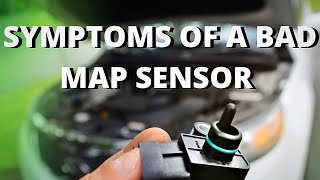
A bad MAP sensor sends incorrect information to the engine's computer, leading to an improper air-fuel mixture. 🎬 Watch a detailed breakdown of common bad MAP sensor symptoms. This can manifest in several ways:
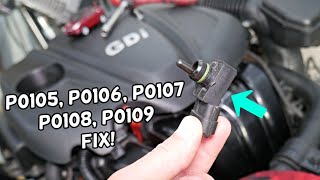
- Check Engine Light: This is often the first sign. The computer will store trouble codes, most commonly P0106, P0107, or P0108.
- Poor Fuel Economy: The computer may inject too much fuel, thinking the engine is under more load than it is, causing your gas mileage to drop.
- Rough Idle: The engine may shake or vibrate at idle because the air-fuel mixture is unstable.
- Hesitation or Sluggish Acceleration: Your Tucson might feel powerless or slow to respond when you press the gas pedal.
- Black Smoke from Exhaust: This is a clear sign that the engine is running rich (too much fuel), which can be caused by a faulty MAP sensor.
- Failed Emissions Test: An incorrect air-fuel ratio will lead to higher-than-normal emissions.
Pro Tip: Check for Vacuum Leaks First
Symptoms of a vacuum leak can be very similar to those of a bad MAP sensor. Before replacing the sensor, it's a good idea to inspect all vacuum hoses connected to the intake manifold for cracks, splits, or loose connections. A simple visual check can sometimes save you the cost of a new part.
Installation: A Simple DIY Task
Replacing the MAP sensor on the 2.0L four-cylinder engine found in the 2005-2009 Tucson is an easy job that requires minimal tools. The sensor is located on the black plastic intake manifold, right next to the throttle body. It is held in place by a single 10mm bolt and has one electrical connector. The entire process of unplugging the connector, removing the bolt, swapping the sensor, and reinstalling should take no more than 15-20 minutes.
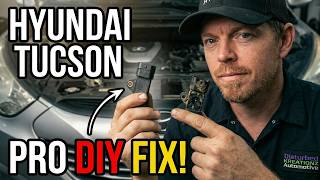
🎬 See how to replace your MAP sensor like a pro.Choosing the Right Aftermarket MAP Sensor
For a simple electronic sensor like this, you don't necessarily need to pay dealership prices for a genuine Hyundai part. Many aftermarket brands offer excellent quality and reliability at a much lower cost. Here's a breakdown of the available brands:
- Premium Brands (NGK/NTK, Standard Ignition): These brands are well-regarded in the industry for producing OE-quality or better sensors. NGK (under their NTK sensor branding) and Standard Motor Products (SMP) have a strong reputation for reliability and undergo extensive testing. Choosing one of these is a safe bet for long-term performance.
- Standard Brands (Spectra, Facet, Vemo): These brands offer a good balance of price and quality. Spectra Premium is a common aftermarket brand, though some user reviews mention fitment issues with grommets or seals, so inspect the part carefully. Facet is a European brand that markets its parts as meeting high-quality standards.
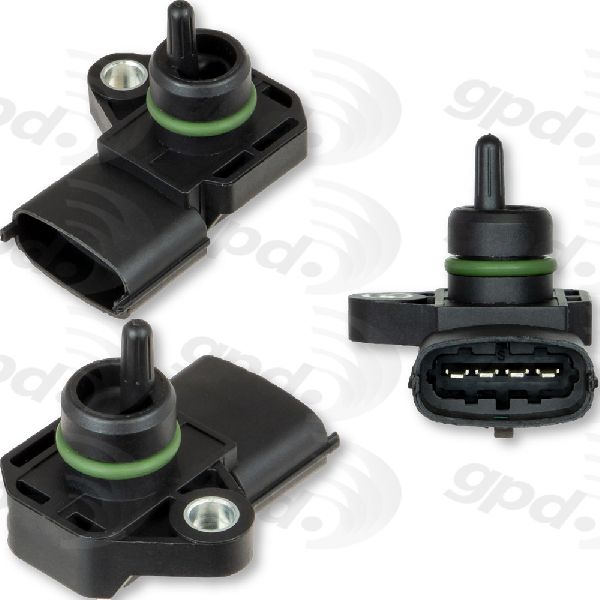
- Value Brands (Global Parts, Unbranded): These are typically the most affordable options. While tempting, quality can be inconsistent. For a critical sensor like the MAP, it's often worth spending a little more for a brand with a proven track record to avoid potential issues and the need for another replacement down the road.
Cost of Replacing a 2005-2009 Tucson MAP Sensor
| Part/Service | Estimated Cost |
|---|---|
| New OEM (Hyundai) | $135 - $195 |
| New Aftermarket | $36.96 - $83.16 |
| Shop Labor | $50 - $100 |
| Total (DIY Aftermarket) | $36.96 - $83.16 |
| Total (Shop-Installed OEM) | $185 - $295+ |
Frequently Asked Questions
Where is the MAP sensor located on my 2005-2009 Tucson?
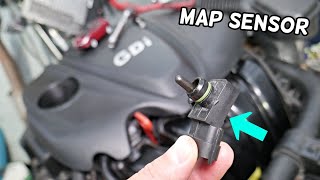
For the 2.0L engine, the MAP sensor is on top of the black plastic intake manifold, near the engine's firewall, right next to the throttle body. It's a small black plastic sensor held in by one 10mm bolt.
🎬 Video guide to locating and removing the Tucson MAP sensor.Can I drive my Tucson with a bad MAP sensor?
Yes, but it's not recommended for long. The vehicle will likely run poorly, get bad gas mileage, and have higher emissions. Driving for an extended period with a very rich fuel mixture can potentially damage the catalytic converter, which is a much more expensive repair.
Do I need to disconnect the battery to change the MAP sensor?
It is always a good safety practice to disconnect the negative battery terminal before working on any electronic component of your vehicle. This prevents any accidental short circuits.
What is the difference between a MAP and a MAF sensor?
A MAP (Manifold Absolute Pressure) sensor measures pressure in the intake manifold, while a MAF (Mass Air Flow) sensor measures the volume and density of air entering the engine. The 2005-2009 Tucson with the 2.0L engine uses a MAP sensor and does not have a MAF sensor.
Are there any recalls for the MAP sensor on the 2005-2009 Tucson?
Based on searches of the National Highway Traffic Safety Administration (NHTSA) database, there are no specific recalls or technical service bulletins (TSBs) directly related to MAP sensor failure for this vehicle generation.
Helpful Videos

Technical Specifications
OEM Part Numbers: 39300-22600 39300-38110
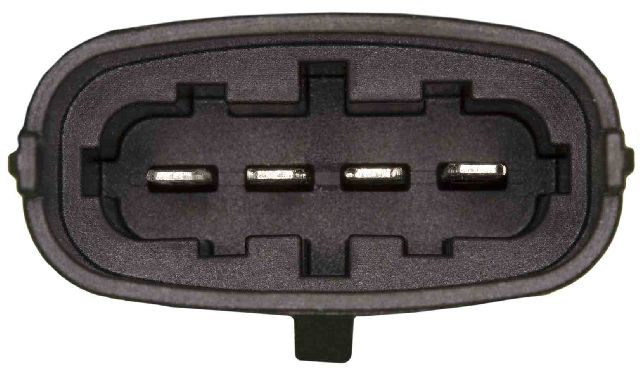
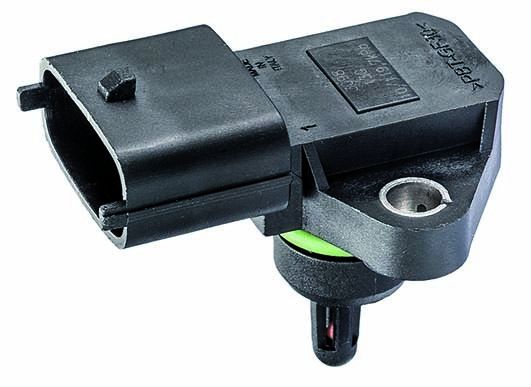
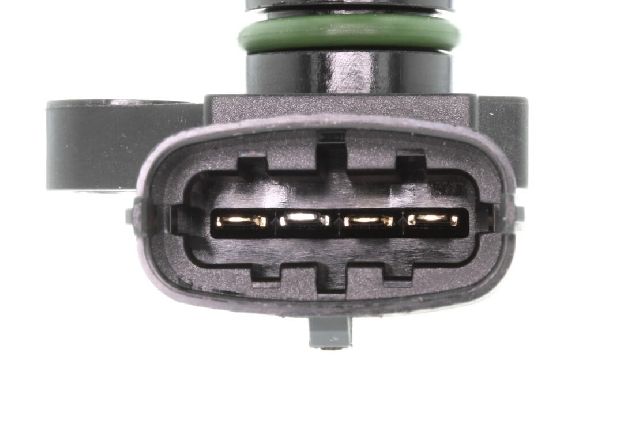
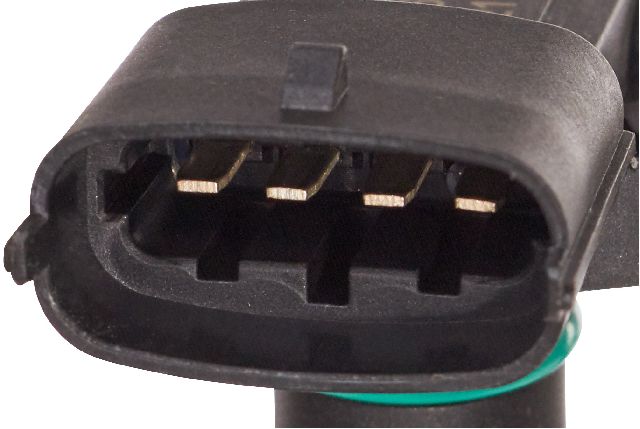
Fits 2005-2009 Hyundai Tucson with 2.0L L4 engine. The sensor is a 3-pin, plastic body component that mounts directly to the intake manifold.
We Have This Part in Stock


The information in this article is provided for general reference and educational purposes only. Vehicle specifications, procedures, and part compatibility can vary by production date, trim level, and region. Always consult your vehicle's factory service manual and verify part numbers before purchasing or performing repairs. Safety-critical components such as airbags, seat belts, and braking systems should be installed by a qualified professional.
- Hyundai Tucson:
- 🎬 Helpful Videos
- 🛍️ Shop This Part
- Is Your Tucson Running Rough? It Could Be the MAP Sensor.
- Symptoms of a Failing MAP Sensor
- Pro Tip: Check for Vacuum Leaks First
- Installation: A Simple DIY Task
- Choosing the Right Aftermarket MAP Sensor
- Cost of Replacing a 2005-2009 Tucson MAP Sensor
- Frequently Asked Questions
- 🎟️ Get 5% Off