

A Guide to the Engine Coolant Thermostat for the 2005-2011 Saab 9-5
Solving common engine temperature problems in your Saab 9-5 starts with the right thermostat.
- First, confirm if you have a 1st Gen (2005-2009) or 2nd Gen (2010-2011) 9-5, as the parts are different.
- A thermostat stuck open is the most common failure, causing a low temp reading and poor heat.
- For reliability, choose an OEM-equivalent brand like Wahler, Mahle, or Calorstat over budget options.
- During installation, ensure the thermostat's bleeder valve points up and that all ground wires are cleaned and reconnected securely.
Is Your Saab a 2005-2009 or a 2010-2011? It Matters.
STOP: You must identify your vehicle's generation before buying a part. The 2005-2011 year range covers two different Saab 9-5 models.
- First Generation (2005-2009): These cars typically have the 2.3L 4-cylinder engine (B235). The thermostat is a simple, standalone part.
- Second Generation (2010-2011): These cars use different engines, like the 2.0T or 2.8T V6. The thermostat may be a different design or part of a complete housing assembly.
Parts are NOT interchangeable between these generations. Always verify the part fits your specific year and engine.
Symptoms of a Failing Thermostat
Thermostats are designed to fail in a safe way, which usually means they get stuck open. However, they can also fail in the closed position.
- Stuck Open (Most Common): The most frequent failure. Coolant flows to the radiator constantly. Symptoms include the engine temperature gauge never reaching the middle (9 o'clock) position, especially on the highway. You will also notice poor heater performance in the cabin and reduced fuel economy, as the engine's computer keeps it in a 'warm-up' mode.
- Stuck Closed (More Serious): This is less common but more dangerous. The thermostat blocks coolant from reaching the radiator, causing the engine to overheat quickly. If you see the temperature gauge spike into the red, pull over immediately to prevent severe engine damage.
- Erratic Temperature: The temperature gauge may fluctuate wildly, indicating the thermostat is struggling to regulate properly.
Choosing the Right Aftermarket Thermostat
For a critical part like a thermostat, quality matters. While many owners recommend using only Genuine Saab parts to guarantee function, several aftermarket brands are available with varying levels of quality.
Tier 1: OEM & OEM-Equivalent Brands
These are the safest bet for reliability. Brands like Wahler and Mahle/Behr are often the original equipment manufacturers for Saab and other European cars. Calorstat is another well-regarded European OEM supplier. Choosing one of these is the closest you can get to dealer quality.
Tier 2: Reputable Aftermarket Brands
Gates is a widely known brand that generally has a good reputation for cooling system components. While not always identical to OEM, they are a solid choice for a balance of price and quality. Facet is another option that some owners have used successfully.
Tier 3: Use With Caution
Some brands have very mixed reviews in the Saab community. Motorad thermostats are a point of debate; some users have no issues, while many others report premature failures. Beck Arnley is a re-boxer, meaning you could get a quality part or a lower-grade one in their box. Stant thermostats have a generally poor reputation among Saab owners for inconsistent performance.
Pro Tip for 1st Gen (2.3L) Owners: A known issue with some aftermarket thermostats is that they interfere with the coolant temperature sensor. The tip of the sensor can hit the thermostat, preventing it from closing fully and causing a constant low-running temperature. If this happens, the common fix is to add small copper washers under the sensor to space it out slightly.
Installation Tips & Known Issues
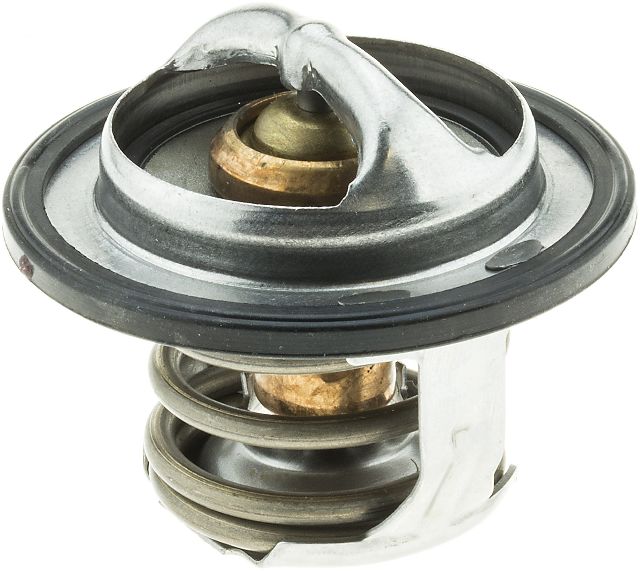
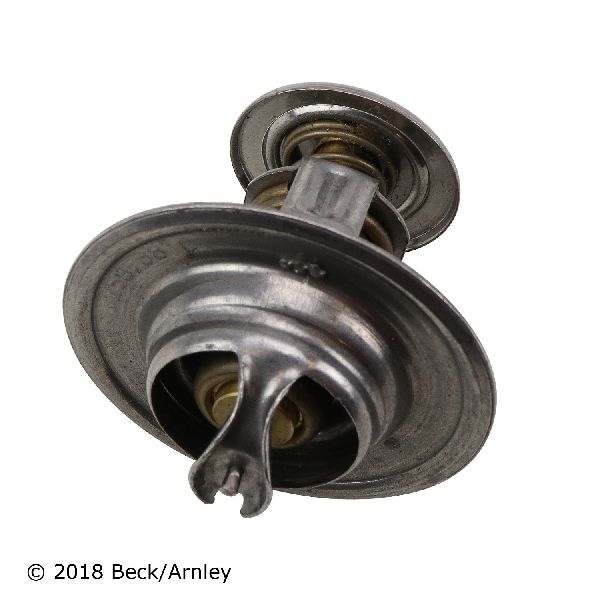
- Bleeder Valve Position: The thermostat has a small jiggle pin or bleeder valve. This MUST be installed at the top (12 o'clock position) to allow trapped air to escape the system. If installed incorrectly, you will have cooling issues.
- Ground Wires: The thermostat housing on the 2.3L engine is a critical grounding point for the electrical system. Make sure to clean the contact points and securely re-fasten the ground wires. A bad connection here can cause a no-start condition.
- Recalls & TSBs: There are no known recalls or Technical Service Bulletins (TSBs) from Saab or the NHTSA specifically for the engine coolant thermostat on these models.
| Part Type | Estimated Cost |
|---|---|
| New Aftermarket Thermostat | $14 - $57 |
| New OEM Thermostat | $60 - $90 |
| Shop Labor Cost | $150 - $250 |
| Total Shop Replacement (Aftermarket) | $164 - $307 |
Frequently Asked Questions
Which temperature thermostat should I buy?
You should always use the OEM specified temperature, which for most Saab 9-5 models is 89°C (192°F) or sometimes listed as 88°C. Do not use a 'cooler' or 'hotter' thermostat, as this will negatively affect engine performance and efficiency.
Do I need to replace the thermostat housing?
On the first-generation 9-5 (2.3L), you typically only replace the thermostat itself and the rubber seal. The housing is reusable unless it is cracked or corroded. On the second-generation 9-5 (2010-2011), some replacement parts come as a complete thermostat and housing assembly. Inspect your original housing for damage when replacing the thermostat.
Why is my car still not warming up after replacing the thermostat?
First, confirm the thermostat was installed with the bleeder valve at the top. Second, if you used an aftermarket part on a 1st-gen 9-5, check for the temperature sensor interference issue mentioned in the Pro Tip section. Finally, a defective new part is possible, especially with lower-quality brands.
Should I flush the coolant when I replace the thermostat?
Yes, it is a great time to do so. You will lose a significant amount of coolant during the replacement anyway. Draining and replacing the coolant ensures the entire system is clean and has the proper corrosion protection.
Technical Specifications
OEM Part Numbers: 30577561 12622410 12638186
Standard opening temperature: 88°C - 89°C (192°F)
We Have This Part in Stock


The information in this article is provided for general reference and educational purposes only. Vehicle specifications, procedures, and part compatibility can vary by production date, trim level, and region. Always consult your vehicle's factory service manual and verify part numbers before purchasing or performing repairs. Safety-critical components such as airbags, seat belts, and braking systems should be installed by a qualified professional.
- Saab 9-5: