

A Guide to the 2005-2014 Volkswagen Jetta Secondary Air Injection Sensor
Don't let a check engine light for the secondary air system sideline your Jetta; understand the problem and find the right part.
- A check engine light with code P0411 does not automatically mean the sensor is bad; the entire system (pump, hoses, fuse, valve) must be checked.
- A loud 'jet engine' noise on cold starts is a classic sign of a failing air pump, which is a separate component from the sensor.
- Volkswagen issued a Technical Service Bulletin (TSB) acknowledging that the sensor can fail due to contamination.
- For a reliable repair, choose a quality aftermarket brand like Standard Ignition or an OEM part, and verify if your car needs just the sensor or a hose assembly kit.
Understanding Failures in the Jetta's SAI System
When the check engine light comes on for the secondary air system, the sensor itself isn't always the culprit. The entire system is known for a few common issues. The most frequent problem is a failed secondary air pump, often caused by moisture getting inside after the one-way check valve (or 'combi valve') fails. This can cause a loud whining or "jet engine" noise for about a minute after a cold start. Other potential causes include a bad relay, a blown fuse, or cracked and leaking plastic hoses. A diagnostic trouble code like P0411 (Incorrect Flow Detected) points to a system problem, not necessarily a bad sensor.
🎬 Watch: Expert diagnostics for P0410 and P0411 system codesDiagnose Before You Replace
The P0411 code is the most common indicator of a problem, but it can be caused by any part of the system. Before buying a new sensor, it's critical to inspect the air pump, the combi valve, all related fuses, and the hoses for cracks or leaks. A smoke test can be very effective at finding hidden leaks 🎬 See this simple fix for Jetta P0411 airflow issues in the hoses. Replacing only the sensor without checking the rest of the system may not fix the problem.
Choosing the Right Aftermarket Sensor

When shopping for a new aftermarket sensor for your 2005-2014 Jetta, you will find a few quality tiers. It is important to know what you are buying.
- OEM Parts: Original Equipment Manufacturer parts are what your car was built with. They offer guaranteed fit and quality but come at the highest cost. For the Jetta, the OEM sensor may be sold as part of a hose assembly, especially for earlier models.
- Standard Ignition: This is a well-known aftermarket brand that has been around for a long time. Their quality is generally considered good, often close to OEM standards, providing a reliable option without the high dealer price tag. They are a solid choice for a dependable repair.
- Replacement Brand: This category represents more generic, value-oriented parts. While they are the most affordable, the quality can be inconsistent. These parts can be a good option for a budget-conscious repair, but may not have the same longevity as an OEM or premium aftermarket part.
Cost of Replacing a Secondary Air Injection Sensor

| Part Type | Estimated Cost |
|---|---|
| New OEM | $150 - $300+ |
| New Aftermarket (Your Price Range) | $48.57 - $275.10 |
| Shop Labor | $100 - $200 |
Pro Tip: On some 2005-2008 models, the sensor can be replaced separately from the hose. On later models, or if the hose is damaged, you may need to buy a kit that includes the hose and an adapter harness for the new sensor. Always check which version your specific vehicle needs.
Frequently Asked Questions (FAQ)

What are the main symptoms of a bad secondary air injection sensor?
The primary symptom is an illuminated Check Engine Light. You will likely not notice any change in how the car drives or performs, as the system only runs for a short time after a cold start. The issue is most often found during a state emissions inspection, which the car will fail with this light on.
What do codes like P0411, P2431, P2432, or P2433 mean?
P0411 indicates that the system has detected incorrect airflow. Codes P2431, P2432, and P2433 specifically point to a problem with the sensor's electrical circuit, such as an out-of-range reading, or a circuit low or high signal. A Volkswagen Technical Service Bulletin (TSB) noted that these sensor codes could be caused by contamination inside the sensor.
Can I clean the secondary air injection sensor?
While some owners may attempt to clean the sensor, a TSB from Volkswagen suggests that contamination by foreign particles is a cause of failure. If the sensor is contaminated internally and throwing a code, replacement is the recommended and most reliable repair.
Is the problem the sensor or the air pump?
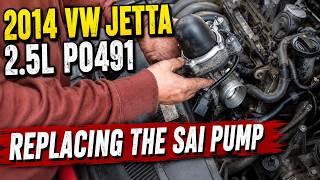
It can be difficult to tell without proper diagnosis. A very loud "vacuum cleaner" or "jet engine" noise on a cold start points directly to a failing air pump. If you don't hear the pump run at all, the issue could be the pump motor, 🎬 Follow this step-by-step guide to replacing a failed air pump its fuse, or the relay. If the pump sounds normal, the problem is more likely to be a leak in a hose or a faulty sensor or combi valve.
Helpful Videos
Technical Specifications
OEM Part Numbers: 07K906051 07K906051B 07K198125
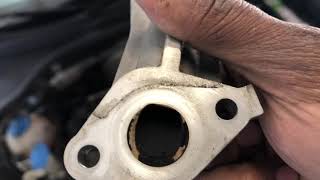
This is a 3-pin pressure sensor that monitors the airflow from the secondary air injection pump. Some model years may require an adapter harness for the electrical connector if replacing an older part with an updated design.
We Have This Part in Stock


The information in this article is provided for general reference and educational purposes only. Vehicle specifications, procedures, and part compatibility can vary by production date, trim level, and region. Always consult your vehicle's factory service manual and verify part numbers before purchasing or performing repairs. Safety-critical components such as airbags, seat belts, and braking systems should be installed by a qualified professional.
- Volkswagen Jetta: