

BMW M5 (2005-2016) Engine Oil Level Sensor: A Guide for Owners
Your M5 doesn't have a dipstick, making this electronic sensor the only way to check your engine's lifeblood.
- Your 2005-2016 M5 has no dipstick; this sensor is the only way to check oil, making its accuracy critical.
- A faulty sensor can give false readings, leading to dangerous under- or over-filling of the engine.
- Replacement requires a full oil change, so it's best to replace a suspect sensor while performing routine maintenance.
- For early E60 M5s (pre-2007), upgrading to the revised, sheathed sensor design is highly recommended for better accuracy.
Understanding Your M5's Oil Level Sensor
On high-performance engines like the S85 V10 (2005-2010) and S63 V8 (2011-2016), proper oil level is not just important—it's everything. BMW removed the manual dipstick, relying completely on an electronic sensor to provide oil level readings through the iDrive display. This sensor also monitors oil temperature. While convenient, it means a faulty sensor leaves you flying blind, risking catastrophic engine damage from either too little or too much oil.
Common Symptoms of a Failing Sensor
A bad oil level sensor can be confusing. You might see warnings that come and go, or readings that don't make sense. Here’s what to watch for:
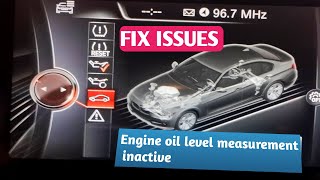
- "Oil Level Measurement Inactive" Message: 🎬 Watch this video to troubleshoot the inactive measurement error. This often means the sensor has failed completely or there's a communication issue with the car's computer.
- Fluctuating Readings: The iDrive might show the oil is full, then suddenly low, or vice-versa, without any oil being added or lost.
- Warning Light Stays On: If the yellow oil warning light stays on even after you know the oil level is correct, the sensor itself is likely the problem.
- Inability to Get a Reading: The measurement process might start but then fail before completion, sometimes getting stuck at 99%.
A Note on E60 M5 (2005-2007)
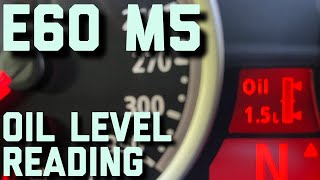
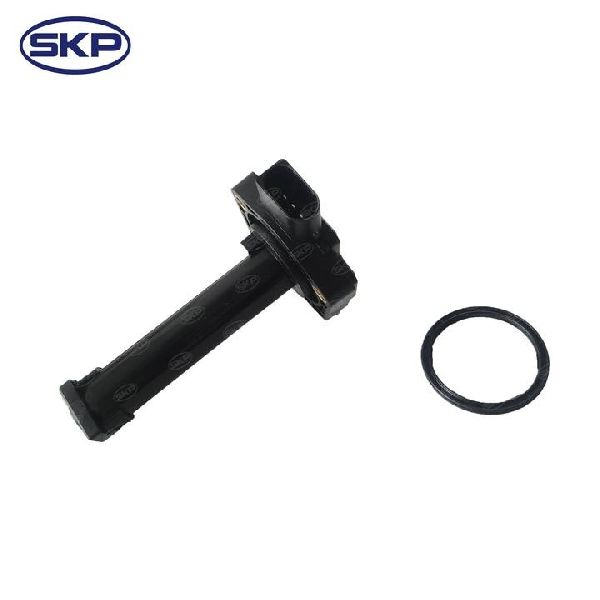
🎬 See why the E60 M5 sensor often gives false readings.Early E60 M5 models used a sensor with an exposed design. These are known to be sensitive to metallic particles in the oil (like from rod bearing wear), which can cause a short and lead to incorrect readings. Later-style revised sensors have a protective plastic sheath and are more reliable. If you have an early model, upgrading to the revised sensor during your next oil change is a smart move.
Choosing the Right Aftermarket Sensor
While a Genuine BMW sensor offers peace of mind, quality aftermarket options can provide reliable performance for less. Here’s how the common brands stack up for your M5:
Tier 1: OEM-Quality Aftermarket
- Vemo: Often considered a high-quality supplier for German vehicles, Vemo parts are a strong alternative to Genuine BMW. Many owners trust Vemo for critical sensors.
- NGK (NTK): While famous for spark plugs, NGK's sensor brand, NTK, is highly reputable. They produce a wide range of OE-quality sensors, and their oil level sensors are built to high standards.
Tier 2: Standard Aftermarket
- Standard Ignition (SMP): A well-known aftermarket brand that offers a balance of quality and value. Their parts are generally reliable for non-critical applications, but for the M5's oil sensor, sticking to a German OEM supplier like Vemo is often preferred by enthusiasts.
- Skyward: This is typically a budget-focused brand. While it may save money upfront, the risk of premature failure on such a critical component for an M5 engine may not be worth the savings.
Pro Tip: For a critical part like this on an M5, many owners and mechanics recommend using either a Genuine BMW part or a proven OEM supplier like Hella or Vemo. The cost savings of a budget part are quickly erased if it fails and leads to engine issues.
Cost to Replace the Engine Oil Level Sensor
| Part Type | Part Cost | Labor Cost (1-1.5 hrs) | Total Estimated Cost |
|---|---|---|---|
| New OEM | $230 - $320 | $172 - $252 | $402 - $572 |
| New Aftermarket | $185 - $437 | $172 - $252 | $357 - $689 |
| DIY (Part Only) | $185 - $437 | $0 | $185 - $437 |
Cost estimates are based on national averages and will vary by location and shop. OEM part prices sourced from dealer and parts retailer data. Labor costs are based on an estimated 1-1.5 hours of work.
Frequently Asked Questions (FAQ)
Can I replace the oil level sensor myself?
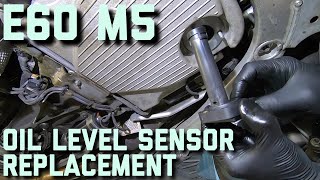
Yes, if you are comfortable changing your own oil. The sensor is located on the bottom of the oil pan and is held by three 10mm nuts. The job requires draining the engine oil, removing an under-tray and possibly a chassis brace, swapping the sensor, and then refilling with fresh oil. It's a straightforward but messy job.
🎬 Watch a step-by-step walkthrough of the sensor replacement process.Do I need to program the new sensor?
Generally, no. It is a direct replacement. However, on some F10 models, owners have reported needing a software reset or clearing fault codes with a diagnostic tool like ISTA for the new sensor to be recognized properly, especially if the "inactive" message was showing.
Are there any recalls for the M5 oil level sensor?
No specific recalls were found for the engine oil level sensor on the 2005-2016 BMW M5. There was a recall for a faulty *fuel* level sensor on some 2018 M5s and an oil *pump* recall for a very small number of 2013 models, but these are unrelated to the oil level sensor.
Is the sensor the same for the E60 M5 and F10 M5?
No, they use different part numbers and are not interchangeable. The E60 M5 (S85 V10) and F10 M5 (S63 V8) have different engine and oil pan designs. Always verify the part fits your specific year and model before purchasing.
Helpful Videos
Technical Specifications
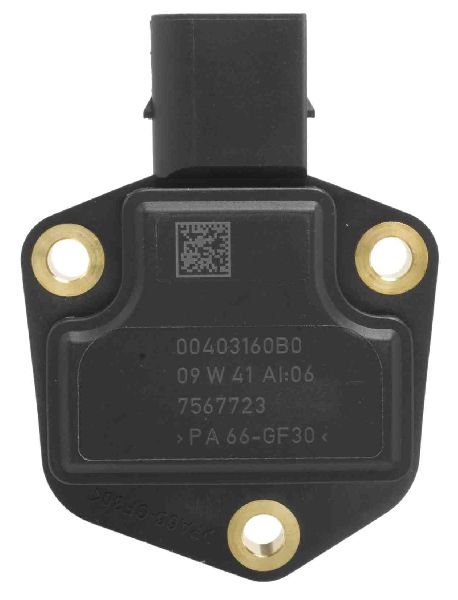
OEM Part Numbers: 12617607910 12618638755 12617567723
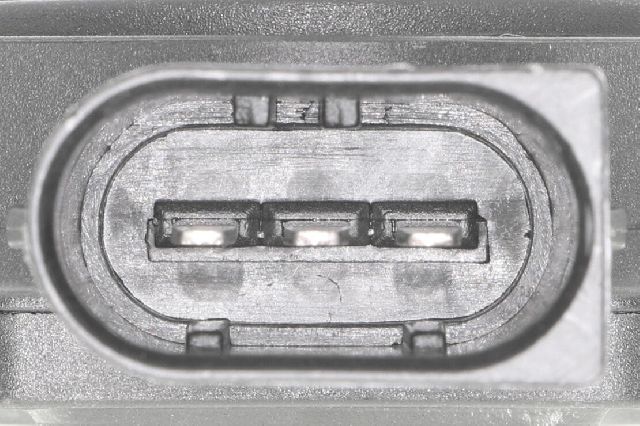
Mounts to the bottom of the engine oil pan with three bolts. Connects via a single electrical plug. Measures oil level and oil temperature.
We Have This Part in Stock


The information in this article is provided for general reference and educational purposes only. Vehicle specifications, procedures, and part compatibility can vary by production date, trim level, and region. Always consult your vehicle's factory service manual and verify part numbers before purchasing or performing repairs. Safety-critical components such as airbags, seat belts, and braking systems should be installed by a qualified professional.
- BMW M5: