

2006-2009 Mercury Milan Cylinder Head Temperature (CHT) Sensor Facts
Understanding the unique temperature sensor in your Milan and why a failure causes so many problems.
- Your Milan uses a Cylinder Head Temperature (CHT) sensor, not a standard coolant sensor.
- A common failure is caused by moisture in the connector, which may require replacing the pigtail harness along with the sensor.
- Replacement is easy on the 4-cylinder engine but very difficult and labor-intensive on the 3.0L V6.
- Driving with a faulty sensor is not recommended as it can mask a real overheating problem or put the car in limp mode.
Is it a CHT or ECT Sensor?
It's important to know that the 2006-2009 Mercury Milan uses a Cylinder Head Temperature (CHT) sensor, not a more common Engine Coolant Temperature (ECT) sensor. While they serve the same basic purpose of monitoring engine temperature, the CHT sensor measures the temperature of the engine's metal head directly. This means it can still provide a reading even if there's a major coolant leak, offering a last line of defense against severe engine damage.
Symptoms of a Failing CHT Sensor
When the CHT sensor fails, it sends incorrect data to the engine's computer, leading to a variety of noticeable issues. You might experience one or more of the following:
- Constant Cooling Fan Operation: The most common symptom is the engine cooling fan running at full speed all the time, even right after a cold start. 🎬 See why your radiator fan stays on all the time This is the computer's fail-safe response to a signal it thinks is an overheating engine.
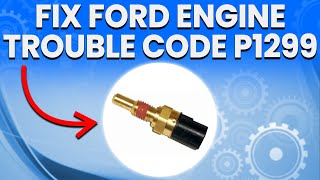
- Check Engine Light: A faulty sensor will trigger the check engine light. You may find diagnostic trouble codes (DTCs) like P1289 (CHT Sensor Circuit High Input) or P1299 (Cylinder Head Overtemperature Protection Active). 🎬 Watch: How to fix the P1299 overtemperature protection code
- Poor Engine Performance: Your Milan may be hard to start, idle roughly, hesitate, or get noticeably worse gas mileage. In some cases, the engine may go into a reduced-power "limp mode."
- Inaccurate Temp Gauge: The temperature gauge on your dashboard may not work at all, or it might suddenly jump to "HOT" even when the engine is not actually overheating.
Known Issue: Water Intrusion
A Ford Technical Service Bulletin (TSB) was issued for a known problem where moisture can get into the CHT sensor's electrical connector. This causes corrosion and leads to false overheating signals, triggering the symptoms above. The fix often involves replacing not just the sensor but also the connector pigtail and sealing it properly.
Choosing an Aftermarket CHT Sensor
For the Milan, a quality aftermarket CHT sensor is a reliable and cost-effective alternative to an expensive OEM part. Since the original design was prone to moisture-related failure, an aftermarket replacement can be a durable solution. Standard replacement brands are designed to meet or exceed the original factory specifications for fit and function, ensuring an accurate temperature reading for your engine's computer. Given the low cost of the part, there is little benefit to sourcing a used sensor.
Replacement Cost
The cost to replace the CHT sensor varies dramatically based on which engine your Milan has. The part itself is inexpensive, but the labor can be high for the V6 engine.
| Part/Service | Estimated Cost |
|---|---|
| New Aftermarket CHT Sensor | $23.55 |
| Shop Labor (4-Cylinder) | $60 - $90 |
| Shop Labor (V6) | $250 - $400+ |
| New OEM CHT Sensor | $45 - $210 |
Pro Tip: The location of the sensor is the biggest factor in replacement cost. On 4-cylinder engines, it is fairly easy to access on the side of the cylinder head. On the 3.0L V6, however, the sensor is buried under the upper and lower intake manifolds, making it a much more labor-intensive job.
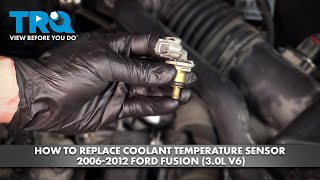
🎬 Watch: Step-by-step CHT sensor replacement for the 3.0L V6Frequently Asked Questions
Where is the CHT sensor located on the Mercury Milan?
On 2.3L 4-cylinder models, the sensor is on the side of the cylinder head, near the thermostat housing. On 3.0L V6 models, it is in the valley between the two cylinder heads, underneath the intake manifolds.
Can I drive my Milan with a bad CHT sensor?
It is not recommended. Your car may enter a low-power mode, or you could be ignoring a real overheating condition that could lead to catastrophic engine damage.
Will a bad CHT sensor cause my car to overheat?
A bad sensor itself won't cause overheating, but it can fail to warn you if the engine *is* actually overheating from another cause. It can also prevent the cooling fans from turning on when they should, which can lead to overheating.
Is there a recall for the coolant temperature sensor on the 2006-2009 Milan?
No, there are no specific recalls for the CHT sensor on these vehicles. Recalls for this model year typically relate to the ABS brake module or airbags.
Helpful Videos


Technical Specifications
This vehicle uses a Cylinder Head Temperature (CHT) sensor. Location varies by engine: accessible on the 2.3L I4, located under the intake manifold on the 3.0L V6.

The information in this article is provided for general reference and educational purposes only. Vehicle specifications, procedures, and part compatibility can vary by production date, trim level, and region. Always consult your vehicle's factory service manual and verify part numbers before purchasing or performing repairs. Safety-critical components such as airbags, seat belts, and braking systems should be installed by a qualified professional.
- Mercury Milan: