

Guide to the Intake Manifold Adjusting Unit (DISA Valve) for 2006-2011 BMW 323i
Understand the two DISA valves in your N52 engine before you replace one.
- Your 2006-2011 323i has two different DISA valves (large and small); you must identify which one is faulty before buying a replacement.
- A rattling noise from the engine is a serious symptom that could lead to engine damage if the valve breaks apart.
- Cheap aftermarket DISA valves have a reputation for early failure; weigh the cost savings against the risk of having to do the job again.
- Replacing the large (outer) valve is an easy DIY job, but replacing the small (inner) valve is much more difficult and may require removing the intake manifold.
Understanding Your 323i's Intake System
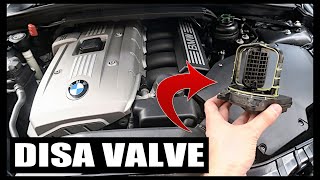
The N52 engine in the 2006-2011 BMW 323i uses a sophisticated 3-stage intake manifold to deliver its signature performance. This system relies on two separate Intake Manifold Adjusting Units, or DISA valves, to work correctly. There is a large, outer valve (BMW part #11617579114) and a small, inner valve (BMW part #11617560538). It is critical to identify which of the two valves has failed before ordering a replacement, as they are not interchangeable and have very different replacement procedures.
Symptoms of a Failing DISA Valve
A failing DISA valve can cause noticeable problems with your engine's performance. The symptoms you experience may vary depending on which valve is failing and how it has failed (stuck open, stuck closed, or broken).
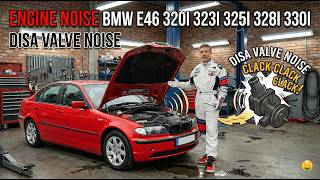
- Rattling or Grinding Noise: The most common and obvious sign is a rattling or buzzing sound coming from the left side of the engine. 🎬 Watch: Hear what a failing DISA valve sounds like This is often the sound of the plastic flap inside the valve vibrating or the internal motor gears stripping.
- Loss of Power: You might feel that your car is sluggish and lacks power, especially at low RPMs. This happens when a valve is stuck in the wrong position, hurting torque delivery.
- Rough Idle: A bad DISA valve can create a vacuum leak or disrupt airflow, leading to a shaky or unstable idle.
- Check Engine Light: A malfunctioning valve will often trigger the Check Engine Light. Common fault codes include 2AA9, 2AAC, and 2D09, which point directly to a problem in the variable intake system.
Critical Failure Warning
The most severe failure is when the plastic flap or its retaining pin breaks off. These pieces can be sucked into the engine, potentially causing catastrophic damage to the pistons, cylinder head, or valves. If you hear a distinct rattling, it is highly recommended to stop driving the vehicle and inspect the DISA valves immediately.
Choosing an Aftermarket Replacement
When it comes to replacing a DISA valve, you have a choice between Original Equipment (OEM) and aftermarket parts. For the N52 engine, this choice is significant.
- OEM (Original Equipment Manufacturer): These are the same parts BMW would install at the factory. They are known for their quality and fit, but they are also the most expensive option, often costing several hundred dollars per valve.
- Aftermarket Parts: These parts are made by other companies. Their quality can range from excellent to very poor. For DISA valves, owner experiences shared on forums show that very cheap aftermarket units (often under $80) have a high rate of failure. Problems include failing within a few months, poor electrical connector fitment, and incorrect operation.
The "Replacement" brand parts available in the $95-$100 price range offer a middle ground. While more affordable than OEM, it's important to understand that they may not have the same long-term durability as the original part. For many owners, the cost savings justify choosing a quality aftermarket part, especially for an older vehicle. However, if maximum reliability is your primary concern, OEM is often the recommended choice by long-time BMW mechanics.
Known Issues, Recalls, and Service Bulletins
Searches of the National Highway Traffic Safety Administration (NHTSA) database and technical service bulletin (TSB) libraries show no specific recalls or widespread service campaigns for DISA valve failure on the 2006-2011 BMW 323i. While other recalls exist for the vehicle (related to airbags or PCV heaters), the DISA valves are considered a standard wear-and-tear component. Failure is common, typically occurring between 70,000 and 100,000 miles, but is addressed on a case-by-case basis.
Frequently Asked Questions
Which of the two DISA valves fails more often?
Both can fail, but the large (outer) valve is often replaced more frequently, partly because it is much easier to access. The small (inner) valve actuates at lower RPMs, so it may see more cycles in city driving. It's best to diagnose the specific fault code to know which one needs attention.
Can I replace just the broken flap?
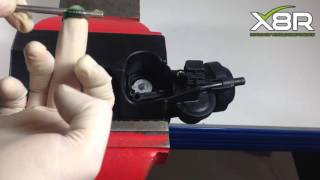
Yes, rebuild kits with metal or aluminum components are available. These kits are for DIY-ers comfortable with taking apart the plastic housing of the original unit, cleaning it, and installing the new parts. This can be a cost-effective and durable repair if the motor in your original unit is still functional.
Is it hard to replace a DISA valve?
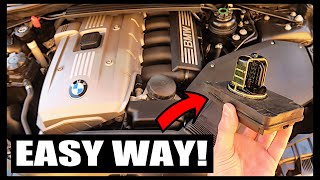
The difficulty depends entirely on which valve has failed. The large, outer valve is considered a fairly easy DIY job that can be done in under an hour 🎬 See this walkthrough for replacing the large outer valve with basic tools. The small, inner valve is much more difficult, requiring the removal of the alternator and throttle body at a minimum, and many mechanics recommend removing the entire intake manifold for proper access. This can take several hours.
What happens if I ignore a bad DISA valve?
You will continue to experience poor engine performance and fuel economy. More importantly, you run the risk of the valve's internal parts breaking off and entering your engine, which can lead to a very expensive repair. It is not recommended to ignore the symptoms.
Helpful Videos
Technical Specifications
OEM Part Numbers: 11617579114 11617560537 11617522929 11617560538 11617522928
For BMW N52 3.0L 6-cylinder engine. Includes one large (outer) valve and one small (inner) valve. Electronically actuated stepper motor design.

The information in this article is provided for general reference and educational purposes only. Vehicle specifications, procedures, and part compatibility can vary by production date, trim level, and region. Always consult your vehicle's factory service manual and verify part numbers before purchasing or performing repairs. Safety-critical components such as airbags, seat belts, and braking systems should be installed by a qualified professional.
- BMW 323i: