

A Ford Mechanic's Guide to the 2006-2011 Explorer CV Axle Shaft
Don't let a clicking or vibrating axle sideline your Explorer—here's what you need to know before you buy a replacement.
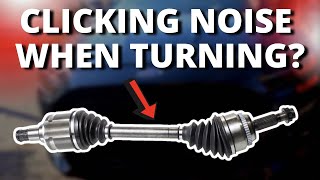
- A clicking noise when turning is the most definitive sign of a bad CV axle on your Explorer.
- It is highly recommended to replace the entire axle assembly, not just the boot, for a lasting repair.
- No specific CV axle recalls exist for the 2006-2011 models; issues for newer Explorers involve a different part (axle bolts).
- For this age of vehicle, a quality new aftermarket axle provides a good balance of cost and reliability compared to expensive and hard-to-find OEM parts.
Is Your Explorer's CV Axle Failing?

A CV axle doesn't usually fail suddenly. It gives you warning signs. The most common problem starts when the protective rubber boot tears. This lets the special grease inside leak out and allows dirt and water to get in, which quickly ruins the joint.
Watch out for these symptoms:
🎬 Watch: A visual guide to identifying bad CV axle symptoms.- Clicking or Popping When Turning: This is the classic sign of a bad outer CV joint. The noise is most obvious during sharp, low-speed turns, like in a parking lot. If it clicks when you turn left, the problem is likely the left axle, and vice-versa.
- Vibration While Driving: A damaged or unbalanced axle shaft can cause a noticeable vibration or shudder that gets worse as you accelerate. You might feel it in the steering wheel or through the floor.
- Grease on Inner Wheel or Undercarriage: If you see dark, heavy grease splattered on the inside of your wheel or on nearby suspension parts, the CV boot has likely failed.
- Clunking Noise: A clunk when you shift into Drive or Reverse, or when you accelerate or decelerate, can point to excessive play in a worn inner CV joint.
Known Issues for the 2006-2011 Ford Explorer

While there are no major recalls or Technical Service Bulletins (TSBs) from the NHTSA specifically for the CV axle shafts on this generation of Explorer, it's worth noting two things. First, recalls for rear axle *bolts* breaking apply to much newer 2020-2022 models and are not related to the CV axles on your 2006-2011 truck. Second, leaks from the axle seals at the differential are a commonly reported problem for this generation. When replacing a CV axle, it is a good pro-tip to install a new seal at the same time to prevent future leaks.
Choosing the Right Aftermarket Axle

When you're shopping for a new CV axle, you have a few levels of quality to consider. It's almost always better to replace the entire axle assembly rather than just the boot or joint, as the labor is nearly the same and you get all new components.
- OEM Ford Axles: Genuine Ford axles are generally considered the highest quality, designed specifically for your vehicle and often better balanced to prevent vibration. However, for an older vehicle like the 2006-2011 Explorer, new OEM axles can be very expensive and are often discontinued or hard to find.
- Premium Aftermarket (e.g., DSS): Brands like DSS (Driveshaft Shop) have a strong reputation, often for high-performance applications. While some reviews in the racing community mention balancing issues on high-end products, their standard replacement axles are typically robust and made with quality materials, making them a solid choice that may exceed OEM standards.
- Standard Aftermarket (e.g., Surtrak): This is the most common and affordable category. Brands like Surtrak offer new axles that meet original specifications and come with a warranty. Forum discussions among mechanics show mixed feelings; some see them as a perfectly fine budget-friendly option for a daily driver, while others are wary of the long-term durability of the materials compared to OEM. For the price, they offer a practical solution to get your Explorer back on the road safely.
What to Expect for Replacement Costs
The cost to replace a CV axle shaft on a 2006-2011 Explorer depends on the parts you choose and who does the work. The job is the same for one side, whether it's the front or rear.
| Part/Service | Estimated Cost |
|---|---|
| New Aftermarket CV Axle | $114 - $192 |
| New OEM Ford CV Axle | $250 - $450+ (if available) |
| Shop Labor (per axle) | $110 - $295 |
| Total Professional Replacement (Aftermarket) | $224 - $487 |
Frequently Asked Questions

Can I just replace the torn CV boot?
While boot kits are available, it's usually not recommended. If the boot is torn, dirt and water have already contaminated the joint, and it will likely fail soon anyway. The labor to replace just the boot is significant, so replacing the entire axle assembly is more cost-effective and reliable in the long run.
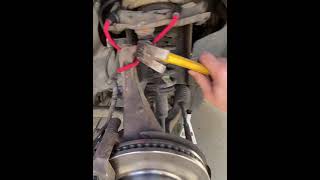
Is this a good DIY job? 🎬 See this step-by-step walkthrough for replacing a front CV axle.
For a mechanic with the right tools, yes. The job is moderately difficult and requires a large 32mm or 35mm socket for the axle nut, a breaker bar, a pry bar to pop the axle from the differential, and a torque wrench. Rust can make removal difficult. If you're not comfortable with heavy suspension work, it's best to leave it to a professional.
What's the difference between front and rear CV axles on the Explorer?
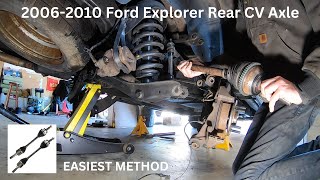
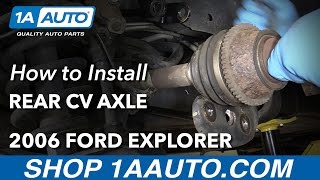
They serve the same function but are different parts with different lengths and spline counts. The front axles must accommodate steering angles, while the rear axles only need to flex with the suspension. You cannot interchange them. 🎬 Watch: How to replace the rear CV axle on your Explorer. Always order the axle for the specific position (e.g., Front Right, Rear Left) you are replacing.
Should I replace axles in pairs?
You don't have to. CV axles wear out based on mileage and conditions, not necessarily in pairs. If only the driver-side axle is clicking, you only need to replace that one. However, if the vehicle has high mileage and one has failed, the other may not be far behind.
Helpful Videos
Technical Specifications
OEM Part Numbers: 7L2Z-4K138-A (Rear Right) 6L2Z-3A427-AA (Front Left, 4WD) 6L2Z-3A428-AA (Front Right, 4WD)
The 2006-2011 Ford Explorer uses CV axles for both its front (on 4WD models) and rear independent suspension. Axles are specific to each corner of the vehicle (Front Left, Front Right, Rear Left, Rear Right) and are not interchangeable. They connect the differential to the wheel hub assembly.
We Have This Part in Stock


The information in this article is provided for general reference and educational purposes only. Vehicle specifications, procedures, and part compatibility can vary by production date, trim level, and region. Always consult your vehicle's factory service manual and verify part numbers before purchasing or performing repairs. Safety-critical components such as airbags, seat belts, and braking systems should be installed by a qualified professional.
- Ford Explorer: