

Dodge Charger (2006-2013) Engine Oil Temperature Sensor Guide
Dealing with a check engine light or erratic temperature readings? Your oil temperature sensor might be the culprit.
- The main symptom of failure is a Check Engine Light with codes P0196, P0197, or P0198.
- Replacement difficulty is easy-to-moderate on V8 engines but very difficult on the 3.6L V6 engine.
- Before replacing the sensor, always inspect the wiring and connector for damage, as this is a common point of failure.
- Using an OEM Mopar sensor is recommended for reliability, but premium aftermarket brands like Crown are a viable budget alternative.
Is Your Charger's Oil Temperature Sensor Failing?

A faulty engine oil temperature sensor on a 2006-2013 Dodge Charger can cause a range of confusing symptoms. Because the car's computer relies on this sensor for important data, a bad signal can lead to noticeable problems. Knowing these signs can help you diagnose the issue before it leads to more serious trouble.
Key Symptoms of a Bad Sensor
- Check Engine Light: This is the most common sign. The computer will log a fault code when it receives an illogical signal from the sensor, triggering the light.
- Specific Trouble Codes: An OBD-II scanner might show codes like P0196 (Sensor Range/Performance), P0197 (Sensor Circuit Low), or P0198 (Sensor Circuit High).
- Erratic Temperature Gauge: If your Charger has an oil temperature display, you might see the reading jump around, show extremely hot right after starting, or not move at all.
- Poor Engine Performance: In some cases, a faulty sensor can contribute to rough idling, reduced power, and decreased fuel economy because the engine's computer is working with bad data.
- Cooling Fans Running Incorrectly: The computer uses oil temperature as one factor in deciding when to run the cooling fans. A bad sensor might cause them to run constantly or not turn on when needed.
Don't Confuse it With Other Sensors
Your Charger has multiple temperature and pressure sensors. The oil temperature sensor is often located near the oil pressure sensor and the engine coolant temperature sensor. They are not interchangeable. Confirming the correct part and location for your specific engine is critical before starting a replacement.
Choosing the Right Aftermarket Sensor

When replacing the oil temperature sensor, you have a choice between OEM (Original Equipment Manufacturer) Mopar parts and aftermarket options. For a critical sensor like this, quality matters.
- OEM (Mopar): This is the highest quality and most reliable option, guaranteed to fit and function as the factory intended. If your budget allows, OEM is the recommended choice for sensors to avoid potential compatibility or longevity issues. The OEM part number for many V8 models is 5149008AA, while the V6 uses a different sensor, often part number 5149077AB.
- Premium Aftermarket (e.g., Crown Automotive): Crown is a well-known brand specializing in parts for Chrysler, Dodge, and Jeep vehicles. Their products are generally considered a step above generic store brands and offer a good balance of price and quality. However, forum discussions show that while many users have success, some have experienced parts that fail prematurely compared to OEM.
- Standard Aftermarket (e.g., Global Parts): This category represents the most budget-friendly options. While they can get the job done, the quality control and material standards may not be as high as OEM or premium aftermarket brands. These are a viable choice if budget is the primary concern, but be aware that the risk of early failure or slightly inaccurate readings can be higher.
Pro Tip: Often, the failure isn't the sensor itself but a damaged wire or corroded connector, especially on V8 models where the sensor is more exposed. Always inspect the wiring harness carefully before replacing the sensor. A simple wiring repair could save you the cost of a new part.
Cost of Replacing the Oil Temperature Sensor (2006-2013 Dodge Charger)
| Part/Service | Estimated Cost |
|---|---|
| New OEM (Mopar) Sensor | $50 - $105 |
| New Aftermarket Sensor | $22 - $40 |
| Shop Labor (V8 Engines) | $100 - $200 |
| Shop Labor (3.6L V6 Engine) | $300 - $500+ |
Note: Labor costs are estimates and vary based on shop rates and location. The significant difference is due to the sensor's location.
Installation: A Tale of Two Engines

The difficulty of this job depends entirely on which engine is in your Charger.
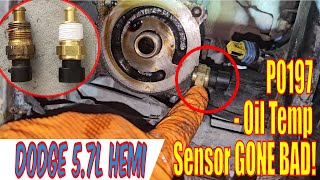
- V8 Engines (5.7L, 6.1L, 6.4L): The sensor is located on the side of the engine block near the oil filter housing, under the alternator. Access is tight, but it can be replaced from underneath the vehicle. Some mechanics remove the oil filter for better access, while others find it necessary to loosen and move the alternator. This is generally considered a DIY-friendly job for someone with moderate experience. 🎬 Watch this walkthrough for replacing the sensor on V8 engines.
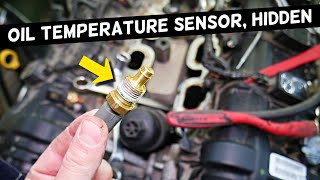
- 3.6L V6 Engine: This is a much more difficult job. The oil temperature sensor is located deep in the engine valley, underneath the upper and lower intake manifolds. Both manifolds must be removed to access the sensor. This significantly increases the labor time and complexity, and it is not recommended for beginners. 🎬 See the complex intake manifold removal required for V6 models.
Frequently Asked Questions
Can I still drive my Charger with a bad oil temperature sensor?
Yes, but it's not recommended for long. The car will typically go into a fail-safe mode, assuming a default oil temperature. While this allows the engine to run, you won't have an accurate reading of your oil's temperature, which could be dangerous if the engine starts to overheat for another reason. It's best to get it fixed promptly.
Are there any recalls for this sensor?
No, searches of the NHTSA database did not show any specific recalls for the engine oil temperature sensor on the 2006-2013 Dodge Charger. There were recalls for other components, but not this sensor.
Is the replacement process the same for all 2006-2013 Chargers?
No. The location and replacement difficulty vary greatly by engine. On V8 models, it is relatively accessible near the oil filter. On the 3.6L V6, it is a much more involved job requiring the removal of the intake manifolds. The sensor for the older 2.7L and 3.5L V6 engines is also in a different location, typically on the engine block.
How do I know if I have a bad sensor or a wiring problem?
A mechanic can test the sensor with a multimeter to see if its resistance changes with temperature. A visual inspection of the wiring harness for cracks, corrosion, or breaks is also a key diagnostic step, especially on V8 models where the wiring is more exposed. A scan tool showing a fixed, illogical temperature (like -40°F) often points to a wiring or connection issue.
Helpful Videos
Technical Specifications
OEM Part Numbers: 5149008AA 5149077AB
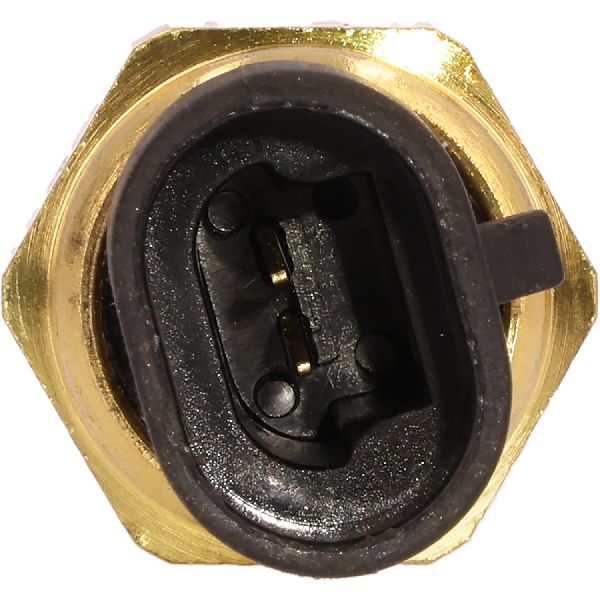
The sensor is a thermistor, which changes its electrical resistance based on the temperature of the engine oil. It typically has a 2-pin connector.
We Have This Part in Stock

The information in this article is provided for general reference and educational purposes only. Vehicle specifications, procedures, and part compatibility can vary by production date, trim level, and region. Always consult your vehicle's factory service manual and verify part numbers before purchasing or performing repairs. Safety-critical components such as airbags, seat belts, and braking systems should be installed by a qualified professional.
- Dodge Charger:
- 🎬 Helpful Videos
- 🛍️ Shop This Part
- Is Your Charger's Oil Temperature Sensor Failing?
- Key Symptoms of a Bad Sensor
- Don't Confuse it With Other Sensors
- Choosing the Right Aftermarket Sensor
- Cost of Replacing the Oil Temperature Sensor (2006-2013 Dodge Charger)
- Installation: A Tale of Two Engines
- Frequently Asked Questions
- 🎟️ Get 5% Off