

Jeep Grand Cherokee Speed Sensor Issues: 2006-2013 Models
Solve your erratic speedometer or shifting problems by understanding your Grand Cherokee's speed sensors.
- Symptoms determine the sensor: ABS lights usually mean a wheel speed sensor, while shifting-only issues can point to a transmission sensor.
- A bad speed sensor can cause an erratic speedometer, harsh shifting, and disable safety features like ABS and traction control.
- DIY replacement is feasible for those with basic tools, but sensors can get stuck in the wheel hub.
- Always scan for codes before ordering parts to identify which specific sensor has failed.
Is it a Wheel Speed Sensor or a Transmission Speed Sensor?
Understanding which speed sensor has failed is the first step. The symptoms your Jeep is showing are the biggest clue. If your main problems are warning lights on the dash, it's likely a wheel speed sensor. If the issue is primarily how the transmission feels, it could be a transmission speed sensor.
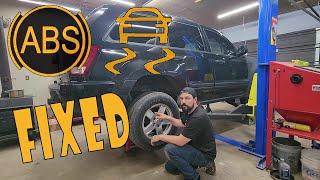
- Wheel Speed Sensor (ABS Sensor) Failure: This is the most common issue. A bad wheel speed sensor will almost always trigger the ABS, ESP/BAS, and traction control warning lights 🎬 Watch how to fix ABS and traction control light issues. on your dashboard. It can also cause an erratic or dead speedometer, as the computer loses a primary source of speed data. In some cases, this can lead to harsh shifting as the transmission computer also relies on this data.
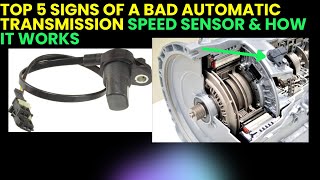
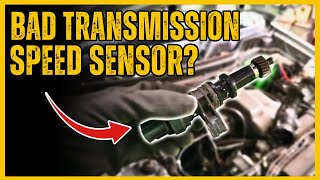
- Transmission Speed Sensor Failure: If your main complaint is the transmission hesitating, shifting hard, or getting stuck in one gear (known as "limp mode") but you have no ABS lights, the problem may be an internal transmission input or output speed sensor. 🎬 Learn how transmission speed sensors work and common failure signs. These sensors directly tell the transmission control module when to shift.
Check for Recalls and TSBs
While there are no specific recalls for speed sensors on the 2006-2013 Grand Cherokee, there have been numerous recalls for electrical issues, including problems with the Totally Integrated Power Module (TIPM), which can cause stalling and other electrical symptoms. It's always wise to check if your vehicle has any open recalls that could be related to your symptoms.
Choosing the Right Aftermarket Part
When replacing a sensor, quality matters. While OEM Mopar parts are a reliable choice, a quality aftermarket part can offer good performance for a lower price. The "Replacement" brand is a cost-effective option that meets original equipment specifications. For electronic parts like sensors, it's important to choose a brand with a good reputation to avoid compatibility issues or premature failure.
Cost to Replace a Jeep Grand Cherokee Speed Sensor (2006-2013)
| Part Type | Cost Range |
|---|---|
| New OEM (Mopar) | $70 - $110 |
| New Aftermarket | $31.71 - $60 |
| Shop Labor | $86 - $126 |
| Total Professional Replacement | $117 - $236+ |
Pro Tip: Before replacing a sensor, have the vehicle scanned for diagnostic trouble codes (DTCs). A code will point you to the exact sensor that is failing (e.g., "right front wheel speed sensor circuit"). This saves you from guessing and replacing the wrong part.
Frequently Asked Questions
Where are the speed sensors located on my Grand Cherokee?
The wheel speed (ABS) sensors are located at each wheel hub, secured by a single bolt. The wire runs from the sensor up into the wheel well. The transmission input and output speed sensors are located on the outside of the transmission housing.
Can I replace a speed sensor myself?
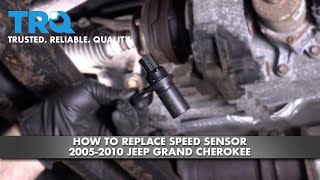
Yes, for many owners this is a DIY-friendly job. Replacing a wheel speed sensor typically involves removing the wheel, undoing one bolt, and unplugging the electrical connector. 🎬 See a step-by-step guide on replacing your Jeep's speed sensor. However, the sensor can sometimes seize in the wheel hub due to rust and may be difficult to remove. Transmission sensors are also accessible from under the vehicle but may require you to work in a tighter space.
Will a bad speed sensor cause my Jeep to go into "limp mode"?
Yes. A failed transmission speed sensor can definitely cause the transmission to enter limp mode, where it stays in a single gear to protect itself. While less common, a severe failure of the wheel speed sensor system could also potentially cause this issue if the transmission computer can't get a reliable speed reading.
My ABS and traction control lights came on after driving in snow. Is the sensor bad?
Not necessarily. Sometimes, snow, ice, or mud can pack around the sensor and block its reading, triggering the warning lights. Before buying a new part, try thoroughly cleaning the area around the wheel hubs to see if the lights turn off after driving a short distance.
Helpful Videos
Technical Specifications
OEM Part Numbers: 56041403AF 52108328AA 68250887AC 56044144AB
The 2006-2013 Grand Cherokee uses four wheel speed (ABS) sensors and two transmission speed sensors (input and output). The correct part depends on the specific location and the vehicle's drivetrain (2WD or 4WD) and transmission type.

The information in this article is provided for general reference and educational purposes only. Vehicle specifications, procedures, and part compatibility can vary by production date, trim level, and region. Always consult your vehicle's factory service manual and verify part numbers before purchasing or performing repairs. Safety-critical components such as airbags, seat belts, and braking systems should be installed by a qualified professional.
- Jeep Grand Cherokee: