

Dodge Avenger Ignition Knock Sensor: A Guide for 2006-2014 Models
Understanding your Avenger's knock sensor is key to protecting its engine and restoring performance.
- Replacement is labor-intensive due to the sensor's location under the intake manifold on both 2.4L and 3.6L engines.
- A faulty sensor will trigger a Check Engine Light (code P0325) and can cause audible engine pinging, poor acceleration, and bad gas mileage.
- Choosing a premium aftermarket (Delphi, NGK) or OEM (Mopar) part is highly recommended to avoid repeat repairs.
- Driving with a bad knock sensor is not advised as it can lead to long-term, expensive engine damage.
Is Your Avenger's Knock Sensor Failing?
A bad knock sensor can cause problems that you might see, hear, and feel. Because the sensor's job is to protect the engine, the vehicle's computer (PCM) will take action when it gets a bad signal or no signal at all. This usually means reducing engine power to be safe.
Common Symptoms of a Bad Knock Sensor:
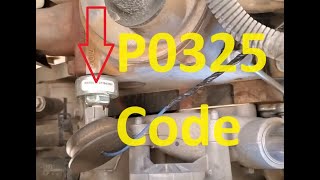
- Check Engine Light: This is the most common sign. The computer will log a fault code, usually P0325, which points to a problem with the knock sensor circuit. 🎬 See this breakdown of P0325 causes, symptoms, and fixes.
- Engine Pinging or Knocking: You may hear a metallic pinging sound, especially when accelerating or driving uphill. This is the sound of detonation that the faulty sensor isn't correcting.
- Poor Acceleration: Your Avenger might feel sluggish or slow to respond when you press the gas pedal. The computer may limit power to prevent potential engine damage.
- Worse Gas Mileage: When the engine's timing is not optimal, it doesn't burn fuel as efficiently, leading to more trips to the gas station.
Choosing the Right Aftermarket Knock Sensor
With a labor-intensive repair like this, choosing a quality part is critical to avoid doing the job twice. While many brands are available, they generally fall into three tiers for your Avenger.
| Brand Tier | Brands | Quality & Cost Assessment |
|---|---|---|
| OEM | Mopar | This is the original factory part. It guarantees perfect compatibility with your vehicle's computer. It is the most expensive but also the most reliable option. |
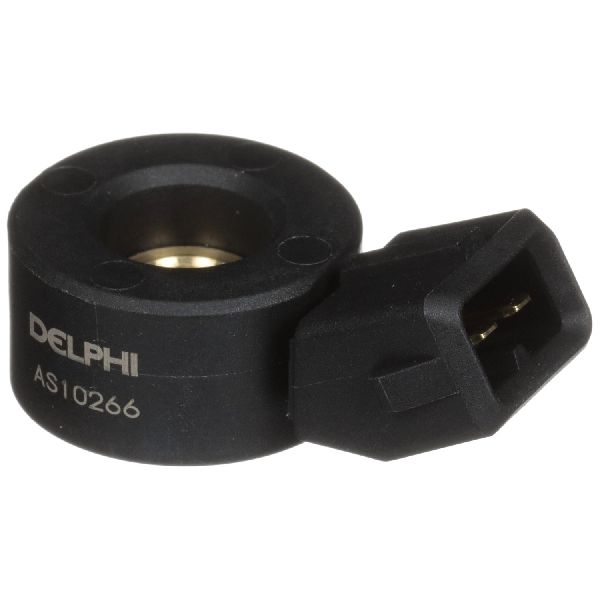
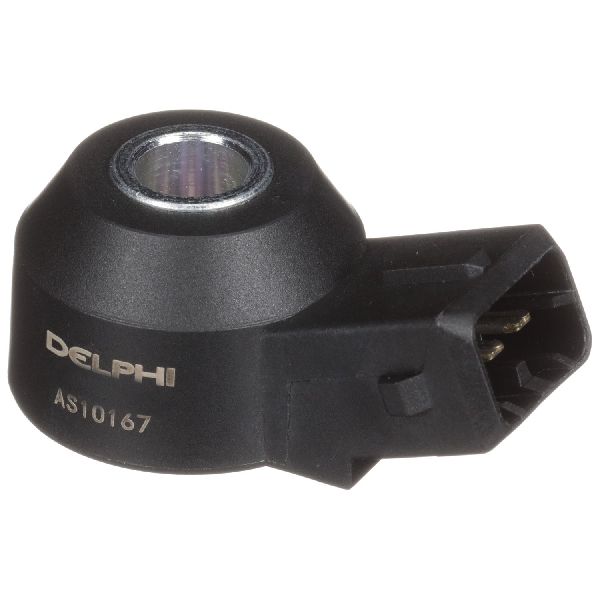
| Premium Aftermarket | Delphi, NGK (NTK) | These brands are often original equipment manufacturers for many car companies. They offer quality and reliability very close to OEM parts but usually at a lower price. For a sensitive electronic part, this tier offers the best balance of cost and quality. |
| Standard & Economy Aftermarket | Standard Ignition, Walker, Holstein, Beck Arnley, and others | These brands can be a good value, but quality can be inconsistent. Some users report these sensors failing prematurely or being too sensitive, causing a check engine light even when new. They are the cheapest option, but the risk of early failure could mean paying for the same labor costs again. |
Frequently Asked Questions
Where is the knock sensor located on my Dodge Avenger?
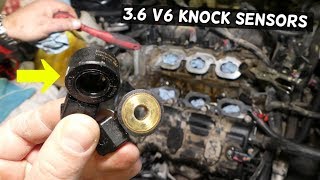
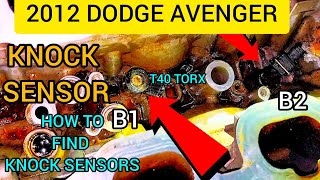
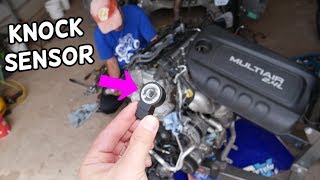
For both the 2.4L I4 and 3.6L V6 engines, the knock sensor(s) are located on the engine block, underneath the upper and lower intake manifolds. 🎬 Watch: How to access knock sensors on the 3.6L Pentastar engine. This difficult-to-reach spot is why labor costs are higher than for many other sensors.
Can I drive my Avenger with a bad knock sensor?
It is not recommended. While the car will likely run, the engine's primary defense against harmful detonation is offline. Continuing to drive, especially under heavy load, could lead to expensive internal engine damage. The computer will also likely reduce engine power, making the car feel sluggish and unsafe to drive in some situations.
What happens if I don't replace a faulty knock sensor?
Ignoring a bad knock sensor can lead to constant engine knocking, which can damage pistons, bearings, and other internal components over time. You will also experience poor performance, bad fuel economy, and will not be able to pass an emissions test.
Are there any recalls for the Dodge Avenger knock sensor?
No. While there have been several recalls for the 2006-2014 Dodge Avenger, none of them are specifically for a faulty knock sensor.
Could something else cause a P0325 code?
Yes. While the sensor itself is the most common cause, the P0325 code indicates a circuit malfunction. This could also be caused by damaged wiring or a bad connector. In some cases, an actual engine problem that is causing severe knocking can also trigger the code.
Helpful Videos
Technical Specifications
OEM Part Numbers: 5149188AA 05033316AA 5149189AA
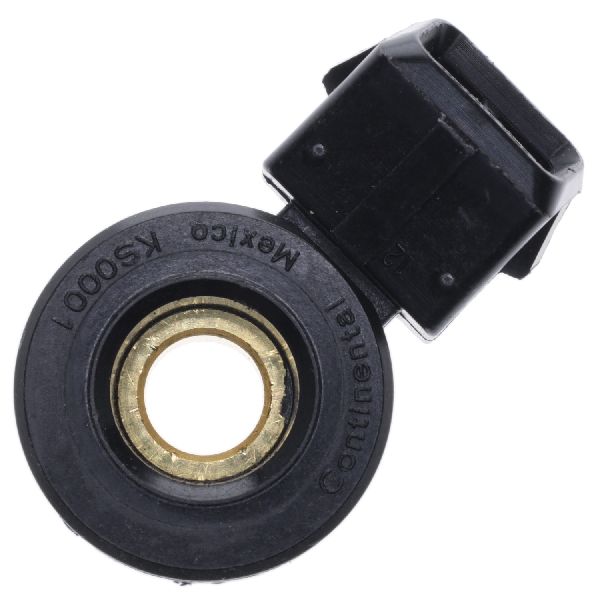
The knock sensor for the Dodge Avenger is a piezoelectric sensor designed to detect specific vibration frequencies associated with engine detonation. It typically uses a 2-pin connector. The 3.6L V6 engine uses two sensors, while the 2.4L 4-cylinder uses one.
We Have This Part in Stock


The information in this article is provided for general reference and educational purposes only. Vehicle specifications, procedures, and part compatibility can vary by production date, trim level, and region. Always consult your vehicle's factory service manual and verify part numbers before purchasing or performing repairs. Safety-critical components such as airbags, seat belts, and braking systems should be installed by a qualified professional.
- Dodge Avenger: