

Ford Mustang Intake Air Temperature Sensor Guide (2006-2022)
Everything a Mustang owner needs to know about a failing Intake Air Temperature Sensor.
- A failing IAT sensor commonly causes a Check Engine Light with codes P0112 or P0113, rough idle, and poor fuel economy.
- On many 2015+ Mustangs, the IAT is a separate, easy-to-replace sensor in the intake tube; on some earlier models, it may be part of the MAF sensor.
- Replacement is a simple DIY job, often taking less than 15 minutes.
- Quality aftermarket brands like Standard Ignition offer a reliable and cost-effective alternative to more expensive OEM parts.
Understanding the Intake Air Temperature (IAT) Sensor in Your Mustang

The Intake Air Temperature (IAT) sensor is a simple but critical component for keeping your 2006 to 2022 Ford Mustang running smoothly. It tells the engine's computer how hot or cold the intake air is, which is essential for calculating the right air-fuel mixture. Without an accurate reading, you can run into a host of engine performance problems. For many Mustangs in this year range, the IAT sensor is a standalone part located in the air intake tube, while for others, it may be integrated into the Mass Airflow (MAF) sensor. It's important to know which setup your specific Mustang has before ordering parts.
Symptoms of a Failing IAT Sensor

When an IAT sensor starts to fail, it sends incorrect data to the engine's computer. This can cause the computer to create an air-fuel mixture that is either too rich (too much fuel) or too lean (not enough fuel). This imbalance can lead to several noticeable problems:
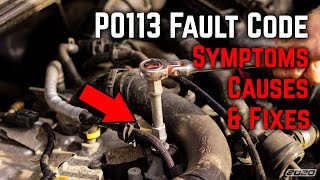
- Check Engine Light: This is often the first sign. The computer will log a fault code, most commonly P0112 (circuit low input) or P0113 (circuit high input).
- Poor Fuel Economy: If the sensor incorrectly reads cold air, the computer will inject more fuel than needed, causing your MPG to drop.
- Rough Idle and Stalling: An incorrect air-fuel mixture can make the engine idle unevenly or even stall, especially when it's warming up.
- Hard Starting: The engine may struggle to start, particularly in cold weather, if the computer isn't providing the right fuel mixture for a cold start.
- Poor Acceleration: You might notice your Mustang feels sluggish, hesitates, or lacks its usual power when you step on the gas.
Known Issues, Recalls & TSBs
As of early 2026, there are no specific recalls or widespread Technical Service Bulletins (TSBs) from Ford directly for the Intake Air Temperature sensor on 2006-2022 Mustangs. Most issues are related to normal wear, contamination from dirt or oil, or wiring problems. However, a TSB for the 2020 Mustang mentions investigating the fuel pressure/temperature sensor, but advises against replacing it without a clear root cause. Always check for the latest information with your VIN on the NHTSA website.
Choosing the Right Aftermarket IAT Sensor

For a component like the IAT sensor, aftermarket options provide a reliable and cost-effective alternative to OEM parts. Since the technology is straightforward, quality aftermarket brands can meet or exceed OEM specifications.
Standard Ignition is a well-regarded brand in the aftermarket industry, known for producing reliable electronic components. Their IAT sensors are designed as direct-fit replacements, ensuring an easy installation process with factory-style connectors. Given the simplicity of the sensor, a quality aftermarket part from a brand like Standard Ignition is a practical choice for most Mustang owners, offering good performance without the higher cost of an OEM part from a dealer.
Mustang IAT Sensor Cost Comparison
| Part Type | Estimated Cost |
|---|---|
| New Aftermarket (e.g., Standard Ignition) | $15 - $42 |
| New OEM (Motorcraft) | $45 - $90 |
| Shop Labor | $50 - $100 |
Pro Tip: To Clean or Replace?
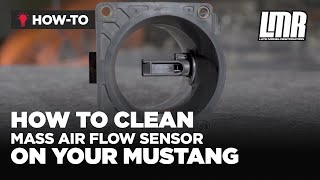
Sometimes, an IAT sensor can give faulty readings because it's covered in dirt, oil, or debris from the intake system. Before replacing the sensor, you can try cleaning it with a dedicated MAF or electronics cleaner. If cleaning doesn't solve the problem, or if the sensor has failed internally, a full replacement is necessary.
Frequently Asked Questions (FAQ)

Where is the IAT sensor located on my Mustang?
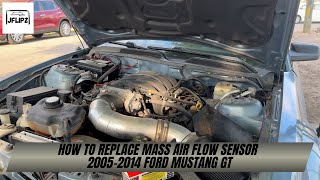
The location can vary. On many Mustangs, especially later models like the S550 (2015+), it is a separate sensor plugged into the air intake tube between the air filter box and the throttle body. On some earlier S197 models (2006-2014), the IAT function might be integrated into the Mass Airflow (MAF) sensor. Always visually inspect your intake system to confirm the location before starting work.
Can I drive my Mustang with a bad IAT sensor?
You can, but it's not recommended for an extended period. A bad sensor can cause poor fuel economy, rough running, and in some cases, engine hesitation or stalling, which can be a safety risk. Long-term driving with a bad mixture can also potentially harm other components like spark plugs and the catalytic converter.
Is replacing the IAT sensor a difficult job?
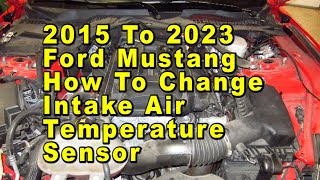
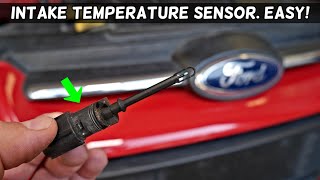
No, for most models where it is a separate sensor, it is a very easy job. It typically involves unplugging an electrical connector and rotating the sensor to remove it from the intake tube. The entire process can usually be done in under 15 minutes with no special tools required. If it's part of the MAF sensor, the process is slightly more involved but still very DIY-friendly.
What are the common trouble codes for a bad IAT sensor?
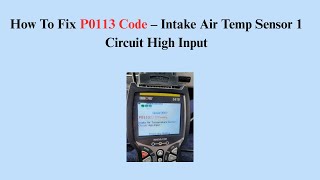
The most common codes are P0112 (Intake Air Temperature Sensor 1 Circuit Low) and P0113 (Intake Air Temperature Sensor 1 Circuit High). P0112 indicates the computer is seeing an abnormally low voltage (suggesting a very high temperature), while P0113 means it's seeing a high voltage (suggesting a very low temperature).
Helpful Videos
Technical Specifications
OEM Part Numbers: DS7A-12A697-AA DY1267
The IAT sensor is a thermistor, which is a resistor whose resistance changes with temperature. It typically has a 2-pin electrical connector and either plugs or screws into the intake air path.
We Have This Part in Stock


The information in this article is provided for general reference and educational purposes only. Vehicle specifications, procedures, and part compatibility can vary by production date, trim level, and region. Always consult your vehicle's factory service manual and verify part numbers before purchasing or performing repairs. Safety-critical components such as airbags, seat belts, and braking systems should be installed by a qualified professional.
- Ford Mustang:
- 🎬 Helpful Videos
- 🛍️ Shop This Part
- Understanding the Intake Air Temperature (IAT) Sensor in Your Mustang
- Symptoms of a Failing IAT Sensor
- Known Issues, Recalls & TSBs
- Choosing the Right Aftermarket IAT Sensor
- Mustang IAT Sensor Cost Comparison
- Pro Tip: To Clean or Replace?
- Frequently Asked Questions (FAQ)
- 🎟️ Get 5% Off