

Dodge Challenger Engine Intake Manifold Gasket Set: 2008-2023 Guide
A leaking intake manifold gasket can cause rough idling and check engine lights on your Challenger; here’s how to choose the right replacement.
- A bad intake gasket is a common cause of a rough idle and lean codes (P0171, P0174) on a Challenger.
- For most repairs, a quality aftermarket brand like Fel-Pro or Victor Reinz offers excellent value and reliability.
- Never reuse old gaskets; replacement is mandatory anytime the intake manifold is removed.
- The job is DIY-feasible for those with mechanical experience, but extreme care must be taken to not drop debris into the open engine ports.
Is Your Challenger Running Rough? It Could Be the Intake Gasket
If your Dodge Challenger has developed a rough idle, poor acceleration, or a mysterious hissing sound from the engine bay, a failed intake manifold gasket could be the culprit. This set of gaskets is crucial for maintaining the air-tight seal your engine needs to run efficiently. Over time, the constant exposure to heat and vibration causes the original rubber or composite gaskets to become hard, brittle, and compressed, leading to leaks.
Symptoms of a Bad Intake Manifold Gasket on a Challenger
A failing intake manifold gasket typically creates a vacuum leak, allowing extra, unmeasured air into the engine. This throws off the computer's calculations and can cause a variety of noticeable problems:
- Rough or High Idle: The engine may shake or idle at higher RPMs than normal, especially when stopped.
- Check Engine Light: The most common trouble codes triggered are P0171 (System Too Lean, Bank 1) and P0174 (System Too Lean, Bank 2), indicating too much oxygen in the exhaust.
- Hesitation and Power Loss: Your Challenger may feel sluggish when you press the gas pedal because the air-fuel mixture is incorrect.
- Hissing Noises: A distinct whistling or hissing sound from the engine area is often the sound of air being sucked through a gap in the failed gasket.
- Reduced Fuel Economy: The engine's computer tries to compensate for the extra air by adding more fuel, which hurts your gas mileage.
- Coolant Leaks or Overheating: On engines where the gasket seals coolant passages, you might notice a low coolant level, the smell of sweet coolant, or the engine temperature climbing higher than normal.
No Specific Recalls, But A Known Wear Item
Searches of the National Highway Traffic Safety Administration (NHTSA) database show no specific recalls or technical service bulletins (TSBs) for intake manifold gaskets on 2008-2023 Dodge Challengers. However, gasket failure is a common issue on many vehicles as they age, and the symptoms should not be ignored.
Choosing the Right Aftermarket Gasket Set
When replacing the intake manifold gaskets, you have several good options. For this part, many aftermarket brands offer quality that is equal to or even better than the original OEM part. You should always replace the gaskets when the intake manifold is removed; never reuse the old ones.
Brand Quality Tiers
- High-Performance (Cometic): If your Challenger is modified with a supercharger, turbo, or has significant engine work, Cometic is the top choice. They specialize in gaskets made from advanced materials like fiber composites that handle extreme heat and pressure, making them ideal for high-performance Hemi applications.
- Premium Aftermarket (Fel-Pro, Victor Reinz, Mahle): For most Challenger owners with stock or lightly modified cars, these brands are excellent choices. Fel-Pro is a highly respected name in the gasket industry and is known for engineering durable replacements that often improve on the original design. Victor Reinz and Mahle are well-known for producing parts that meet or exceed original equipment (OE) quality standards.
- Standard Replacement (Dorman, Apex, URO Parts): These brands offer affordable, direct-fit replacements. Dorman is known for providing complete kits that may include new bolts and other small components, adding convenience to the repair. They are a practical choice for a standard repair on a daily-driven vehicle.
Cost to Replace Dodge Challenger Intake Manifold Gaskets
The total cost depends on your engine and local labor rates. The parts themselves are not very expensive, but the job requires some time.
| Part/Service | Estimated Cost |
|---|---|
| New Aftermarket Gasket Set | $14 - $129 |
| New OEM (Mopar) Gasket Set | $25 - $70 |
| Shop Labor | $200 - $450 |
| Total Estimated Cost (Professional) | $225 - $580 |
Frequently Asked Questions (FAQ)
Do I need different gaskets for a V6 vs. a Hemi V8?
Yes. The 3.6L Pentastar V6 and the 5.7L, 6.1L, 6.2L, and 6.4L Hemi V8 engines have completely different intake manifold designs and require specific gasket sets. Always confirm the gasket fits your exact year and engine before ordering.
Can I reuse my old intake manifold gaskets?
No. Once a gasket has been installed and heat-cycled, it becomes compressed and will not create a reliable seal if reinstalled. Always use a new set of gaskets for this repair to avoid having to do the job twice.
Do I need to use any sealant on the new gaskets?
Generally, no. Modern intake manifold gaskets for the Challenger are designed to be installed dry. The molded rubber or silicone seals do the work. Applying sealant where it's not required can actually cause the gasket to slip out of place and create a leak.
Could a warped intake manifold cause the leak?
Yes. The intake manifolds on modern Challengers are typically made of a composite plastic. Over many years and heat cycles, it is possible for the manifold's sealing surface to warp slightly. If this happens, even a new gasket may not be able to seal the gap, and the entire intake manifold may need to be replaced.
Technical Specifications
OEM Part Numbers: 68545089AA 5184331AC 5184562AC 05281823AA
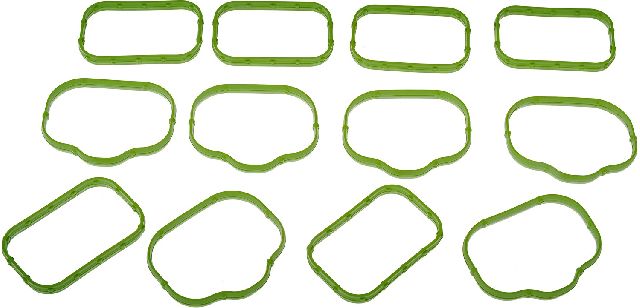
Gaskets are engine-specific. The 3.6L V6 uses separate upper and lower gasket sets. Hemi V8 engines (5.7L, 6.1L, 6.4L, 6.2L) use a set of individual port seals. Materials are typically molded rubber, silicone, or high-performance fiber composites.
We Have This Part in Stock



The information in this article is provided for general reference and educational purposes only. Vehicle specifications, procedures, and part compatibility can vary by production date, trim level, and region. Always consult your vehicle's factory service manual and verify part numbers before purchasing or performing repairs. Safety-critical components such as airbags, seat belts, and braking systems should be installed by a qualified professional.
- Dodge Challenger:
- 🛍️ Shop This Part
- Is Your Challenger Running Rough? It Could Be the Intake Gasket
- Symptoms of a Bad Intake Manifold Gasket on a Challenger
- No Specific Recalls, But A Known Wear Item
- Choosing the Right Aftermarket Gasket Set
- Brand Quality Tiers
- Cost to Replace Dodge Challenger Intake Manifold Gaskets
- Frequently Asked Questions (FAQ)
- 🎟️ Get 5% Off