

A Guide to Replacing Stabilizer Bar Links on Your 2007-2015 Mazda CX-9
Hearing a clunking noise from your suspension? Your stabilizer bar links are a likely and affordable fix.
- A clunking noise over bumps is the number one sign of a bad stabilizer link on your CX-9.
- Replacing links is a common repair and a very manageable DIY job for most home mechanics.
- Always replace links in pairs (both front or both rear) to maintain balanced handling.
- Aftermarket links from brands like TRW or Mevotech often feature improved designs that are easier to install than the original parts.
Is Your CX-9 Making a Clunking Noise?
The most common sign of a failing stabilizer bar link on the 2007-2015 Mazda CX-9 is a distinct clunking, knocking, or rattling sound from the front or rear suspension. This noise is most noticeable when driving over bumps, uneven pavement, or when turning at lower speeds. You might also notice that your CX-9 feels less stable, leans more in turns (increased body roll), or the steering feels a bit loose. These symptoms occur because the joints inside the link have worn out, creating excessive play that allows metal parts to knock against each other.
🎬 Watch: How to fix that clunking noise with a simple replacement.Known Issues for the 2007-2015 Mazda CX-9
While there are no direct recalls for the stabilizer bar links themselves, it's important to be aware of a significant safety recall for the front lower control arms on 2007-2014 CX-9 models (NHTSA #15V451000). This recall addressed corrosion that could cause the ball joint to separate, leading to a loss of steering control. During this repair, especially in regions that use road salt, mechanics often had to cut off rusted front sway bar end links to replace the control arms. If your vehicle had this recall service performed, the links may have been replaced at that time. Separately, general front-end repairs, including sway bar links and control arms, are noted as common maintenance items for this generation of CX-9.
Choosing the Right Aftermarket Stabilizer Link
For the CX-9, the original equipment (OEM) stabilizer links are known to wear out, so choosing a quality aftermarket part is a smart and cost-effective decision. Many aftermarket brands offer designs with improved features, like grease fittings for longer life or beefier construction. Here’s a breakdown of common brand tiers:
- Premium (TRW, Mevotech Supreme/TTX): TRW is often an original equipment manufacturer for many car brands, so their quality is typically equivalent to the dealer part. Mevotech's premium lines (Supreme or TTX) are also highly regarded, often featuring improvements over the original design and greaseable fittings for extended service life.
- Standard (Dorman, Mevotech): These brands offer a good balance of quality and affordability for daily driving. They are a reliable choice for a standard repair and are widely available. Some Dorman links are noted as being good quality.
- Economy: While the most budget-friendly, economy-tier parts may not offer the same longevity as premium or standard options. Given the low cost of even high-quality links, it's often worth spending a little more for a part that will last longer.
Pro Tip: Many aftermarket links for the CX-9 use a hex shape on the back of the stud for a wrench, which makes them much easier to install and remove than the original factory parts that often use a small Allen key slot that can strip out easily.
Replacement Cost for 2007-2015 Mazda CX-9
| Part/Service | Estimated Cost |
|---|---|
| New Aftermarket Link Kit (per axle) | $29 - $55 |
| Shop Labor (per axle) | $100 - $200 |
| Total Professional Replacement (per axle) | $129 - $255 |
Note: Costs are estimates and can vary based on location, the specific parts chosen, and shop labor rates.
Frequently Asked Questions (FAQ)
Do I need to replace stabilizer links in pairs?
Yes, it is highly recommended to replace them in pairs (both front links or both rear links at the same time). Since they are exposed to the same conditions, if one has failed, the other is likely not far behind. Replacing them in pairs ensures balanced handling and saves you from having to do the same job twice in the near future.
Is replacing a stabilizer link a good DIY project?
Yes, for someone with basic mechanic's tools, this is a very feasible DIY job. The most common difficulty is removing the old, rusted nuts. You may need a set of locking pliers or even an angle grinder to cut the old link off if the nut is seized. The installation of the new part is straightforward.
🎬 See this step-by-step walkthrough for replacing your front links.Do I need a wheel alignment after replacing stabilizer links?
No, a wheel alignment is not required after replacing only the stabilizer bar links. The links do not affect the vehicle's alignment angles (camber, caster, or toe).
Are the front and rear stabilizer links the same?
No, the front and rear stabilizer links on the Mazda CX-9 are different parts and have unique part numbers. Be sure to order the correct links for the front or rear axle as needed.
🎬 Watch: A helpful guide for replacing the rear stabilizer links.Helpful Videos
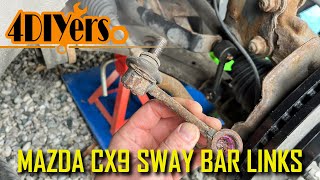
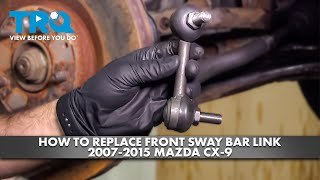
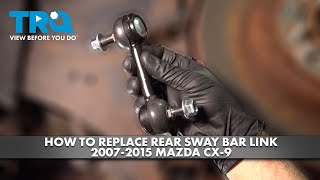

Technical Specifications
OEM Part Numbers: TD11-34-170 TD11-34-150 TD11-28-170
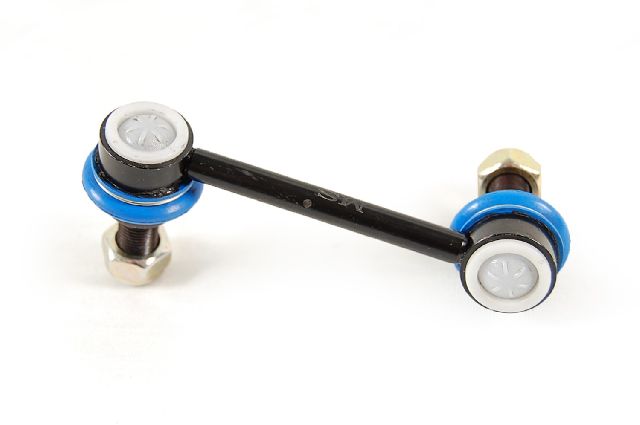
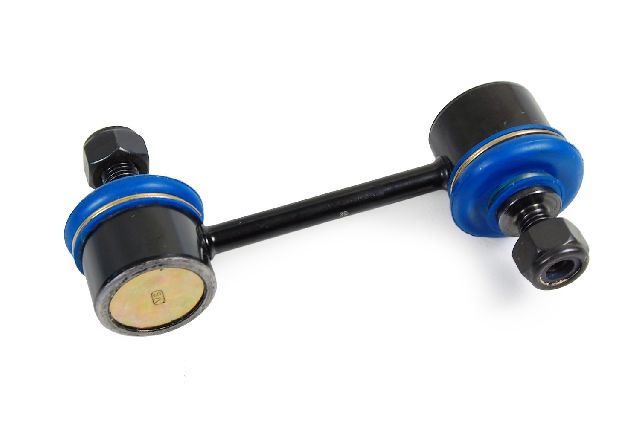
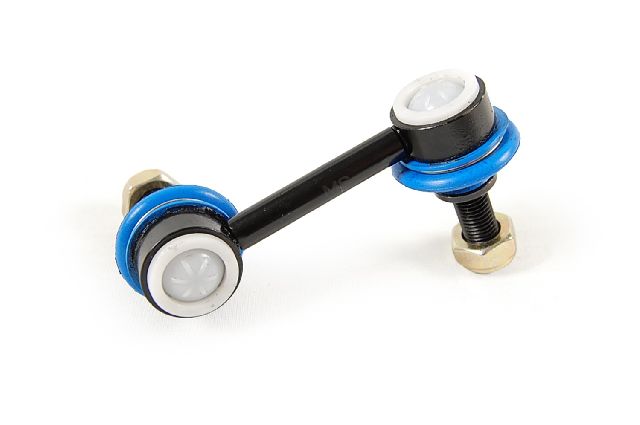
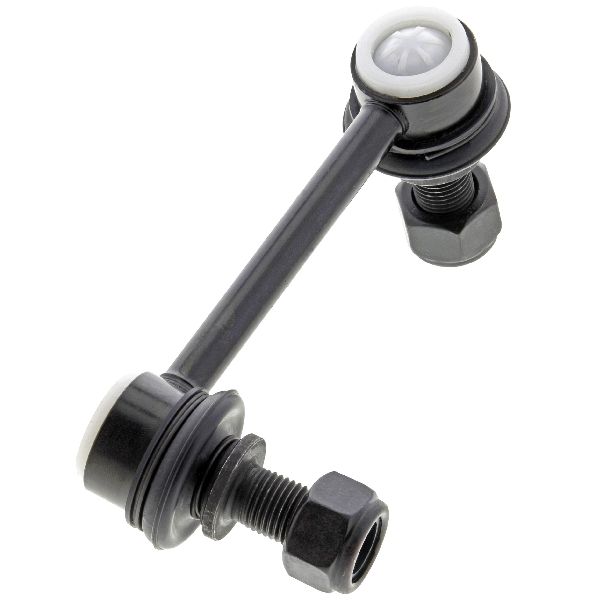
The kit consists of a metal rod with a ball joint at each end. The front links connect the stabilizer bar to the strut assembly, while the rear links connect the stabilizer bar to the lower control arm. Aftermarket versions often include nuts and may feature grease fittings.
We Have This Part in Stock


The information in this article is provided for general reference and educational purposes only. Vehicle specifications, procedures, and part compatibility can vary by production date, trim level, and region. Always consult your vehicle's factory service manual and verify part numbers before purchasing or performing repairs. Safety-critical components such as airbags, seat belts, and braking systems should be installed by a qualified professional.
- Mazda CX-9: