

Nissan Altima Ignition Coil Guide: 2007 to 2019 Models
Everything you need to know before replacing the ignition coils on your 2007-2019 Nissan Altima.
- Confirm your engine (4-cylinder or V6) before buying, as parts and labor differ greatly.
- For reliability, choose OEM (Hitachi) or premium aftermarket brands like NGK and Delphi; avoid the cheapest options.
- Always replace spark plugs with your ignition coils to prevent premature failure of the new parts.
- If you have a V6, consider replacing all six coils at once due to the high labor cost to access the rear three.
Understanding Ignition Coil Failure in Your Altima

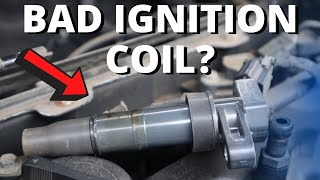
Ignition coils are wear-and-tear items that operate in a hot, high-vibration environment. Over time, the internal windings can break down or the housing can crack, leading to engine performance issues. While they can last over 100,000 miles, it's not uncommon to replace one or more during the life of your Altima. When a coil fails, it can no longer deliver the powerful spark needed for proper combustion, causing a cylinder to misfire.
Symptoms of a Bad Ignition Coil

A failing ignition coil will make its presence known. The most common sign is a flashing or solid Check Engine Light on your dashboard. Other symptoms include:
- Engine Misfires: The engine may shake, shudder, or run roughly, especially at idle or under acceleration.
- Loss of Power: Your Altima may feel sluggish and slow to accelerate.
- Reduced Fuel Economy: When a cylinder isn't firing correctly, your engine burns more fuel to compensate.
- Difficulty Starting: The engine may take longer to crank or fail to start.
- Exhaust Changes: You might notice the smell of unburned gasoline or see black smoke from the tailpipe. 🎬 Watch: A visual guide to common symptoms of coil failure.
Engine Differences Matter
The 2007-2019 Altima was available with different engines, primarily the 4-cylinder (QR25DE) and the V6 (VQ35DE). The 2019 model year also introduced a 2.0L VC-Turbo engine. These engines use different ignition coils and have vastly different replacement procedures. Always confirm your engine type before ordering parts.
Choosing the Right Aftermarket Ignition Coil

When shopping for aftermarket coils, you'll find a wide range of prices and brands. They can generally be grouped into three tiers.
Tier 1: OEM & Premium Aftermarket
These brands are often the original equipment manufacturer or are known for equivalent quality. For the Nissan Altima, Hitachi is a known OEM supplier. Brands like NGK, Delphi, and Denso are also highly regarded in forums and by mechanics for their reliability and performance, closely matching OEM standards. If you want a fit-and-forget repair, these are your best choices.
Tier 2: Quality Aftermarket
This tier includes brands like Standard Ignition (SMP), Walker Products, and Motorad. These companies have a long history of producing reliable replacement parts. They offer a good balance of quality and price, often with solid warranties. They are a dependable choice for most daily drivers.
Tier 3: Economy Brands
This category includes lesser-known or private-label brands like DriveWire, Skyward, and True Tech. While the low price is tempting, especially when buying a full set, quality can be inconsistent. Forum discussions frequently warn that cheap, unbranded coils can fail prematurely, leading you to do the job twice. These might be a temporary solution, but for long-term reliability, investing in a higher-tier brand is recommended.
Pro Tip: If one coil fails on a high-mileage engine, the others may not be far behind. To save yourself future headaches, many owners and mechanics recommend replacing all coils at the same time, especially if the job is labor-intensive (like on the V6 model).
Cost to Replace Nissan Altima Ignition Coils

The cost can vary significantly based on your engine, the brand you choose, and whether you do it yourself. The V6 requires more labor for the rear coils, which increases the cost of a professional repair.
| Item | 4-Cylinder (QR25DE) Cost | V6 (VQ35DE) Cost |
|---|---|---|
| Single Economy Coil | $35 - $50 | $35 - $50 |
| Single Premium Coil (e.g., Hitachi, NGK) | $60 - $100 | $65 - $110 |
| Shop Labor (DIY is possible) | $75 - $150 | $250 - $500+ (for all 6) |
| Total DIY (Full Set, Premium) | $240 - $400 | $390 - $660 |
| Total Professional Repair (Full Set, Premium) | $315 - $550 | $640 - $1160+ |
Known Issues, Recalls, and TSBs
There are no major recalls specifically for ignition coil failure on the 2007-2019 Nissan Altima. However, Nissan issued a Technical Service Bulletin (NTB06-075) for earlier V6 models (2004-2006) noting that a faulty negative battery ground cable could cause ignition coils to blister or melt. While this TSB is for an older model, it highlights the importance of checking electrical system grounds if you experience repeated coil failures.
Frequently Asked Questions (FAQ)
Can I replace just one bad ignition coil?
Yes, you can replace only the failed coil, and the car will run fine. However, since all coils have the same amount of wear, another one may fail soon after. For this reason, especially on high-mileage vehicles, it's often recommended to replace them as a set.
Should I replace my spark plugs at the same time?
Absolutely. It is highly recommended. Worn spark plugs create a larger gap, forcing the ignition coil to work harder and produce a higher voltage to create a spark. This extra strain can shorten the life of a new ignition coil. Since you already have everything taken apart, replacing the plugs is a smart and preventative step.
Why is replacing coils on the V6 Altima so much harder?
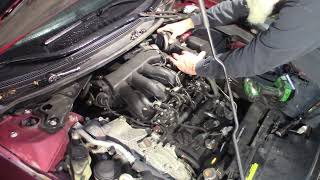
On the V6 (VQ35DE) engine, three of the six ignition coils are located at the back of the engine, tucked under the intake manifold. To access them, the entire upper intake manifold must be removed, which makes the job significantly more time-consuming and complex compared to the easily accessible front three coils 🎬 See how to access the rear coils on the V6 engine. or the coils on the 4-cylinder engine.
How do I know which cylinder has the bad coil?
An OBD-II scanner will give you a specific trouble code. Codes P0301, P0302, P0303, and P0304 refer to misfires in cylinders 1, 2, 3, and 4 respectively. A common diagnostic trick is to swap the suspected bad coil with a known good one from another cylinder. Clear the codes and run the engine. If the trouble code "follows" the coil to its new cylinder (e.g., a P0301 becomes a P0302 after swapping coils from cylinder 1 and 2), you have confirmed the coil is the problem.
🎬 Watch: A step-by-step guide to diagnosing an Altima misfire.Helpful Videos
![2007-2012 (& '13-'18) Nissan Altima Misfire Troubleshoot & Fix! [2.5L QR25DE]](https://img.youtube.com/vi/VMSUjv94x2w/mqdefault.jpg)
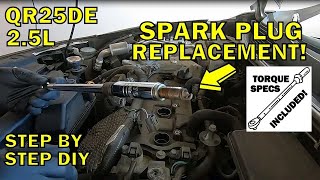
![2013-2018 Nissan Altima Spark Plug Replacement [2.5L QR25DE]](https://img.youtube.com/vi/MGKLhHYgbKQ/mqdefault.jpg)
Technical Specifications
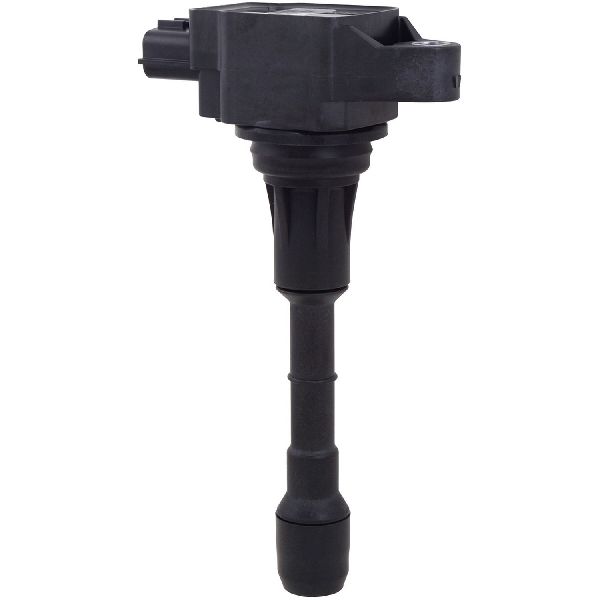
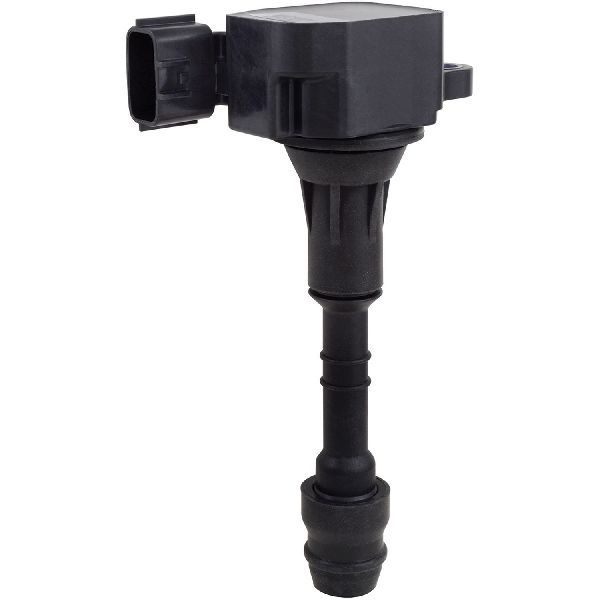
OEM Part Numbers: 22448-JA00C 22448-ED000 22448-JA00A 22448-1KT1A 22448-8J115 22448-JA10C 22448-6CA1A 22448-5NA0A
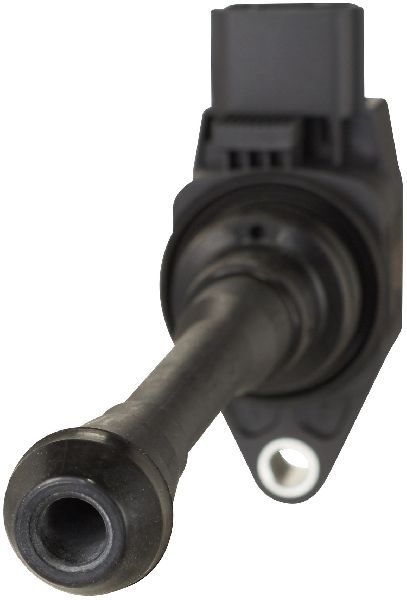
Configuration: Coil-on-Plug (COP). Voltage: Varies, converts 12V to ~45,000V. Connector: Varies by engine and year, typically a 3-pin connector. Always verify the part number for your specific engine (QR25DE, VQ35DE, KR20DDET).
We Have This Part in Stock


The information in this article is provided for general reference and educational purposes only. Vehicle specifications, procedures, and part compatibility can vary by production date, trim level, and region. Always consult your vehicle's factory service manual and verify part numbers before purchasing or performing repairs. Safety-critical components such as airbags, seat belts, and braking systems should be installed by a qualified professional.
- Nissan Altima:
- 🎬 Helpful Videos
- 🛍️ Shop This Part
- Understanding Ignition Coil Failure in Your Altima
- Symptoms of a Bad Ignition Coil
- Engine Differences Matter
- Choosing the Right Aftermarket Ignition Coil
- Tier 1: OEM & Premium Aftermarket
- Tier 2: Quality Aftermarket
- Tier 3: Economy Brands
- Cost to Replace Nissan Altima Ignition Coils
- Known Issues, Recalls, and TSBs
- Frequently Asked Questions (FAQ)
- 🎟️ Get 5% Off