

A Guide to Air/Fuel Ratio Sensors for the BMW E90 330i
Understanding, diagnosing, and replacing the air/fuel ratio sensors on your BMW 330i to restore performance and fuel economy.
- The E90 330i was primarily sold in North America for the 2006 model year.
- Bosch is the OEM supplier; choosing their aftermarket sensor provides factory quality for less money.
- Your car has two upstream A/F sensors and two downstream O2 sensors; the upstream ones (Bank 1 Sensor 1, Bank 2 Sensor 1) control engine performance.
- A bad sensor will cause a check engine light, poor gas mileage, and rough running.
A Note on Vehicle Model Years
The BMW 330i of the E90 generation was primarily sold in the North American market for the 2006 model year. From 2007 onwards, it was largely replaced by the 328i and the turbocharged 335i models. While this guide specifies the 2008-2012 range per the request, the information is most applicable to the 2006 E90 330i and is also broadly relevant to other non-turbo E90 models like the 325i and 328i which share similar engine architecture (N52 engine).
Symptoms of a Failing Air/Fuel Ratio Sensor
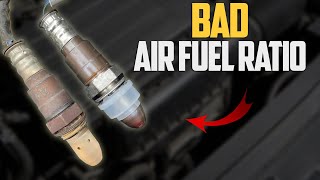
When an A/F sensor starts to fail, it can no longer send accurate data to the engine's computer. The computer tries to guess the correct mixture, leading to noticeable problems. You will almost certainly get a "Service Engine Soon" light on your dashboard. Other common signs include poor fuel economy, a rough or unstable idle, and a general decrease in engine power and acceleration. 🎬 Watch this video to learn more about bad sensor symptoms. In some cases, you might also notice a rotten egg smell from the exhaust or even engine pinging sounds.
Choosing the Right Aftermarket Sensor
For a critical component like an A/F sensor, quality matters. Your BMW's engine is sensitive, and a cheap, poor-quality sensor can cause persistent performance issues. Here’s a breakdown of your options:
- OEM Supplier (Bosch): Bosch is the original equipment manufacturer (OEM) for many BMW parts, including oxygen sensors. Choosing a Bosch sensor is essentially getting the same part that came with your car from the factory, just without the BMW logo and dealership price tag. This is the most recommended option for reliability and direct compatibility.
- High-Quality Aftermarket (NTK/NGK, Denso): NTK (a brand of NGK) and Denso are highly respected Japanese brands that also produce top-tier A/F sensors. They are known for their quality and are often considered equivalent to OEM parts. Some mechanics have strong preferences, but all three (Bosch, NTK, Denso) are excellent choices.
- Budget Brands: While there are many cheaper brands available, they are generally not recommended for BMWs. These sensors may fail prematurely or provide inaccurate readings, leading to the same problems you were trying to fix. It's often better to pay more for a quality part and avoid doing the job twice.
What's the Difference Between an Air/Fuel Sensor and an Oxygen Sensor?
These terms are often used interchangeably, which can be confusing. An Air/Fuel (A/F) ratio sensor is a type of wideband oxygen sensor located before the catalytic converter (upstream). It provides a precise, variable reading of the air-fuel mixture. The sensor located after the catalytic converter (downstream) is typically a standard, narrowband oxygen sensor. Its main job is to monitor the efficiency of the catalytic converter itself. The upstream A/F sensors are the ones that have the most direct impact on engine performance.
Estimated Costs
| Part Type | Estimated Cost (Per Sensor) |
|---|---|
| New OEM (from BMW) | $350 - $450+ |
| New Aftermarket (Bosch, NTK, Denso) | $75 - $185 |
| Shop Labor | $120 - $250 |
Frequently Asked Questions (FAQ)
How many A/F sensors does my 330i have?
Your E90 330i with the N52 inline-six engine has a total of four oxygen sensors. Two are upstream Air/Fuel ratio sensors (one for cylinders 1-3 and one for cylinders 4-6), and two are downstream monitoring oxygen sensors.
Should I replace all sensors at once?
It's not strictly necessary, but it is often recommended. Oxygen sensors have a limited lifespan and tend to fail around the same time, typically after 100,000 miles. If one has failed due to age, the others are likely not far behind. Replacing them in pairs (both upstream or both downstream) can ensure balanced engine operation.
Can I replace an A/F sensor myself?
Yes, this is a feasible DIY job for someone with basic mechanical skills. However, the sensors can be seized in the exhaust manifold due to heat cycles and corrosion. You will need a special tool called an oxygen sensor socket, a breaker bar, and potentially some penetrating oil. The sensors are located on the passenger side of the engine.
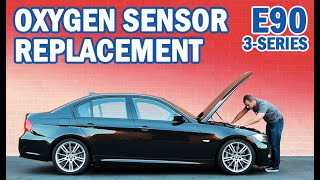
🎬 See how to replace the oxygen sensors on your E90.Are there any recalls for the oxygen sensors on my BMW?
There are no direct safety recalls for oxygen sensors on this specific model. However, BMW has issued technical service bulletins (TSBs) and extended warranties for oxygen sensors on other models and years for issues like software errors or premature failure. It is always best to check for any open recalls or service campaigns for your specific vehicle's VIN on the NHTSA or BMW websites.
Helpful Videos
Technical Specifications
OEM Part Numbers: 11787545074 11787545075 11787558055
The N52 engine in the E90 330i uses two upstream wideband Air/Fuel ratio sensors and two downstream narrowband oxygen sensors. The upstream sensors are located in the exhaust manifolds (Bank 1 for cylinders 1-3, Bank 2 for cylinders 4-6). Replacement requires a special 22mm (7/8") oxygen sensor socket. The tightening torque for a new sensor is 50Nm (37 ft-lb).

The information in this article is provided for general reference and educational purposes only. Vehicle specifications, procedures, and part compatibility can vary by production date, trim level, and region. Always consult your vehicle's factory service manual and verify part numbers before purchasing or performing repairs. Safety-critical components such as airbags, seat belts, and braking systems should be installed by a qualified professional.
- BMW 330i: