

A Guide to the Starter on Your 2006-2007 BMW 330i (E90)
Is your BMW 330i making a clicking sound but not starting? This guide is for you.
- The starter is located under the intake manifold, making replacement a labor-intensive job.
- Symptoms include a single click with no crank, slow cranking, or no sound at all.
- Always replace the single-use aluminum starter bolts and the intake manifold gaskets during the job.
- Choosing a quality brand like Bosch or Valeo is recommended due to the high labor cost of replacement.
Is Your BMW 330i Starter Failing?
When a starter begins to fail, it can leave you stranded without warning. Before it dies completely, it usually gives a few signs. It's important to distinguish these symptoms from a weak battery, as they can be very similar. A weak battery might cause slow cranking or a rapid clicking sound, while a bad starter often has its own distinct set of warnings.
Don't Get Stranded
A failing starter rarely fixes itself. The symptoms usually get worse until the car won't start at all. If you hear a single, loud click or a slow, struggling crank, it's time to diagnose the problem before you're left needing a tow.
Common Failure Symptoms
Pay close attention to how your car sounds when you press the start button. These are the most common signs of a failing starter on the E90 330i:
- Single Loud Click: You press the start button, and instead of the engine cranking, you hear one loud click from the engine bay. This is often the starter solenoid engaging but failing to turn the motor.
- Slow or Labored Cranking: The engine turns over much slower than usual, sounding weak and struggling to start. This can be confused with a weak battery, but if the battery is healthy, the starter is the likely culprit.
- No Sound at All: You press the button, the dashboard lights up, but there is no click and no cranking sound from the engine.
- Grinding or Whirring Noise: After the engine has started, you might hear a grinding or high-pitched whirring noise. This can happen if the starter fails to disengage from the flywheel.
Choosing the Right Aftermarket Starter
The original starter on your 330i was likely made by Bosch or Valeo. When choosing a replacement, you have several options that balance cost and quality.
Tier 1: OEM-Quality Brands
These brands are original equipment manufacturers or have a reputation for matching OEM quality. They are the most reliable choice for a long-lasting repair.
- Bosch: As an original supplier, a new or remanufactured Bosch starter is a safe bet. They are designed to meet the exact specifications of your vehicle. Remanufactured units are often more affordable and are rebuilt to high standards.
- Valeo: Another OEM supplier for BMW, Valeo starters are a high-quality alternative to Bosch. Some owners prefer them, believing they offer improvements over the original Bosch units.
Tier 2: Reputable Aftermarket Brands
These brands offer a good balance of price and performance. They may not have the OEM pedigree, but they are trusted in the industry.
- Carquest Premium / Duralast Gold: These are often remanufactured units from major auto parts stores. They typically come with a lifetime warranty, which can be appealing.
- WAI Global / TYC: These companies produce new aftermarket starters and have a decent reputation among DIYers for their value.
Tier 3: Economy Brands
While the low price is tempting, these starters can be a gamble. They may have a shorter lifespan or inconsistent quality. Given the difficult labor involved in replacing the starter on an N52 engine, saving a few dollars on the part itself is often not worth the risk of having to do the job twice.
A Note on Remanufactured vs. New
A high-quality remanufactured starter from a top brand like Bosch is often a better choice than a new starter from an unknown, budget brand. Remanufactured units from reputable sources have their wear components (like brushes and bushings) replaced and are thoroughly tested.
| Part Type | Estimated Price Range |
|---|---|
| New OEM (Dealer) | $550 - $825 |
| New Aftermarket (Bosch, Valeo) | $195 - $265 |
| Remanufactured (Bosch, Carquest) | $165 - $215 |
| Used OEM | $50 - $100 |
| Shop Labor | $500 - $800 |
Frequently Asked Questions
Is it my starter or my battery?
A battery issue often causes all electronics to dim or a rapid clicking sound when you try to start the car. A starter issue is more likely to be a single, loud click or a very slow, struggling crank even with a fully charged battery. If jumping the car doesn't help, the starter is a more likely suspect.
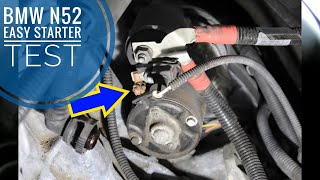
🎬 Watch: How to test your starter without using special tools.Why is the replacement so expensive?
The starter itself is not overly expensive, but its location makes the job labor-intensive. On the N52 engine, the starter is buried underneath the intake manifold. A mechanic must remove the entire manifold to access it, which takes several hours. This significant labor time is what drives up the total cost of replacement.
Can I replace the starter myself?
Yes, but it is a difficult job for a beginner. It requires removing the intake manifold, which involves disconnecting numerous hoses and electrical connectors. You will need a good set of tools, including E-Torx sockets, extensions, and swivel adapters. The job can take an experienced DIYer 3-5 hours 🎬 Watch: The fastest way to complete this starter replacement DIY., but can take much longer for a first-timer. It is considered a challenging but achievable DIY project.
🎬 See this detailed walkthrough for replacing the N52 starter motor.Do I need to replace any other parts at the same time?
Yes. The aluminum starter bolts are single-use and must be replaced. It is also highly recommended to replace the intake manifold gaskets while you have it off. Some owners also choose to replace the crankcase ventilation (PCV) hoses or the crank position sensor, as they are much easier to access with the manifold removed.
Helpful Videos

Technical Specifications
OEM Part Numbers: 12412354701 12417521116 12417526236 12412354693
Voltage: 12V, Power Rating: ~1.2-1.4 kW, Rotation: Clockwise, Teeth: 9

The information in this article is provided for general reference and educational purposes only. Vehicle specifications, procedures, and part compatibility can vary by production date, trim level, and region. Always consult your vehicle's factory service manual and verify part numbers before purchasing or performing repairs. Safety-critical components such as airbags, seat belts, and braking systems should be installed by a qualified professional.
- BMW 330i: