

A Deep Dive into Suspension Strut Replacement for the 2008-2012 Chevrolet Impala
Restore your Impala's ride quality and handling by understanding how to choose the right new aftermarket struts.
- For a simpler and safer installation, always choose a complete strut assembly ('quick strut').
- Struts must be replaced in pairs (both front or both rear) to ensure vehicle stability.
- A safety recall for front control arms only affects 2008-2012 Impala police models, not civilian cars.
- An alignment is necessary after replacing struts to prevent uneven tire wear.
Is Your Impala's Ride Not What It Used to Be?

As your 2008-2012 Chevrolet Impala ages, the original struts wear out. This happens gradually, so you might not notice it at first. But worn struts can make your car less safe and uncomfortable to drive. Symptoms often include a bouncy, floating ride, unusual noises when going over bumps, and the front end diving forward when you brake. You might also notice that your tires are wearing unevenly, a condition known as 'cupping'. If you push down hard on a corner of the car and it bounces more than once, it's a classic sign your struts are worn.
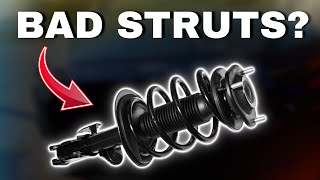
🎬 Watch: 5 symptoms of bad struts you should not ignore.Pro Tip: Always Replace in Pairs
Suspension struts should always be replaced in pairs (both front struts or both rear struts at the same time). Replacing only one can lead to unbalanced handling and unpredictable steering. An alignment is also highly recommended after the job is done to prevent premature tire wear.
Known Issues for the 2008-2012 Chevrolet Impala

While this generation of the Impala has a generally reliable suspension, there are a few specific items to be aware of:
- Police Vehicle Recall: There was a major safety recall (NHTSA Campaign #12V-377) for fractured front lower control arms on 2008-2012 Impala police vehicles only. This recall does not apply to civilian models, as they use a different part.
- Rear End Clunk (2012-2013): A technical service bulletin (TSB PIC-5732) was issued for some 2012 models that could develop a clunk or creak from the rear when accelerating. This noise can be mistaken for a bad strut but may actually be caused by a shifting, deformed fuel tank.
- Strut Seepage vs. Leaks: GM issued a TSB (#150089004C) to help technicians tell the difference between minor fluid 'seepage' on a strut, which is normal, and a true fluid leak that requires replacement. A light film of oil is acceptable, but if it's actively dripping, the strut has failed.
Choosing the Right Aftermarket Strut: Complete Assemblies are Key

For the 2008-2012 Impala, the best choice for almost every owner is a complete strut assembly, also known as a 'loaded' or 'quick' strut. This is a pre-built unit that includes the strut, coil spring, and upper mount all in one piece. Buying a complete assembly is much safer and easier than disassembling the old unit to install a bare strut, a process that requires a dangerous tool called a spring compressor.
Aftermarket Brand Tiers
Here’s a breakdown of common aftermarket brands to help you decide:
- OEM / Premium Aftermarket (ACDelco, KYB): ACDelco is the original parts supplier for GM, so their struts will provide a ride very similar to how your car felt when it was new. KYB is another top-tier brand, often considered a slight upgrade. Owners report KYB struts provide a firmer, more controlled ride than stock, which can improve handling.
- Standard Aftermarket (Monroe, Gabriel): Monroe is a very popular brand and also an OEM supplier for GM, known for providing a comfortable ride that's close to the original feel. Some users feel they may not last as long as firmer options like KYB. Gabriel is another well-regarded brand in this category, offering a good balance of quality and value.
- Economy Aftermarket (Detroit Axle, TRQ, PRT): These brands offer complete strut assemblies at a very attractive price point. They can be a good choice for budget-conscious repairs to restore basic function, but may not offer the same ride refinement or long-term durability as the premium or standard tiers.
| Part Type | Estimated Part Cost (Pair) | Shop Labor Cost | Total Estimated Cost |
|---|---|---|---|
| New Aftermarket (Economy) | $200 - $300 | $250 - $400 | $450 - $700 |
| New Aftermarket (Standard/Premium) | $300 - $550 | $250 - $400 | $550 - $950 |
| New OEM (ACDelco) | $450 - $700+ | $250 - $400 | $700 - $1100+ |
Cost estimates are approximate and can vary based on location, brand, and the specific repair shop. Sourced from multiple online retailers and repair estimators.
Frequently Asked Questions
Do I need to replace all four struts at once?
You don't have to, but it's best practice to replace them in pairs (front pair or rear pair). If all four are original and have high mileage, replacing all of them will fully restore your car's handling and ride height. If budget is a concern, start with the pair that is in the worst condition.
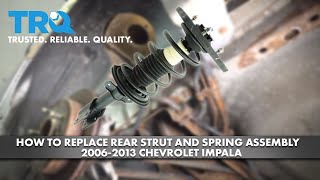
🎬 Watch: How to replace your rear strut and spring assembly.Can I replace just the shock absorber and reuse my old spring?
While technically possible, it is not recommended for a DIY repair. It requires a special spring compressor tool that is dangerous to use without proper training. The labor cost at a shop to do this often makes it more expensive than simply buying a complete, pre-assembled strut unit.
What are the torque specs for the Impala's struts?
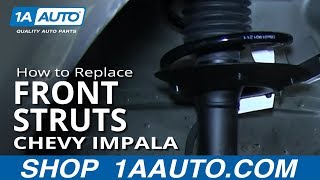
For the front struts, the three upper mount nuts should be torqued to 24 lb-ft. The two large bolts that connect the strut to the steering knuckle should be torqued to 96 lb-ft. 🎬 See this walkthrough for replacing your front struts. Always verify specs for your specific vehicle and part.
Will new struts fix a clunking noise?
Often, yes. A clunking or knocking noise over bumps is a very common symptom of a bad strut or a worn strut mount. However, other worn parts like sway bar links or control arm bushings can also cause clunking, so a thorough inspection is important.
Helpful Videos
Technical Specifications
The 2008-2012 Impala uses a MacPherson strut design for both the front and rear suspension. Replacement is most commonly done with complete strut assemblies. Torque specifications for the front are approximately 24 lb-ft for the three upper mount nuts and 96 lb-ft for the two lower knuckle bolts.

The information in this article is provided for general reference and educational purposes only. Vehicle specifications, procedures, and part compatibility can vary by production date, trim level, and region. Always consult your vehicle's factory service manual and verify part numbers before purchasing or performing repairs. Safety-critical components such as airbags, seat belts, and braking systems should be installed by a qualified professional.
- Chevrolet Impala: