

Hyundai Santa Fe Starter Guide: 2008-2013 Models
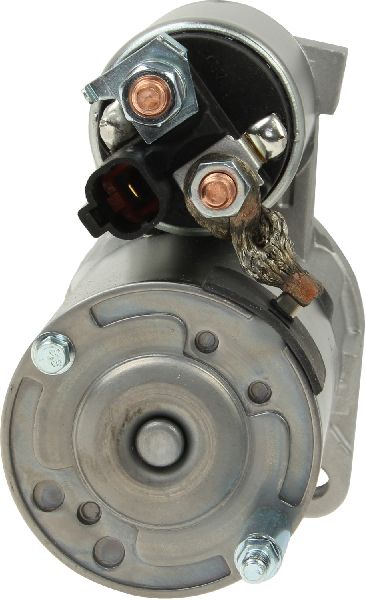
Is your 2008-2013 Santa Fe clicking, slow to start, or not starting at all? It could be the starter.
- Failure symptoms include clicking, slow cranking, or a no-start condition.
- On 2.4L engines (2010-2013), a whirring sound without cranking is a known issue addressed by a TSB.
- Replacement is much more difficult and costly on the 2.4L engine because the starter is under the intake manifold.
- Always ensure the heat shield is reinstalled, especially on V6 models, to prevent premature failure of the new starter.
Is Your Santa Fe's Starter Failing?

A starter problem on the 2008-2013 Hyundai Santa Fe usually gives some warning signs before it fails completely. Ignoring these signs can leave you with a car that won't start. Before you blame the battery, look for these common symptoms.
Top 5 Failure Symptoms
- Single Loud Click or Rapid Clicking: When you turn the key, you hear a single, sharp "click" or a series of rapid clicks, but the engine doesn't turn over. This often means the starter isn't getting enough power or the internal components have failed.
- Engine Cranks Slowly: The engine turns over much slower than usual, sounding sluggish and weak. This can indicate a dying starter motor that is drawing too much power.
- Grinding Noise: A harsh grinding sound when you try to start the engine (or just after it starts) can mean the starter's gear is not engaging correctly with the engine's flywheel or is already damaged.
- Intermittent Starting: The car starts perfectly one day but refuses to start the next. This unpredictability is a classic sign of a starter on its way out, often due to a loose connection or a developing dead spot in the motor.
- No Sound at All: You turn the key and nothing happens. While this could be a dead battery, it can also be a completely failed starter motor or solenoid.
Known Issue: 2.4L Engine Starter Lever (2010-2013)
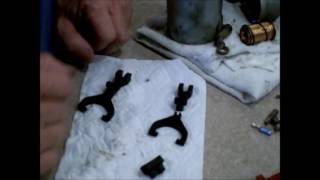
Hyundai issued a Technical Service Bulletin (TSB 13-EE-001) for 2010-2013 Santa Fe models with the 2.4L engine. The problem is a "No Start" condition where you hear the starter motor spin freely, but it doesn't crank the engine. This is caused by a broken plastic starter lever inside the motor. If you have a 2.4L engine and hear a whirring sound but no crank, this is the likely cause.
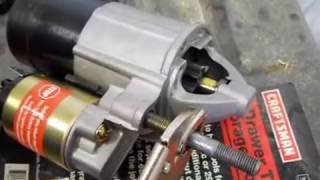
🎬 Watch: How to replace the broken 2.4L starter leverChoosing a New Aftermarket Starter

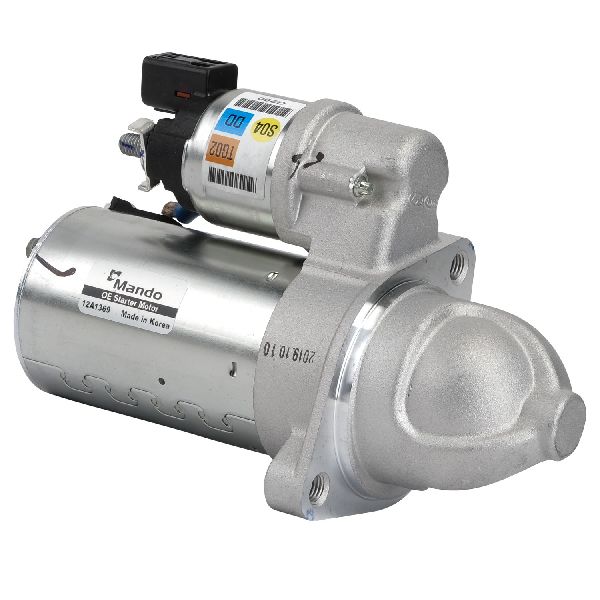
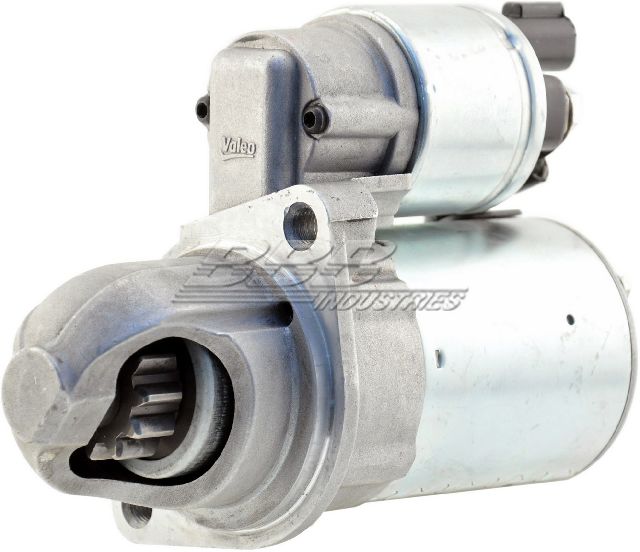
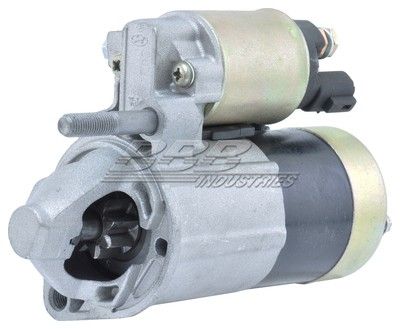
When replacing the starter on your Santa Fe, you don't have to buy an expensive OEM part from the dealer. Aftermarket brands offer a wide range of quality and price. Mando is a known original equipment manufacturer for Hyundai, so their parts are a direct equivalent to the factory starter. Brands like Bosch, Denso, and Valeo are also top-tier suppliers known for excellent quality that often meets or exceeds OEM standards. Other brands like Remy, WAI Global, and BBB Industries offer good value and are reliable choices, especially if they come with a strong warranty.
Cost to Replace a 2008-2013 Hyundai Santa Fe Starter

The cost depends on your engine and whether you do the job yourself. The starter on V6 models is easier to access from underneath the vehicle. However, on the 2.4L 4-cylinder engine, the starter is located under the intake manifold, which must be removed. This makes the job significantly longer and more expensive if you're paying for labor.
| Part/Service | Estimated Cost |
|---|---|
| New Aftermarket Starter | $121 - $296 |
| Shop Labor (V6 Engines) | $150 - $250 |
| Shop Labor (2.4L I4 Engine) | $300 - $500+ |
| Total Professional Replacement (V6) | $271 - $546 |
| Total Professional Replacement (2.4L) | $421 - $796+ |
Frequently Asked Questions

Is there a recall on the 2008-2013 Santa Fe starter?
No, there are no active safety recalls for the starter motor on the 2008-2013 Hyundai Santa Fe. Recalls you may have seen are for much newer model years and do not apply to this generation.
Can I replace the Santa Fe starter myself?
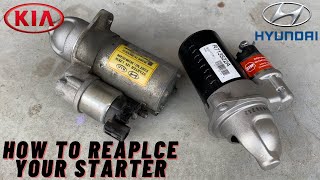
Yes, it is a DIY-feasible job, but the difficulty depends on your engine. On the 2.7L, 3.3L, and 3.5L V6 engines, the starter is accessed from underneath and is a relatively straightforward unbolt-and-replace job. On the 2.4L 4-cylinder, the starter is under the intake manifold, requiring more extensive disassembly, making it a more advanced DIY task.
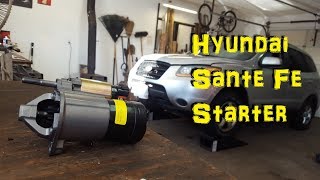
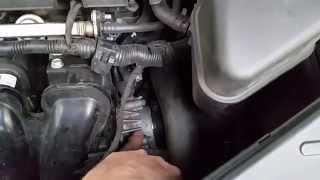
🎬 See this overview of the 2.4L starter replacement processMy car just clicks. Is it the starter or the battery?
It could be either, but there's a simple test. Turn on your headlights and try to start the car. If the headlights dim significantly or go out, your battery is likely weak or dead. If the headlights stay bright and you just hear a click, the problem is more likely the starter or its connections.
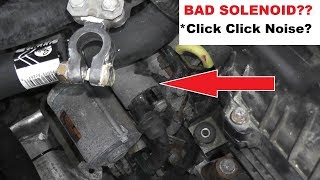
🎬 Watch: How to test the solenoid if you hear clickingWhat's the difference between a new and remanufactured starter?
A new starter is made with 100% new components. A remanufactured starter has been completely disassembled, cleaned, and had its worn or failed components replaced with new parts before being reassembled and tested to meet specifications. For many reputable brands, a remanufactured unit is a high-quality, cost-effective alternative to new.
Helpful Videos
Technical Specifications
OEM Part Numbers: 36100-2G100 36100-3C151 36100-25020 36100-37210
Voltage: 12V. Power Rating: 1.2kW to 1.4kW depending on engine. Rotation: Clockwise. Number of Teeth: 8 or 11.
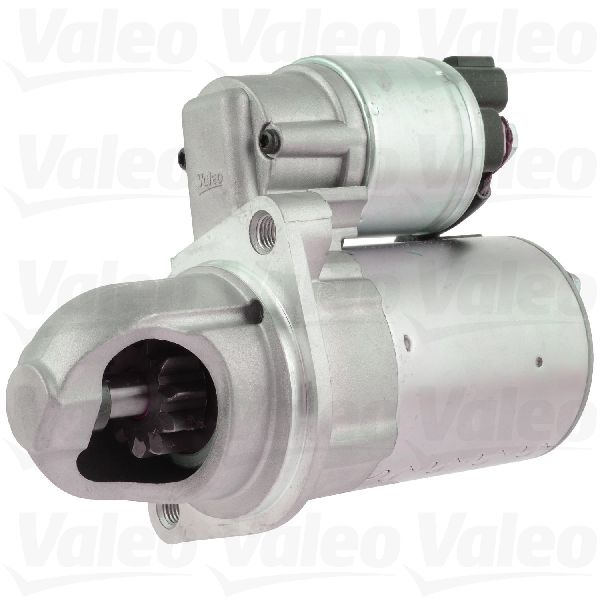
We Have This Part in Stock

The information in this article is provided for general reference and educational purposes only. Vehicle specifications, procedures, and part compatibility can vary by production date, trim level, and region. Always consult your vehicle's factory service manual and verify part numbers before purchasing or performing repairs. Safety-critical components such as airbags, seat belts, and braking systems should be installed by a qualified professional.
- Hyundai Santa Fe: