

Honda CR-V Transmission Speed Sensor Guide (2008-2014)
Solving erratic shifting and speedometer problems in your 2008-2014 Honda CR-V starts here.
- The 2008-2014 CR-V has transmission speed sensors (input/output) that are different from the ABS wheel speed sensors; transmission issues are tied to the former.
- Symptoms include harsh shifting, a faulty speedometer, and a Check Engine Light with codes like P0500, P0717, or P0722.
- Before ordering, use a scanner to identify which sensor (input or output) has failed to avoid buying the wrong part.
- Replacement is a manageable DIY task, and quality aftermarket brands like Standard Ignition offer a reliable alternative to OEM parts.
Is It a Transmission Sensor or a Wheel Speed Sensor?

It is important to know the difference. Your CR-V has two types of speed sensors. This article is about the Transmission Speed Sensors, which are located on the transmission housing and control shifting. You also have four Wheel Speed Sensors (or ABS sensors), one at each wheel, which are mainly for the Anti-lock Brake System (ABS) and traction control. While a bad wheel speed sensor can sometimes affect the speedometer, the most common causes of poor shifting are the transmission-mounted sensors.
Symptoms of a Failing Transmission Speed Sensor

When a transmission speed sensor fails, your CR-V's computer gets confusing information. This can lead to several noticeable problems.
- Harsh or Delayed Shifting: The transmission may slam into gear, hesitate before shifting, or refuse to shift into higher gears.
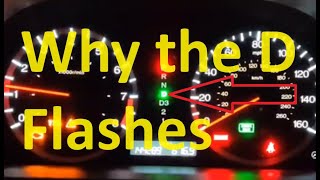
- Flashing 'D' Light: The green 'D' on your gear indicator may start blinking, signaling a transmission-related fault. 🎬 Watch: Why the D light flashes and how to fix it
- Check Engine Light: A fault will trigger the check engine light, storing codes like P0500, P0717, or P0722.
- Faulty Speedometer: The speedometer needle may bounce, drop to zero while driving, or show an incorrect speed.
- Cruise Control Inoperable: The cruise control system will not work if it doesn't receive a reliable speed signal.
Common Ordering Mistake
Your CR-V has both an input and an output transmission speed sensor, and they are not the same part. Before ordering, use an OBD-II scanner to see which sensor circuit is triggering the fault code (e.g., P0717 for input, P0722 for output). 🎬 See this walkthrough for replacing an input shaft speed sensor Ordering the wrong sensor is a common and frustrating mistake.
Choosing the Right Aftermarket Part

For a critical electronic part like a speed sensor, quality is important. While an OEM Honda part is a safe bet, high-quality aftermarket brands provide excellent performance and value.
Standard Ignition (SMP) is a well-regarded brand that manufactures parts meeting or exceeding original equipment standards. They are a trusted choice for sensors among professional mechanics. The wide price range for this part ($32.76 - $216.54) often reflects the difference between the input and output sensors or different quality tiers offered by a brand. A higher price often means more robust internal components and stricter testing.
| Part Type | Estimated Cost |
|---|---|
| New OEM | $80 - $130 |
| New Aftermarket (Standard Ignition) | $32 - $217 |
| Shop Labor | $100 - $225 |
Pro Tip: Check Your Wiring First
Before replacing the sensor, inspect the wiring harness and connector. A loose connection, or wiring that is corroded or damaged, can cause the exact same symptoms as a failed sensor. A quick visual check can sometimes save you the cost of a new part.
Frequently Asked Questions

Where are the transmission speed sensors located on a 2008-2014 CR-V?
The input and output speed sensors are mounted on the exterior of the automatic transmission. The output sensor, which provides the VSS signal, is typically found on top of the transmission housing, underneath the air filter box.
🎬 Watch: How to locate and replace the output speed sensorCan I replace a transmission speed sensor myself?
Yes, this is a feasible DIY project for someone with basic tools. Accessing the sensors usually requires removing the air intake assembly. The sensor itself is typically held in by a single bolt. The job takes about 1 to 1.5 hours.
Are there any recalls for the CR-V speed sensor?
As of late 2024, there are no specific recalls or technical service bulletins (TSBs) from Honda or the NHTSA for widespread failure of the transmission speed sensors on the 2008-2014 CR-V.
What's the difference between an input and output speed sensor?
The input sensor (or turbine sensor) measures the speed of the transmission's input shaft, while the output sensor measures the speed of the output shaft. The computer compares these two speeds to verify that the transmission is in the correct gear and shifting properly. Both are essential for smooth operation.
Helpful Videos
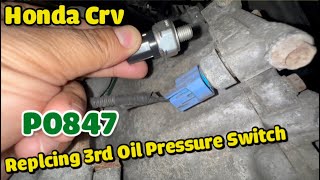

Technical Specifications
OEM Part Numbers: 28820-RPC-013 (Output Shaft Speed Sensor) 28810-R90-003 (Input Shaft Speed Sensor) 28810-R90-013
The system uses two primary sensors on the automatic transmission: an input (turbine) speed sensor and an output (countershaft) speed sensor. Both are typically 3-pin Hall effect sensors that send a signal to the Powertrain Control Module (PCM).
We Have This Part in Stock


The information in this article is provided for general reference and educational purposes only. Vehicle specifications, procedures, and part compatibility can vary by production date, trim level, and region. Always consult your vehicle's factory service manual and verify part numbers before purchasing or performing repairs. Safety-critical components such as airbags, seat belts, and braking systems should be installed by a qualified professional.
- Honda CR-V: