

Dodge Challenger Manifold Absolute Pressure (MAP) Sensor Guide (2008-2015)
Is your Challenger running rough or losing power? The MAP sensor might be the culprit.
- A bad MAP sensor causes poor performance, rough idle, and bad gas mileage in your Challenger.
- Replacement is very easy and can be done in minutes with no special tools.
- Stick with Mopar, NGK/NTK, or Delphi brands for sensors to ensure reliability and avoid repeat failures.
- No recalls or TSBs exist for this specific part, so failure is usually due to normal wear and tear.
Is Your Challenger's MAP Sensor Failing?
A bad MAP sensor sends wrong information to your car's computer, leading to noticeable engine problems. Because this sensor is vital for the air-fuel mixture, ignoring a failure can lead to poor performance, bad fuel economy, and potentially long-term engine damage.
Key Failure Symptoms:
- Rough Idle: The engine may shake or sound unstable when stopped.
- Poor Fuel Economy: A bad sensor can cause the engine to run rich (too much fuel), wasting gas.
- Loss of Power & Hesitation: You might feel a delay or sluggishness when you press the gas pedal.
- Black Smoke from Exhaust: This is a sign of unburnt fuel from a rich air-fuel mixture.
- Check Engine Light: A failing MAP sensor will almost always trigger a Check Engine Light with codes like P0106, P0107, or P0108.
Known Issues, Recalls, or TSBs
For the 2008-2015 Dodge Challenger, there are no widespread recalls or Technical Service Bulletins (TSBs) specifically related to the MAP sensor. Failure is typically due to age, heat exposure, or contamination from engine oil vapors.
Choosing the Right Aftermarket MAP Sensor
When it comes to engine sensors for your Challenger, quality matters. While it's a simple part, a low-quality sensor can fail quickly or provide inaccurate readings, causing the same problems you're trying to fix. Here’s a breakdown of the available brands.
Tier 1: OEM & Premium Aftermarket
These brands are known for being Original Equipment (OE) suppliers or for having equivalent quality. For critical sensors, this is the safest bet.
- Mopar: The official OEM part. It's the benchmark for quality and fitment, but usually the most expensive option.
- NGK/NTK: Widely regarded as an OEM manufacturer for many brands, including Mopar. Their sensors are trusted by mechanics and enthusiasts.
- Delphi: Another major OEM supplier. Delphi parts are known for their reliability and are a strong alternative to Mopar.
Tier 2: Reputable Aftermarket
These brands offer a good balance of price and quality and are a solid choice for most owners.
- Standard Ignition (SMP): A long-standing brand with a generally good reputation for producing reliable electronic components.
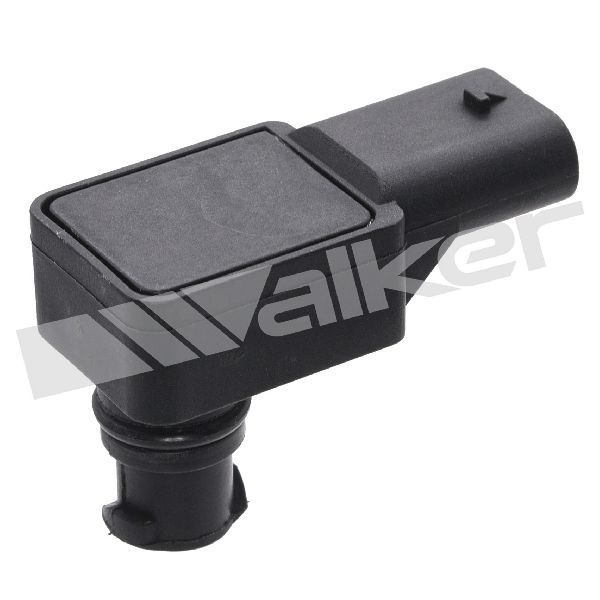
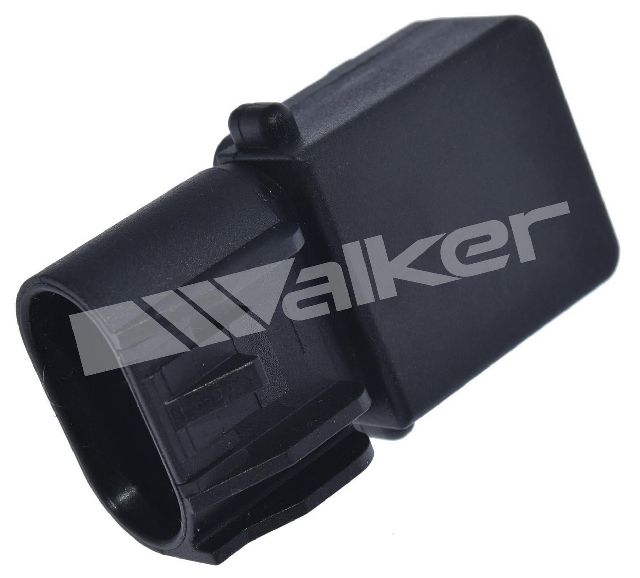
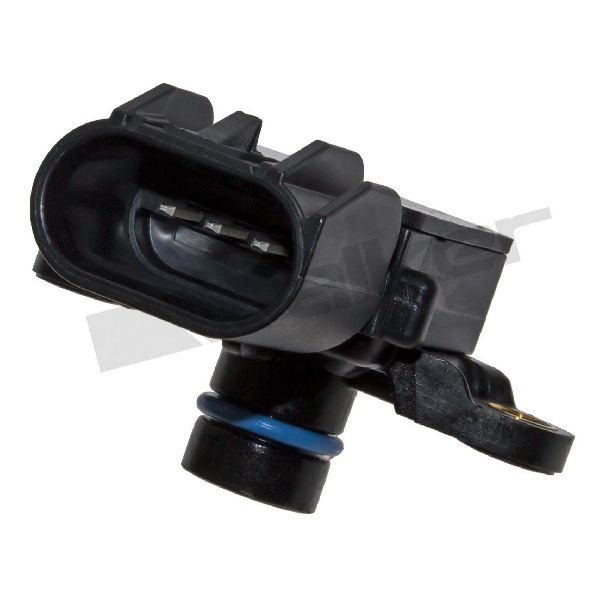
- Walker Products: A well-known aftermarket manufacturer that produces a wide range of engine management components.
A Note on Budget Brands
Brands like Crown, Holstein, Spectra, and Global Parts fall into the standard or economy category. While they offer a lower price point, forum discussions among Mopar owners often suggest sticking with OEM or premium aftermarket brands for electronic sensors to avoid performance issues or premature failure.
Cost of Replacing a Challenger MAP Sensor
The MAP sensor is one of the easier and more affordable parts to replace on your Challenger.
| Part Type | Estimated Cost |
|---|---|
| New OEM (Mopar) | $55 - $90 |
| New Aftermarket | $26 - $155 |
| Shop Labor | $50 - $75 |
Costs are estimates and can vary based on brand, retailer, and your location. It is not recommended to use used or remanufactured sensors.
Frequently Asked Questions
Where is the MAP sensor located on the 2008-2015 Challenger?
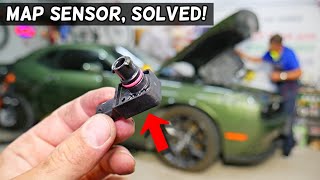
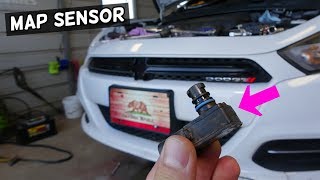
The MAP sensor is located on the intake manifold, just behind the throttle body. 🎬 Watch this video to see the exact MAP sensor location. On both V6 and V8 engines, you'll need to remove the top engine cover to see it. It is typically held in by its O-ring seal and is removed with a simple twist-and-pull motion after unplugging the electrical connector.
Can I replace the MAP sensor myself?
Yes, this is a very beginner-friendly job. It requires no special tools beyond what you might need to remove the engine cover. The entire process usually takes less than 15 minutes. 🎬 See this walkthrough for removing and replacing the sensor. Just be careful not to break the plastic locking tab on the electrical connector.
Should I buy an OEM Mopar sensor or is aftermarket okay?
For critical engine sensors, OEM (Mopar) or a premium aftermarket brand like NGK/NTK or Delphi is highly recommended. While cheaper options exist, they can be a gamble in terms of accuracy and lifespan. Spending a little more for a quality part can save you from future headaches.
Do I need to reset the computer after replacing the MAP sensor?
It's a good practice to clear the Check Engine Light codes with an OBD2 scanner after installation. You can also disconnect the battery's negative terminal for about 15 minutes to reset the ECU. This allows the computer to relearn its parameters with the new sensor's readings.
Helpful Videos
Technical Specifications
OEM Part Numbers: 68199324AB 68199324AA 5149091AA 5033310AC 56041018AC
The MAP sensor for the Dodge Challenger is a 3-pin solid-state sensor that measures pressure changes inside the intake manifold and sends a variable voltage signal to the ECU.
We Have This Part in Stock


The information in this article is provided for general reference and educational purposes only. Vehicle specifications, procedures, and part compatibility can vary by production date, trim level, and region. Always consult your vehicle's factory service manual and verify part numbers before purchasing or performing repairs. Safety-critical components such as airbags, seat belts, and braking systems should be installed by a qualified professional.
- Dodge Challenger:
- 🎬 Helpful Videos
- 🛍️ Shop This Part
- Is Your Challenger's MAP Sensor Failing?
- Key Failure Symptoms:
- Known Issues, Recalls, or TSBs
- Choosing the Right Aftermarket MAP Sensor
- Tier 1: OEM & Premium Aftermarket
- Tier 2: Reputable Aftermarket
- A Note on Budget Brands
- Cost of Replacing a Challenger MAP Sensor
- Frequently Asked Questions
- 🎟️ Get 5% Off