

Jeep Wrangler (2008-2018) Accessory Drive Belt Replacement Guide
Squealing noises from under the hood of your Jeep could mean it's time for a new accessory drive belt.
- Identify your engine; the 3.8L (08-11) and 3.6L (12-18) use different belts and replacement procedures.
- A squealing noise is often caused by a bad tensioner or idler pulley, not just the belt. Plan to inspect and likely replace these parts at the same time.
- If the belt breaks, do not drive the vehicle. You will lose power steering and the engine will quickly overheat.
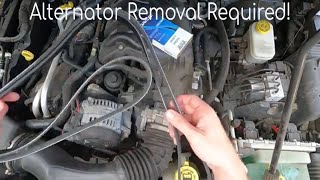
- For the 3.6L engine, be prepared to loosen the alternator to get the belt off; it's a required step for the job.
Is Your Jeep's Accessory Belt Failing?
An accessory drive belt is a wear item. Made of rubber, it degrades over time due to heat and friction. You should inspect it regularly, especially after 60,000 miles. There are two different engines in the 2008-2018 Jeep Wrangler JK, the 3.8L V6 (2008-2011) and the 3.6L Pentastar V6 (2012-2018), which use different belts and have slightly different warning signs.
Common Failure Symptoms:
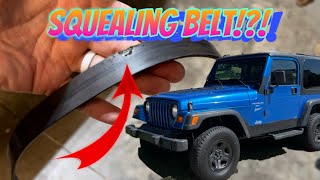
- Squealing or Chirping Noises: 🎬 Watch this video to hear what a failing belt sounds like. This is the most common sign of a problem. The noise might happen when you start the engine, accelerate, or turn on the air conditioning. It's usually caused by a worn, slipping, or misaligned belt.
- Visible Damage: A visual inspection can tell you a lot. Look for cracks, frayed edges, missing ribs, or a shiny, glazed surface on the belt. If you see any of these, the belt needs replacement.
- Accessory Problems: If your power steering becomes heavy, the battery warning light comes on, or the engine temperature gauge starts to climb, your belt may have failed.
- Poor A/C Performance: If your air conditioning isn't blowing cold air, it could be because a slipping belt isn't turning the compressor properly.
Don't Ignore a Failing Belt
If the accessory drive belt breaks completely, your Jeep will lose power steering and the ability to charge its battery. The water pump will also stop working, causing the engine to overheat quickly, which can lead to severe engine damage. Do not drive a vehicle with a broken accessory belt.
Choosing the Right Aftermarket Belt
For the Jeep Wrangler, the original Mopar belt is a quality part, but top-tier aftermarket brands often meet or exceed OEM standards. When shopping for a replacement, you have several good options.
- Premium Aftermarket (ACDelco, Bando): Brands like ACDelco and Bando are well-regarded in the industry. Bando is an OEM supplier for many automakers and is known for its durability. ACDelco, GM's parts division, also produces high-quality belts known for being long-lasting and crack-resistant. These are excellent choices for a reliable replacement.
- Jeep Specialist (Crown Automotive): Crown Automotive specializes in parts for Jeep vehicles. While specific comparisons for their belts are less common in forums, they are a dedicated source for Jeep-specific components.
Pro Tip: It's Not Just the Belt!
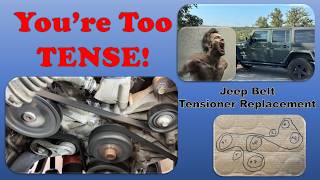
Often, a squealing noise isn't caused by the belt itself, but by a failing belt tensioner or idler pulley. The tensioner keeps the belt tight, and if it's weak, a new belt will still slip and wear out quickly. When replacing your belt, always spin the pulleys by hand (with the engine off). If they feel rough, make noise, or wobble, they must be replaced. Many owners choose to replace the belt, tensioner, and idler pulleys at the same time to prevent future problems.
Installation & Cost
Replacing the accessory belt is a common maintenance task, but the difficulty varies by engine.
- 2008-2011 (3.8L V6): This is a straightforward job that can be done in under an hour with basic hand tools. 🎬 See this step-by-step belt replacement walkthrough for the 3.8L engine.
- 2012-2018 (3.6L V6): This is more complex. The alternator must be loosened and tilted out of the way to create enough space to remove and install the belt. While still possible for a DIYer, it requires more time and effort. 🎬 Watch how to move the alternator and replace the 3.6L belt.
| Item | Cost |
|---|---|
| New Aftermarket Belt | $40.18 - $57.80 |
| New OEM Mopar Belt | $47 - $89 |
| Shop Labor | $84 - $124 |
| Total Professional Replacement | $152 - $195 (approx.) |
Frequently Asked Questions (FAQ)
Can I drive my Jeep with a squealing belt?
You can, but it's risky. A squeal is a warning that the belt is slipping or worn. It could fail at any moment, leaving you stranded. It's best to get it inspected and replaced as soon as possible.
Should I replace the tensioner and pulleys with the belt?
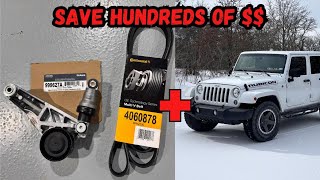
It is highly recommended. A worn tensioner or idler pulley is a very common cause of belt noise and failure on the Jeep Wrangler. Replacing them with the belt is preventative maintenance that saves you from having to do the job twice.
Is an aftermarket belt as good as the OEM Mopar belt?
Yes, high-quality aftermarket brands like Bando, ACDelco, Gates, and Continental are widely considered to be as good as, or sometimes better than, the original OEM part. They use durable materials like EPDM rubber that resist heat and cracking.
Why is replacing the belt on the 3.6L engine harder than on the 3.8L?
On the 3.6L Pentastar engine, the design requires the alternator to be unbolted and moved to get the belt around a mounting bracket. The 3.8L engine does not have this obstruction, making the belt replacement much simpler.
Helpful Videos
Technical Specifications
OEM Part Numbers: 53032857AB (for 3.8L V6) 4627043AA (for 3.6L V6)
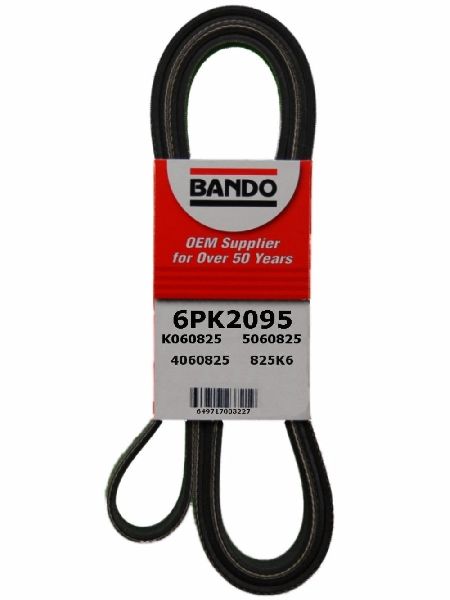
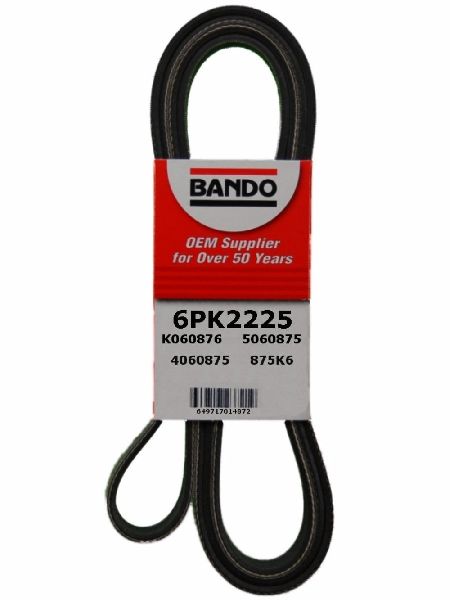
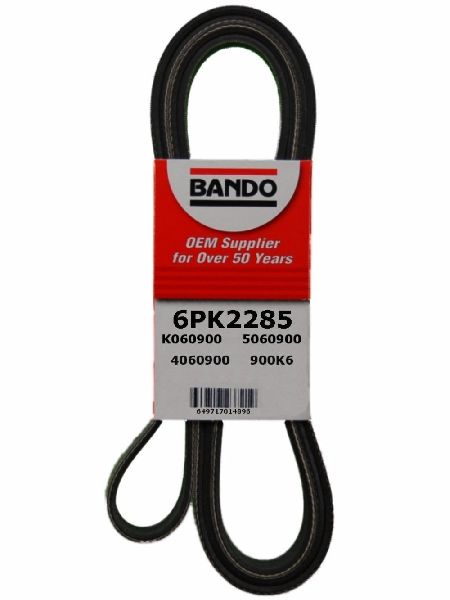
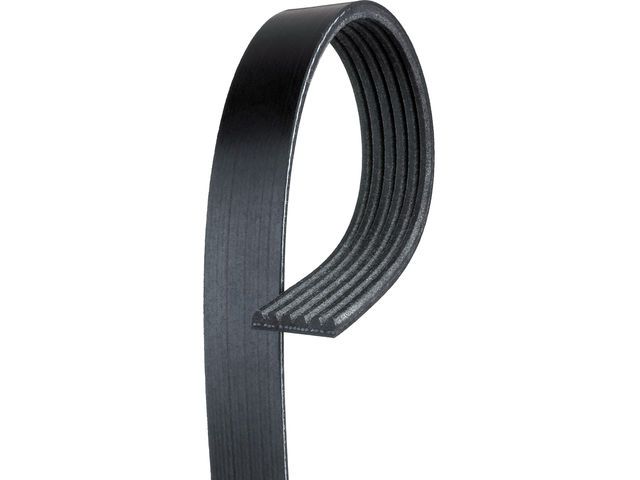
The 2008-2018 Jeep Wrangler uses a 6-rib, multi-V serpentine belt. The length differs between the 3.8L and 3.6L engines. Belts are typically made from durable EPDM rubber to resist heat and cracking.
We Have This Part in Stock

The information in this article is provided for general reference and educational purposes only. Vehicle specifications, procedures, and part compatibility can vary by production date, trim level, and region. Always consult your vehicle's factory service manual and verify part numbers before purchasing or performing repairs. Safety-critical components such as airbags, seat belts, and braking systems should be installed by a qualified professional.
- Jeep Wrangler: