

A Jeep Wrangler Owner's Guide to Oxygen Sensor Replacement (2008-2019)
Bad gas mileage and a check engine light on your Wrangler? It might be time for new oxygen sensors.
- Stick with NTK or Denso brands for aftermarket sensors to avoid compatibility issues; NTK is the OEM supplier for Mopar.
- A bad O2 sensor can lead to poor gas mileage, rough running, and eventually damage the catalytic converters.
- Replacing O2 sensors is a manageable DIY job, but requires a special socket and sometimes removing the inner fender liner for access.
- If you replace a sensor and the check engine light returns, check for underlying issues like exhaust leaks or bad wiring before replacing more parts.
Understanding Oxygen Sensors in Your 2008-2019 Wrangler

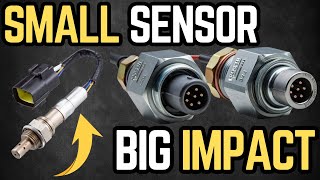
The oxygen sensors in your Jeep Wrangler are small but mighty parts that play a huge role in how your engine runs. They act like sniffers in your exhaust pipe, telling the engine's computer how rich (too much fuel) or lean (not enough fuel) the fuel mixture is. The computer then makes real-time adjustments. When a sensor fails, the computer gets bad information, which can lead to poor performance and other problems. The 2008-2011 models with the 3.8L V6 and the 2012-2019 models with the 3.6L Pentastar V6 both rely on a four-sensor setup for proper operation.
Symptoms of a Failing Oxygen Sensor

A bad O2 sensor won't usually stop your Jeep in its tracks, but it will cause noticeable issues. Keep an eye out for these common signs:
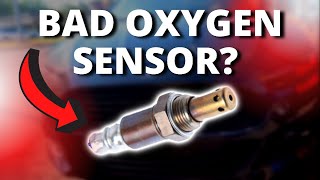
🎬 Watch this guide to identify common failing oxygen sensor symptoms.- Check Engine Light: This is the most common symptom. Codes like P0137, P0138, P0420, or P0430 often point to an O2 sensor issue.
- Poor Fuel Economy: If you're stopping for gas more often, a bad sensor could be forcing your engine to use more fuel than necessary.
- Rough Idle and Misfires: A faulty sensor can mess with the air-fuel mixture, causing your engine to run rough, shake at idle, or misfire.
- Sluggish Performance: Your Wrangler might feel slow or hesitant during acceleration.
- Rotten Egg Smell: A strong sulfur smell from the exhaust can indicate that unburned fuel is getting into the catalytic converter, a problem often caused by a bad O2 sensor.
Don't Ignore the Signs
Driving with a bad oxygen sensor for too long can cause more expensive problems. An incorrect fuel mixture can overheat and damage your catalytic converters, which are much more costly to replace than the sensors themselves.
Choosing the Right Aftermarket Oxygen Sensor

When it comes to sensors for your Jeep, quality matters. While Mopar (OEM) is always a safe bet, high-quality aftermarket brands can offer the same performance for less money. However, many Jeep owners and mechanics report problems with cheaper, generic brands causing persistent check engine lights.
Brand Tiers for Jeep Wrangler
- Tier 1 (Highly Recommended): NTK and Denso. NTK is the original equipment manufacturer (OEM) for Mopar O2 sensors, so buying NTK is like getting the dealer part without the dealer price. Denso is another highly respected OEM supplier known for its reliability. Most Jeep owners on forums report excellent results with these brands.
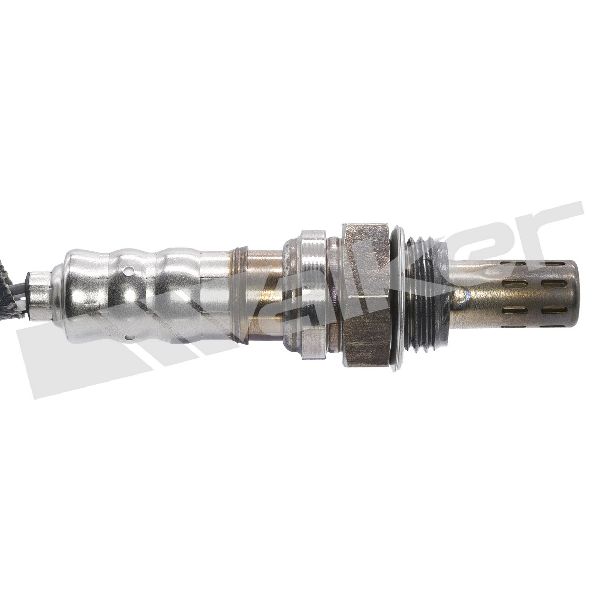
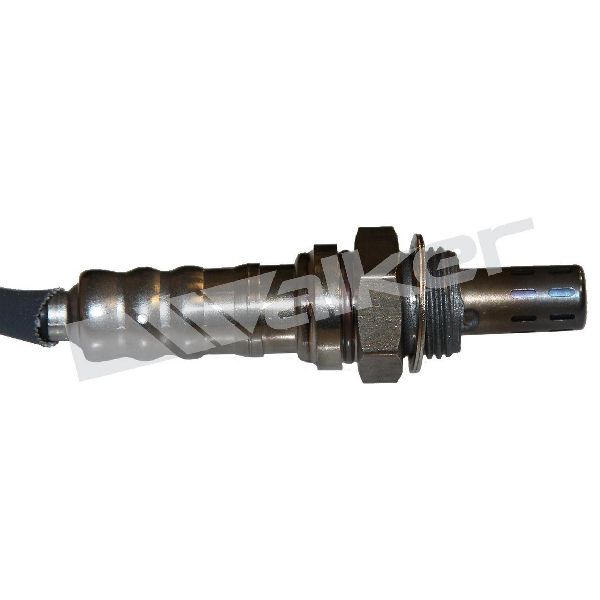
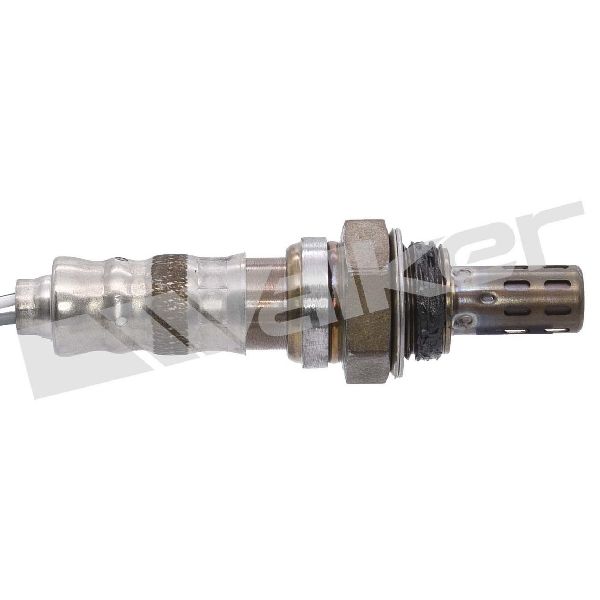
- Tier 2 (Good Value): Walker Products and Spectra are often considered reliable mid-tier options that provide good performance for their price.
- Tier 3 (Use with Caution): Bosch. While a major brand, many Jeep owners report compatibility issues and recurring check engine lights after installing Bosch sensors on their Wranglers. It's often recommended to avoid them for this specific application.
Pro Tip: Replace in Pairs or Sets
Oxygen sensors wear out over time, typically lasting up to 100,000 miles. If one sensor fails, the others are likely not far behind. It's often a good idea to replace them in pairs (both upstream or both downstream) or as a complete set of four to ensure balanced and accurate readings across the system.
Known Issues, Recalls & TSBs

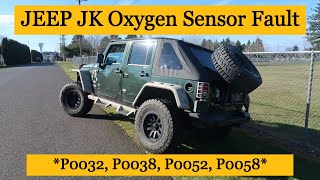
No widespread recalls exist for oxygen sensors on the 2008-2019 Wrangler. However, some Technical Service Bulletins (TSBs) have been issued for newer models (specifically 2024) related to PCM software causing O2 sensor heater circuit codes (P0032, P0038, P0052, P0058). 🎬 Learn how to troubleshoot these specific heater circuit fault codes. While this doesn't directly apply to the 2008-2019 range, it highlights that sometimes the sensor isn't the root cause. On older 3.8L models, wiring issues, particularly a bad ground connection near the passenger side of the engine, can mimic the symptoms of a failed sensor.
Cost of Replacing a Jeep Wrangler Oxygen Sensor
| Part Type | Typical Cost (Part Only) |
|---|---|
| New OEM (Mopar) | $80 - $150 per sensor |
| New Aftermarket (Tier 1) | $50 - $100 per sensor |
| New Aftermarket (Tier 2/3) | $25 - $60 per sensor |
| Shop Labor | $100 - $200 per hour |
Frequently Asked Questions

Where are the oxygen sensors located on my Wrangler?
Your Wrangler has four sensors. Two are "upstream" (between the engine and the catalytic converters) and two are "downstream" (after the catalytic converters). There is one upstream and one downstream sensor on each side of the exhaust (Bank 1 is the passenger side, Bank 2 is the driver side).
Can I replace an oxygen sensor myself?
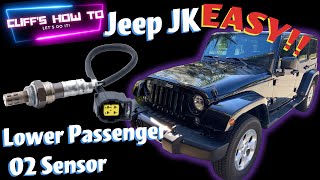
Yes, this is a DIY-friendly job for someone with basic mechanical skills. The main tools needed are a ratchet, extensions, and a special oxygen sensor socket. 🎬 See a step-by-step walkthrough of a Wrangler O2 sensor replacement. Accessing the sensors, especially on the passenger side, often requires removing the front wheel and inner fender liner. The driver's side downstream sensor can be the most difficult due to tight space.
What's the difference between upstream and downstream sensors?
Upstream sensors (also called Sensor 1) measure the exhaust directly from the engine and are used for making rapid fuel adjustments. Downstream sensors (Sensor 2) measure the exhaust after it has passed through the catalytic converter. Their main job is to monitor the health and efficiency of the converter itself.
Do I need to use anti-seize on the new sensor?
Most new, high-quality oxygen sensors come with anti-seize compound already applied to the threads. If yours does not, it is highly recommended to apply a small amount of high-temperature anti-seize to the threads before installation, being careful not to get any on the sensor tip itself. This will make it much easier to remove in the future.
My check engine light is still on after replacing the sensor. What now?
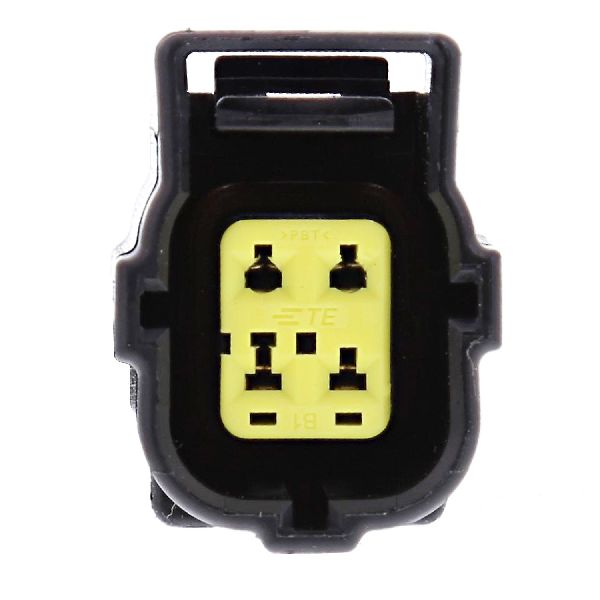
First, ensure you've cleared the codes with a scanner. If the light returns, the issue might not have been the sensor itself. Check for exhaust leaks, damaged wiring or connectors, or a failing catalytic converter. On some Jeeps, a bad ground wire can also cause false O2 sensor codes.
Helpful Videos

Technical Specifications
OEM Part Numbers: 5033500AA 56028994AA 68224424AA 68291423AB
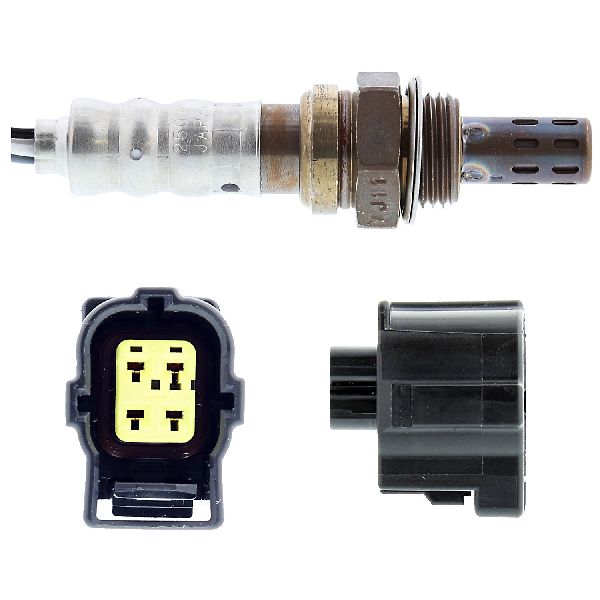
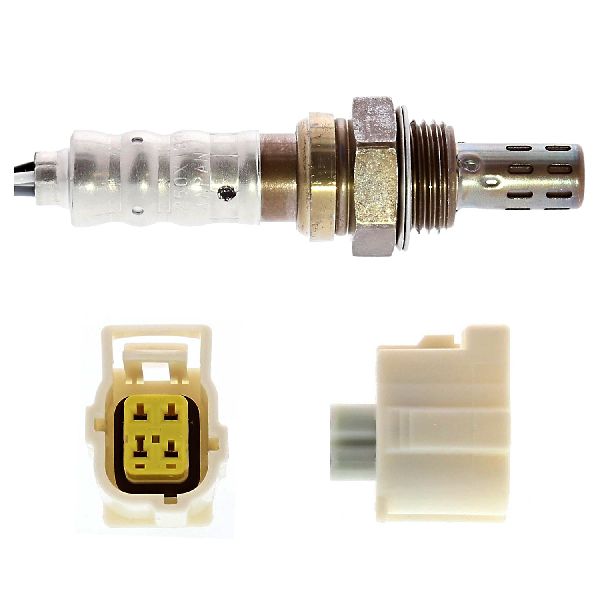
Your Wrangler uses four heated oxygen sensors. There are two upstream (pre-catalyst) and two downstream (post-catalyst) sensors. The sensors for the 3.8L V6 (2008-2011) and 3.6L V6 (2012-2019) are different. Always verify the correct part number for your specific year, engine, and sensor location (Bank 1/2, Sensor 1/2).
We Have This Part in Stock

The information in this article is provided for general reference and educational purposes only. Vehicle specifications, procedures, and part compatibility can vary by production date, trim level, and region. Always consult your vehicle's factory service manual and verify part numbers before purchasing or performing repairs. Safety-critical components such as airbags, seat belts, and braking systems should be installed by a qualified professional.
- Jeep Wrangler:
- 🎬 Helpful Videos
- 🛍️ Shop This Part
- Understanding Oxygen Sensors in Your 2008-2019 Wrangler
- Symptoms of a Failing Oxygen Sensor
- Don't Ignore the Signs
- Choosing the Right Aftermarket Oxygen Sensor
- Brand Tiers for Jeep Wrangler
- Pro Tip: Replace in Pairs or Sets
- Known Issues, Recalls & TSBs
- Cost of Replacing a Jeep Wrangler Oxygen Sensor
- Frequently Asked Questions
- 🎟️ Get 5% Off