

Nissan Altima Camshaft Position Sensor Guide for 2008-2020 Models
Experiencing stalling or starting problems with your Altima? A faulty camshaft position sensor could be the culprit.
- Common symptoms include stalling, hard starting, rough idle, and a Check Engine Light with codes P0340 or P0345.
- Before replacing the sensor, always check your engine oil level and condition, as low or dirty oil can cause identical symptoms.
- This is a very easy DIY replacement, typically requiring only a 10mm socket and less than 30 minutes.
- Be cautious with aftermarket sensors; some Altimas are sensitive and may require a genuine OEM part to resolve starting issues permanently.
Is Your Altima Stalling or Hard to Start?

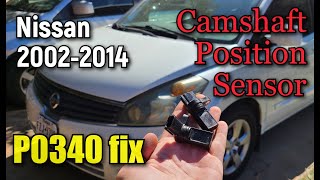
A failing camshaft position sensor in a 2008-2020 Nissan Altima often causes distinct and frustrating symptoms. Because this sensor is critical for engine timing, a bad signal can make your car run poorly or not at all. The most common sign is the Check Engine Light turning on. You will likely see trouble codes such as P0340 (for Bank 1 or the 4-cylinder engine) or P0345 (for Bank 2 on V6 engines).
Other common symptoms include:
- Engine Stalling: The engine may shut off unexpectedly while you are driving or idling at a stoplight.
- Hard Starting or No Start: Your car may take longer than usual to start, or it might just crank without ever firing up. 🎬 Watch: Diagnosing a P0340 no-start condition on an Altima
- Rough Idle: The engine may shake or vibrate when the car is in park or at a stop.
- Loss of Power: Acceleration may feel sluggish or hesitant, especially when going uphill.
- Poor Fuel Economy: You might notice you're filling up your gas tank more often than usual.
Check Your Oil First!
Before replacing the sensor, check your engine oil level and condition. On many Nissan vehicles, extremely low or dirty engine oil can cause the same symptoms and trigger camshaft sensor error codes. An oil change might be all you need to fix the problem.
Choosing a Replacement Sensor: OEM vs. Aftermarket

When it comes to electronic sensors for the Nissan Altima, there is a debate about using Original Equipment Manufacturer (OEM) parts versus aftermarket parts. OEM sensors are the same ones installed at the factory and are known for their reliability and perfect fit. Aftermarket parts are made by other companies and are usually much less expensive.
For many parts, an aftermarket version is a great way to save money. However, for this specific sensor on the Altima, caution is advised.
A Warning on Aftermarket Sensors
Some Altima owners have reported that after installing an aftermarket camshaft position sensor, their starting problems continued or got worse. In these cases, switching to a genuine OEM sensor solved the issue. While an aftermarket sensor can be a tempting budget option, be aware that some Altimas are very sensitive and may only function correctly with an OEM part. If you choose an aftermarket part and the problem persists, the sensor itself could be the issue.
Camshaft Position Sensor Replacement Cost
The cost to replace a camshaft position sensor in a 2008-2020 Nissan Altima depends on who does the work and the type of part used. The job is simple and can be done quickly by a professional or a DIYer.
| Part Type | Estimated Cost |
|---|---|
| New Aftermarket Part | $36.98 |
| New OEM Part | $113 - $270 |
| Shop Labor | $49 - $72 |
| Total Professional Replacement (Aftermarket) | $86 - $109 |
| Total Professional Replacement (OEM) | $162 - $342 |
Frequently Asked Questions

Is it hard to replace the camshaft position sensor myself?
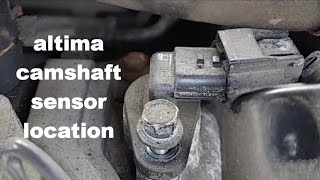
No, this is a very easy DIY job for most Altima models. The sensor is usually located on the top of the engine's valve cover and is held in place by a single 10mm bolt. The process involves unplugging the electrical connector, removing the bolt, swapping the sensor, and reconnecting everything. The entire job can take less than 30 minutes.
🎬 Watch: Quick video showing the sensor location on the engineWhat's the difference between Bank 1 and Bank 2 sensors?
This applies to Altimas with the V6 engine, which have two camshaft sensors. "Bank 1" is the cylinder bank closer to the firewall (the back of the engine bay), while "Bank 2" is closer to the radiator (the front of the car). The sensors themselves can be different shapes (one straight, one angled), so it's important to order the correct one for the bank you are replacing. 🎬 See this walkthrough for replacing V6 Bank 1 and 2 sensors Four-cylinder engines may have one or two sensors (intake and exhaust), which are often the same part number.
Should I replace the crankshaft position sensor at the same time?
It is not required, but it's a common practice. The camshaft and crankshaft position sensors work together. They often fail around the same time because they are exposed to the same heat and wear over the years. If one has failed, the other may not be far behind. Replacing both can save you from another repair in the near future.
Were there any recalls for this part?
No, there have been no specific recalls issued by Nissan or the NHTSA for the camshaft position sensor on the 2008-2020 Nissan Altima. While some Technical Service Bulletins (TSBs) exist for engine and CVT issues, none point to a widespread defect with this specific sensor.
Helpful Videos
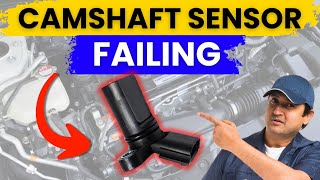
Technical Specifications
OEM Part Numbers: 23731-JA11B 23731-6N21A 23731-EN22A 23731-JA11A 23731-6N202 23731-8J006
The camshaft position sensor on a 2008-2020 Nissan Altima is a 3-pin magnetic sensor. It is secured to the engine's valve cover or cylinder head with a single 10mm bolt.

The information in this article is provided for general reference and educational purposes only. Vehicle specifications, procedures, and part compatibility can vary by production date, trim level, and region. Always consult your vehicle's factory service manual and verify part numbers before purchasing or performing repairs. Safety-critical components such as airbags, seat belts, and braking systems should be installed by a qualified professional.
- Nissan Altima: