

Toyota Camry Knock Sensor Guide: 2008-2020 Models
Understanding knock sensor failure and replacement for your 2008-2020 Toyota Camry.
- Replacement on a V6 engine is much more difficult and costly than on a 4-cylinder due to the sensor location under the intake manifold.
- Using a high-quality OEM-grade aftermarket part (like Denso) is crucial to avoid repeat failures, especially on V6 models where labor costs are high.
- On V6 models, it is highly recommended to replace both knock sensors and the wiring harness at the same time.
- Common symptoms include a Check Engine Light (P0325, P0330), poor acceleration, and reduced fuel economy.
Is Your Camry's Knock Sensor Failing?

A failing knock sensor can cause several noticeable problems with your Toyota Camry. The most common sign is the check engine light turning on. You might also feel that your car is sluggish and doesn't accelerate as well as it used to. In some cases, you may hear a metallic pinging or knocking sound coming from the engine, especially when accelerating or going up hills. Poor fuel economy is another common symptom because the engine isn't running as efficiently.
4-Cylinder vs. V6 Engines: A Major Difference
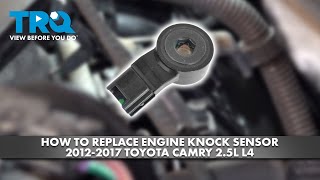
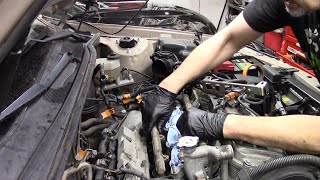
The engine in your Camry makes a huge difference in how this repair is done. On 4-cylinder models, there is one knock sensor located on the back of the engine block, underneath the intake manifold. On V6 models, there are two knock sensors located in the valley of the engine, under the entire lower intake manifold. Because of this location, replacing the sensors on a V6 is a much more difficult and labor-intensive job. It is highly recommended to replace both sensors and the wiring harness at the same time on V6 models.
Choosing the Right Aftermarket Knock Sensor

When it comes to engine sensors on a Toyota, quality matters. The original equipment (OEM) manufacturer for many Toyota sensors is Denso. While OEM parts can be expensive, many owners and mechanics recommend using an OEM or OEM-quality aftermarket brand like Denso or NTK for this repair.
Using a low-quality, cheap aftermarket sensor is risky. These parts can fail quickly or not communicate correctly with the Camry's computer, causing the check engine light to come back on. Given the high cost of labor for this repair, especially on the V6 engine, spending a little more on a quality part can save you from having to do the job all over again.
Cost to Replace a Toyota Camry Knock Sensor
The cost can vary significantly based on your engine type and whether you do the work yourself or use a repair shop.
| Part/Service | Estimated Cost |
|---|---|
| New Aftermarket Knock Sensor | $31 - $80 |
| New OEM Knock Sensor | $127 - $258 |
| Shop Labor | $265 - $700+ (Varies greatly by engine) |
| Total Professional Replacement | $392 - $800+ |
Note: The labor cost for a V6 Camry will be at the higher end of the range, or even exceed it, due to the complexity of removing the intake manifold.
Frequently Asked Questions

Can I drive my Camry with a bad knock sensor?
You can, but it's not recommended for long. Your car's computer will likely put the engine into a 'safe mode,' which reduces power and fuel efficiency to prevent damage. If the engine is truly knocking and the sensor isn't working, you could risk serious internal engine damage over time.
What error codes are related to a bad knock sensor?
The most common codes are P0325 for Knock Sensor 1 Circuit Malfunction (used for 4-cylinder and Bank 1 on V6) and P0330 for Knock Sensor 2 Circuit Malfunction (Bank 2 on V6 engines). You might also see codes like P0327, P0328, P0332, or P0333, which relate to low or high circuit inputs.
Why is the V6 replacement so much more expensive?
On the V6 engine, the two knock sensors are buried deep under the intake manifold. A mechanic must remove the upper and lower intake manifolds to access them, which is a time-consuming process that significantly increases labor costs.
Should I replace the wiring harness at the same time?
For V6 models, it is strongly recommended to replace the short wiring harness that connects the two sensors. The harness is located in a high-heat area under the manifold and can become brittle and fail. Since the labor to get to it is the same, replacing it with the sensors is a smart move to avoid future problems.
Are there any recalls for the knock sensor on the 2008-2020 Camry?
Based on searches of the National Highway Traffic Safety Administration (NHTSA) database and other public information, there are no specific safety recalls for knock sensor failure on the 2008-2020 Toyota Camry.
Helpful Videos

Technical Specifications
OEM Part Numbers: 89615-06010 89615-20090 89615-BZ030 89615-BZ040
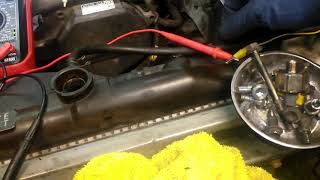
The knock sensor for the Toyota Camry is a piezoelectric sensor that converts engine vibrations into an electrical voltage. V6 models use two sensors. The wiring harness is also a common failure point, especially on V6 models.

The information in this article is provided for general reference and educational purposes only. Vehicle specifications, procedures, and part compatibility can vary by production date, trim level, and region. Always consult your vehicle's factory service manual and verify part numbers before purchasing or performing repairs. Safety-critical components such as airbags, seat belts, and braking systems should be installed by a qualified professional.
- Toyota Camry: