

2009-2010 Hummer H3T Throttle Position Sensor & Throttle Body Guide
Solving the dreaded 'Reduced Power' message on your H3T starts here.
- The 'Reduced Power' message on a 2009-2010 H3T is almost always caused by a failed throttle body.
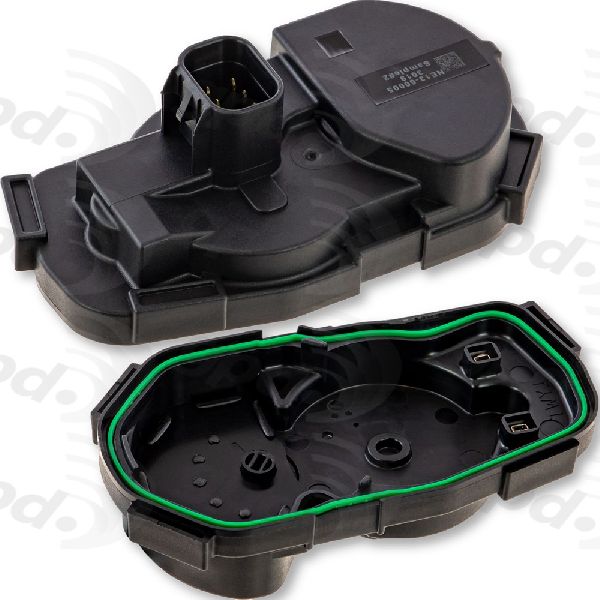
- The Throttle Position Sensor (TPS) is integrated into the throttle body; you must replace the entire assembly.
- GM issued a warranty extension (Special Coverage) for this known issue, but it has expired. The repair is now your responsibility.
- An aftermarket throttle body from a reputable brand like Standard Ignition or NGK/NTK is a reliable and cost-effective solution.
The Critical Throttle Body Issue on the 2009-2010 H3T
If you own a 2009-2010 Hummer H3T, you need to know about the throttle body. This part is a known weak point. The most common sign of failure is the "Engine Reduced Power" message on your dashboard, which puts the truck into a 'limp mode' with very little acceleration. This happens because the internal Throttle Position Sensor (TPS) fails, and the truck's computer can no longer trust the signal it's receiving about how much air the engine is getting.
A Known Problem: GM's Special Coverage Adjustment
General Motors was aware of this widespread issue. Instead of a formal recall, they issued Special Coverage Adjustments (#11273B for V8s and #14582A for I5s) that extended the warranty on the throttle body assembly to 10 years or 120,000 miles. For virtually all 2009-2010 H3T models, this coverage has now expired. This means the cost of repair is now the owner's responsibility.
Symptoms of a Failing H3T Throttle Body
A bad throttle body can cause a range of frustrating problems. The signs are often very clear and consistent for the H3T.
- "Engine Reduced Power" Message: This is the most definitive symptom. It's a safety feature that severely limits engine power.
- Check Engine Light: Often appears with the reduced power message. The most common trouble code is P2135 (Throttle/Pedal Position Sensor/Switch A/B Voltage Correlation).
- Unstable or Rough Idle: The engine may idle too high, too low, or surge up and down when stopped.
- Hesitation on Acceleration: You might feel a delay or sluggishness when you press the gas pedal.
- Stalling: In some cases, the engine may stall completely, especially at idle.
Choosing the Right Aftermarket Part
Since the original throttle bodies have a documented history of failure, a new aftermarket replacement is a smart and cost-effective choice. You do not need to spend extra money on a dealership part. Aftermarket brands manufacture parts that meet or exceed original specifications. When shopping, it is critical to buy the correct part for your engine, as the 3.7L I5 and 5.3L V8 Alpha models use different throttle bodies.
Available Aftermarket Brands:
- Standard Ignition (Standard Motor Products): A well-regarded brand in the aftermarket industry, often considered a reliable OEM-equivalent for sensors and electronics. They offer direct-fit replacement parts.
- NGK (NTK): Known for their expertise in ignition and sensor technology, NTK (the sensor division of NGK) produces high-quality electronic components designed to meet or exceed OE standards.
- Motorad: Reviews for Motorad parts are mixed. While some users report good experiences with fit and price, others have noted premature failures, particularly with thermostats. It may be considered a budget-friendly option, but potentially with less long-term reliability than other brands.
- Global Parts: This brand appears to be a more budget-oriented option. There is less brand-specific feedback available from enthusiast forums for this particular part.
Pro Tip: Before you replace the throttle body, check your battery terminals for a tight, clean connection. Low voltage can sometimes cause similar electronic issues. Also, inspect the wiring harness near the throttle body for any chafed or damaged wires, which can also mimic sensor failure.
| Part Type | Estimated Cost |
|---|---|
| New Aftermarket Throttle Body | $67.73 - $82.50 |
| New OEM (Dealer) | $270 - $610 |
| Shop Labor | $110 - $220 |
Frequently Asked Questions
Is the Throttle Position Sensor sold separately for the H3T?
No. Although some parts stores list a separate sensor, the original design for the Hummer H3T integrates the sensor into the throttle body assembly. To properly fix a failed sensor, you must replace the entire throttle body unit.
Is there a recall for the H3T throttle body?
No, there was no safety recall. GM issued a Special Coverage Adjustment (TSB #11273B / #14582A), which was an extended warranty for the part. This program has expired for almost all vehicles based on age.
Do I need a different part for my 5.3L V8 Alpha model?
Yes. The 3.7L 5-cylinder and 5.3L V8 engines use different throttle body assemblies. They are not interchangeable. It is critical to order the correct part for your specific engine to ensure proper fit and function.
Is a "relearn" procedure required after installation?
Yes. After installing a new throttle body, the engine's computer needs to learn the new sensor's idle and full-throttle positions. This can often be done without special tools by letting the vehicle idle for several minutes after reconnecting the battery. If idle issues persist, a mechanic with a scan tool can perform a specific relearn procedure.
Technical Specifications
OEM Part Numbers: 19259452
The key issue is that the Throttle Position Sensor (TPS) is integral to the throttle body assembly. While aftermarket companies may list standalone sensors, they are not applicable to the OEM design for the H3T. The entire throttle body unit must be replaced.
We Have This Part in Stock


The information in this article is provided for general reference and educational purposes only. Vehicle specifications, procedures, and part compatibility can vary by production date, trim level, and region. Always consult your vehicle's factory service manual and verify part numbers before purchasing or performing repairs. Safety-critical components such as airbags, seat belts, and braking systems should be installed by a qualified professional.
- Hummer H3T: