

Accessory Drive Belt Guide for the 2009-2012 Suzuki Equator
Everything you need to know about replacing the serpentine belt on your Suzuki Equator pickup.
- Your 2009-2012 Suzuki Equator is a rebadged Nissan Frontier, so parts and repair info are interchangeable.
- You must confirm if you have the 2.5L 4-cylinder or 4.0L V6 engine, as they use different belts.
- If you have the 4.0L V6 and hear a chirping noise, a known TSB may require replacing the tensioner along with the belt.
- For best results, it is highly recommended to replace the belt tensioner and idler pulleys at the same time as the belt.
The Suzuki Equator and Nissan Frontier Connection
When working on your 2009-2012 Suzuki Equator, it's important to know that it is mechanically identical to the Nissan Frontier of the same years. They were built on the same platform and share the same engines and parts, including the entire accessory drive system. This means that parts and repair information listed for the 2009-2012 Nissan Frontier will also fit your Equator, which can make finding the right components much easier.
Symptoms of a Failing Accessory Drive Belt
A drive belt will almost always give you a warning before it fails completely. Ignoring these signs can lead to the belt snapping, which will cause an immediate breakdown. Watch for these common symptoms:
- Squealing or Chirping Noises: This is the most common sign. A high-pitched squeal, especially on cold starts or on damp days, usually means the belt is worn, loose, or slipping.
- Visible Wear and Tear: Look at the belt itself. If you see cracks, frayed edges, missing chunks of the ribs, or a shiny, glazed surface, it's time for a replacement.
- Accessory Problems: Since the belt runs many systems, you might notice symptoms like dimming headlights (alternator), a battery that won't stay charged, difficult or stiff steering (power steering), or an engine temperature that starts to climb (water pump).
- A/C Not Cooling: If the belt is slipping, it may not be able to turn the A/C compressor effectively, leading to weak or no cold air.
Known Issue: Drive Belt Noise TSB
For the 4.0L V6 engine, Nissan issued a Technical Service Bulletin (TSB NTB06-072b) to address a persistent chirping or squeaking noise from the drive belt. The issue is often worse in cold or damp weather. The fix may involve checking the power steering pump pulley for proper alignment and replacing the belt tensioner and belt with updated parts. If your V6 Equator has a stubborn belt noise, this TSB is highly relevant.
Choosing the Right Aftermarket Belt
Your Equator has one of two engines, and they use different belts. You must confirm your engine size before ordering.
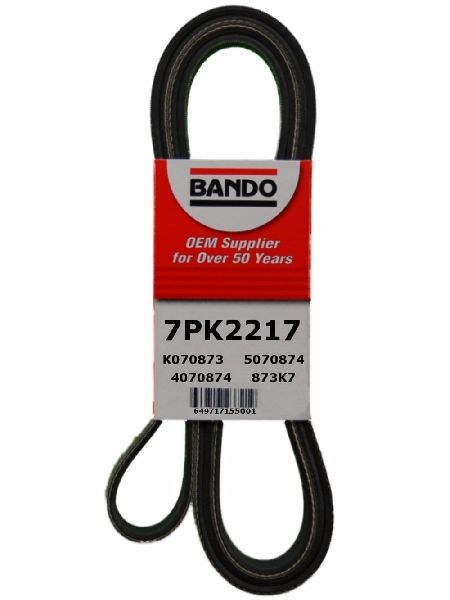
- 4.0L V6 Engine: Uses a wider 7-rib belt.
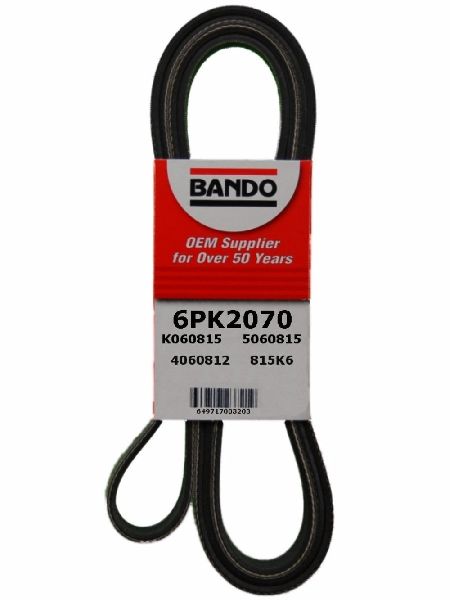
- 2.5L 4-Cylinder Engine: Uses a 6-rib belt.
For a vehicle like the Equator, a high-quality aftermarket belt often meets or exceeds the original factory part's quality. Brands like Bando are known to be Original Equipment (OE) suppliers for many Japanese automakers, including Nissan. This means an aftermarket Bando belt is often made to the same specifications and with the same materials (like durable EPDM rubber) as the original part, but at a more affordable price.
Replace Pulleys and Tensioner with the Belt
The automatic belt tensioner and idler pulleys have bearings that wear out over time. A seized pulley or a weak tensioner can destroy a brand-new belt very quickly. To ensure a long-lasting and quiet repair, it is highly recommended to replace the belt tensioner and any idler pulleys at the same time as the belt.
Cost of Replacing a Suzuki Equator Accessory Drive Belt
| Part Type | Estimated Cost |
|---|---|
| New Aftermarket Belt | $28 - $41 |
| New OEM Belt | $75 - $95 |
| Shop Labor | $49 - $72 |
| Total Estimated Cost (Aftermarket) | $77 - $113 |
Frequently Asked Questions (FAQ)
Is the belt for the 4-cylinder and V6 engine the same?
No. The 4.0L V6 uses a 7-rib belt (approx. 87.3 inches) and the 2.5L 4-cylinder uses a 6-rib belt (approx. 81.5 inches). They are not interchangeable. You must buy the correct belt for your specific engine.
Was there a recall for the accessory belt?
There were no recalls for the belt itself, but some related Suzuki and Nissan models had recalls or service campaigns for tensioner pulleys that could fail and cause the belt to come off. It is wise to inspect the tensioner and pulleys for wear or damage during a belt replacement.
Can I replace the accessory drive belt myself?
Yes, this is a DIY-friendly job for someone with basic mechanical skills. The process involves removing the air intake duct for access, using a wrench to release the tension on the automatic tensioner, removing the old belt, and routing the new one correctly. Always make a diagram or take a picture of the belt routing before you start.
What is a serpentine belt vs. an accessory drive belt?
They are the same thing. Modern vehicles use a single belt to run all the accessories, which snakes around multiple pulleys. This is why it's commonly called a serpentine belt, but the technical name is accessory drive belt.
Technical Specifications
OEM Part Numbers: 11720-EA20A (For 4.0L V6) 17521-82Z10 (For 4.0L V6) 11720-EA001 (For 2.5L I4)
4.0L V6 Belt: 7 Ribs, ~87.3 inches effective length. 2.5L I4 Belt: 6 Ribs, ~81.5 inches effective length.
We Have This Part in Stock

The information in this article is provided for general reference and educational purposes only. Vehicle specifications, procedures, and part compatibility can vary by production date, trim level, and region. Always consult your vehicle's factory service manual and verify part numbers before purchasing or performing repairs. Safety-critical components such as airbags, seat belts, and braking systems should be installed by a qualified professional.
- Suzuki Equator:
- 🛍️ Shop This Part
- The Suzuki Equator and Nissan Frontier Connection
- Symptoms of a Failing Accessory Drive Belt
- Known Issue: Drive Belt Noise TSB
- Choosing the Right Aftermarket Belt
- Replace Pulleys and Tensioner with the Belt
- Cost of Replacing a Suzuki Equator Accessory Drive Belt
- Frequently Asked Questions (FAQ)
- 🎟️ Get 5% Off