

Accessory Drive Belt Guide for the 2009-2014 Subaru Forester
A guide to fixing that squealing noise and choosing the right replacement accessory belt for your Forester.
- First, confirm if your Forester has the two-belt system (2009-2010) or the single serpentine belt (2011-2014) to ensure you buy the correct parts.
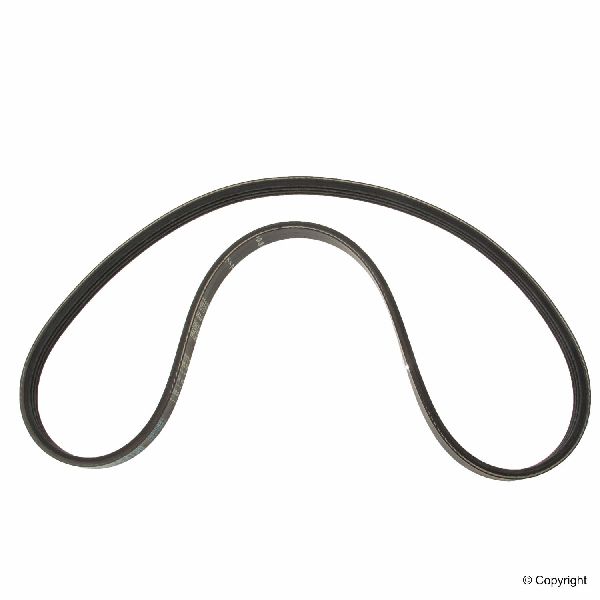
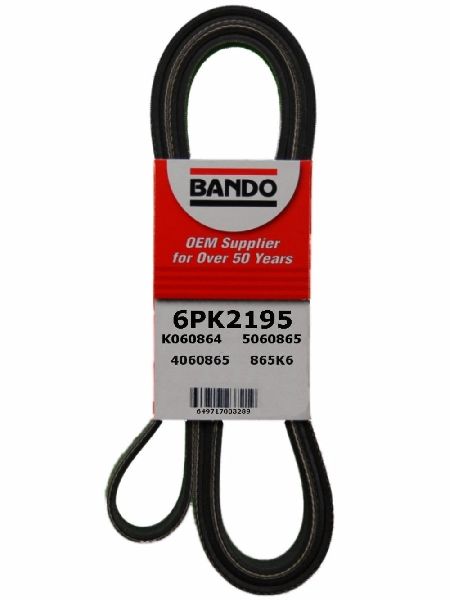
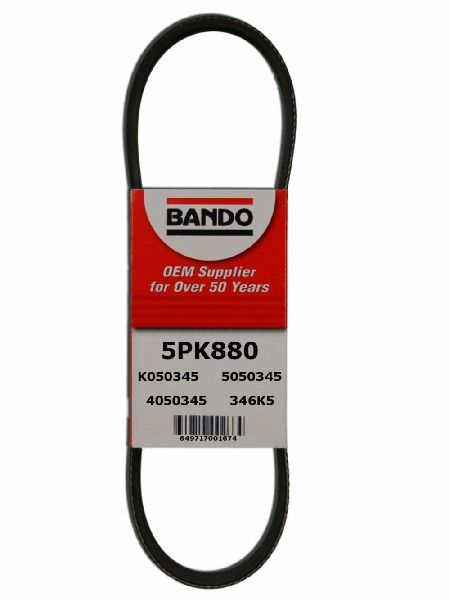
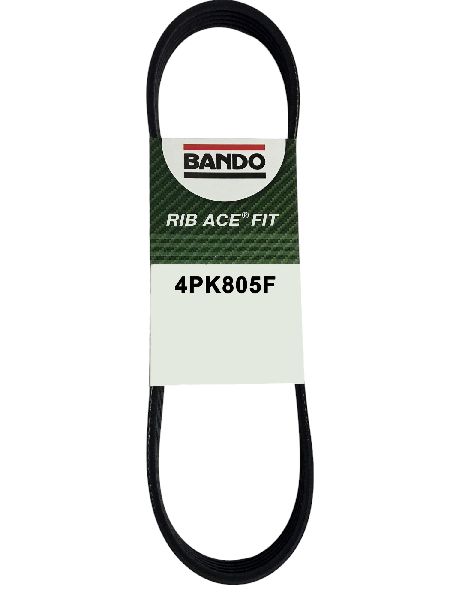
- Choose a high-quality aftermarket belt from an OEM supplier like Bando or Mitsuboshi for OEM performance without the dealer price tag.
- Always inspect the tensioner and idler pulleys when replacing the belt; a bad pulley can ruin a new belt quickly.
- Do not drive the vehicle if the belt has broken; you will lose power steering, charging ability, and potentially cause the engine to overheat.
Is it a Serpentine Belt or a Drive Belt?

The terms are often used for the same part. For the 2009-2014 Subaru Forester, the key is knowing which engine you have, as this determines the belt setup.
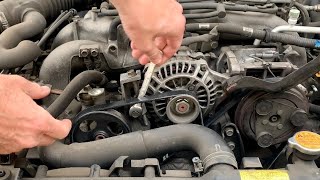
- 2009-2010 Forester (EJ25 Engine): These models use two separate drive belts. One belt runs the alternator and power steering, while a second, smaller belt is dedicated to the A/C compressor. 🎬 Watch: How to replace the A/C stretch belt on 2008-2010 models.
- 2011-2014 Forester (FB25 Engine): These models use a single, long serpentine belt for all accessories. This system features an automatic tensioner, which makes replacement easier.
Ordering Mistake Alert: The most common mistake is ordering the wrong belt. Before you buy, confirm if your Forester has the two-belt (EJ25) or single-belt (FB25) system. A 2011 model could have either, so a visual check is the best way to be sure.
Symptoms of a Failing Accessory Drive Belt

A failing belt gives clear warnings. Ignoring them can leave you stranded when the belt breaks completely.
- Squealing or Chirping Noises: This is the most common symptom. It's a high-pitched noise from the engine bay, often worse on cold starts or in wet weather. This sound means the belt is slipping on the pulleys.
- Visible Damage: A visual inspection can reveal a lot. Look for cracks, frayed edges, missing ribs, or a shiny, glazed surface on the belt. Any of these signs mean the belt is old and needs to be replaced.
- Accessory Problems: If your battery light comes on, the power steering feels heavy, or the A/C stops blowing cold, the belt may be slipping and failing to power those components properly.
- Engine Overheating: On 2011-2014 models, a failed belt will stop the water pump, leading to rapid engine overheating. If you see the temperature gauge rise quickly, pull over immediately.
Known Issues: TSB for Belt Squeal
Subaru issued Technical Service Bulletin (TSB) 02-168-17 for some models experiencing persistent squealing or chirping sounds. The bulletin acknowledges that the noise can be caused by the belt material itself. Subaru introduced an updated belt made from a new material to solve this slipping issue. When buying an aftermarket part, choosing a quality EPDM rubber belt from a reputable brand helps ensure you get a modern, quiet-running part.
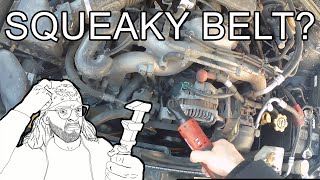
🎬 See this guide on how to fix squeaky Subaru belts.Choosing the Right Aftermarket Belt

For a critical part like the drive belt, quality matters more than saving a few dollars. Fortunately, excellent aftermarket options are available that are often the same as the original part.
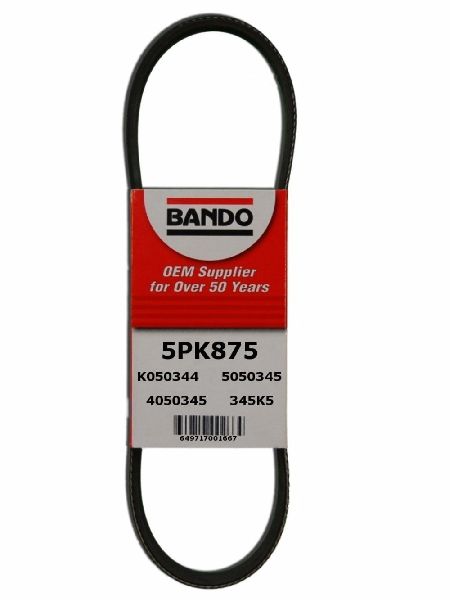
- OEM vs. Aftermarket: Subaru does not manufacture its own belts. They use suppliers like Bando and Mitsuboshi. You can often buy the exact same belt from these brands in an aftermarket box for significantly less than the dealer-branded part.
- Recommended Brands: Bando and Mitsuboshi are top-tier choices and are considered original equipment quality. They are engineered for a precise fit and long life. For a part this important, sticking with an OEM supplier is a smart investment.
Pro Tip: Inspect Pulleys and Tensioners. While the belt is off, spin the idler pulleys and the tensioner pulley by hand. They should spin smoothly and silently. If you feel any roughness, grinding, or wobble, the bearing is failing and the pulley should be replaced. A bad pulley can quickly destroy a brand new belt.
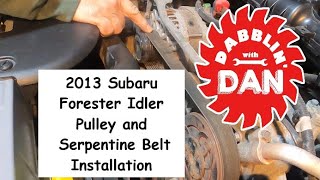
🎬 Watch: How to install a new idler pulley and serpentine belt.Accessory Drive Belt Replacement Cost
| Part Type | Estimated Cost |
|---|---|
| New Aftermarket Belt(s) | $17.50 - $74.38 |
| New OEM Belt(s) | $26.00 - $83.00 |
| Shop Labor | $100 - $250 |
Frequently Asked Questions (FAQ)

How often should I replace the accessory drive belt?
A typical replacement interval is between 50,000 and 100,000 miles. However, you should inspect the belt at every oil change and replace it at the first sign of cracking, fraying, or noise, regardless of mileage.
Should I replace the tensioner and pulleys with the belt?
Not always, but you must inspect them. If the automatic tensioner (on 2011-2014 models) is weak or if any of the pulleys are noisy or rough when spun by hand, they should be replaced. Replacing them at the same time as the belt can save you from having to do the job twice.
Is the accessory drive belt the same as the timing belt?
No, they are completely different. The accessory drive belt is visible on the front of the engine and runs your accessories. The timing belt (on pre-2013 models) is hidden behind a plastic cover and synchronizes the engine's internal components. Timing belt failure can cause catastrophic engine damage, while a broken accessory belt will just cause the car to shut down.
Can I drive with a squealing belt?
You can drive cautiously to a repair shop, but the noise is a warning that the belt is failing. If the belt breaks completely, the car will lose power steering and the ability to charge the battery, and on newer models, it will overheat. It is not safe or possible to drive with a broken belt.
Helpful Videos
Technical Specifications
OEM Part Numbers: 809218450 11718AA082 23780AA160 73323SA000
System varies by model year. 2009-2010 models use a two-belt system with manual tensioning. 2011-2014 non-turbo models use a single serpentine belt with an automatic tensioner.
We Have This Part in Stock


The information in this article is provided for general reference and educational purposes only. Vehicle specifications, procedures, and part compatibility can vary by production date, trim level, and region. Always consult your vehicle's factory service manual and verify part numbers before purchasing or performing repairs. Safety-critical components such as airbags, seat belts, and braking systems should be installed by a qualified professional.
- Subaru Forester: