

A Guide to Replacing Suspension Struts on the 2009-2018 Chevrolet Traverse
Restore your Traverse's ride quality and eliminate clunking noises by choosing the right replacement struts.
- For easier and safer installation, choose a complete strut assembly (Quick-Strut) which includes the spring and mount.
- Always replace struts in pairs (both front) to maintain vehicle stability and predictable handling.
- A four-wheel alignment is mandatory after replacing front struts to prevent uneven tire wear and ensure safety.
- KYB is a highly-regarded premium aftermarket option, while Monroe offers a solid mid-range choice and FCS/PRT are value-oriented brands.
Is It Time to Replace Your Traverse's Struts?

The front struts on the first-generation Chevrolet Traverse are a common wear item, typically needing replacement between 80,000 and 100,000 miles. When they start to fail, you'll likely notice a few key symptoms. Ignoring them can lead to poor handling, increased stopping distance, and uneven tire wear.
Common Failure Symptoms:
- Clunking or Popping Noises: A common sign is a clunking sound when going over bumps. This can be caused by a worn-out strut mount at the top of the assembly. 🎬 Watch: Diagnosing that annoying clunking or rattling noise.
- Bouncy or Unstable Ride: If your Traverse feels extra bouncy or sways excessively around turns, the internal parts of the strut are likely worn out and no longer controlling the suspension properly.
- Visible Fluid Leaks: Look at the strut body itself. If you see oily fluid leaking down the side, the strut's internal seal has failed, and it needs to be replaced.
- Uneven Tire Wear: Worn struts can cause the inside or outside edges of your tires to wear down faster than the rest of the tread.
Pro Tip: Replace in Pairs
Suspension struts should always be replaced in pairs (both front struts or both rear shocks at the same time). Replacing only one can cause uneven handling and instability. After replacement, it is essential to have a four-wheel alignment performed to ensure proper handling and prevent premature tire wear.
Choosing the Right Aftermarket Strut

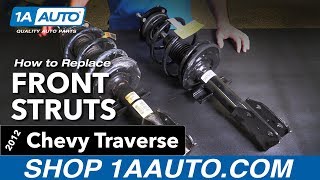
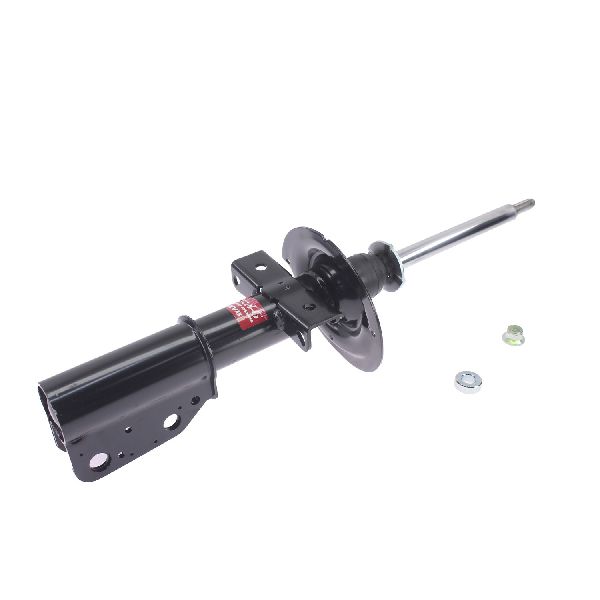
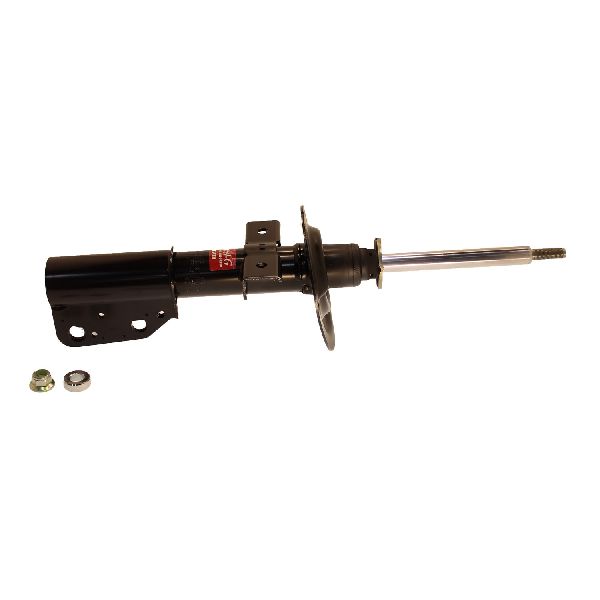
When shopping for new struts, you'll see two main types: a bare strut and a complete strut assembly (often called a "Quick-Strut"). For a DIY replacement, the complete assembly is highly recommended. It includes the strut, coil spring, and new mount all in one unit, which is much safer and easier to install than taking the old assembly apart to reuse the spring.
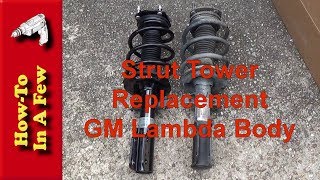
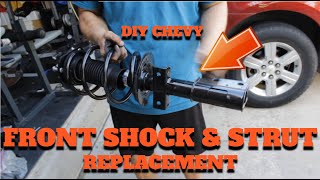
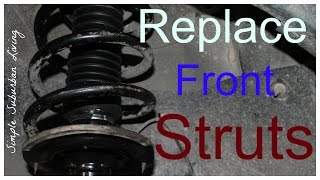
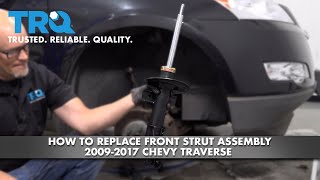
🎬 See this step-by-step guide for installing a complete strut assembly.Here’s a breakdown of available brands to help you choose:
Brand Quality Tiers
- Best (Premium Replacement): KYB
Often considered the top-tier aftermarket choice, KYB struts are known for restoring the original ride quality and handling characteristics of your Traverse. Many professional technicians prefer KYB for its quality and durability, viewing it as the best option next to an original GM part. The KYB Excel-G is a popular model that is specifically valved for vehicles like the Traverse. - Better (OEM-Quality Alternative): Monroe
Monroe is a well-known brand that offers a reliable, OE-style replacement. Their Quick-Strut complete assemblies are very popular for DIY repairs because they include all necessary components for a straightforward installation. While some enthusiasts prefer other brands, Monroe offers a good balance of quality, convenience, and value. - Good (Value-Focused): FCS and PRT
Brands like FCS and PRT offer a budget-friendly solution for getting your Traverse back on the road. They are a good choice if your primary concern is cost. While they may not offer the same ride refinement or longevity as premium brands, they meet the basic requirements to restore function to a worn-out suspension.
Known Issues, Recalls, and Bulletins

There are no active recalls from the NHTSA specifically for the front suspension struts on the 2009-2018 Chevrolet Traverse. However, owners have reported issues with premature strut failure. Additionally, a Technical Service Bulletin (TSB 20-NA-033) was issued for some 2018 models for a squeak or creak from the rear suspension, caused by the jounce pin. While not a strut issue, it's a known suspension noise to be aware of.
| Part Type | Estimated Cost (Per Part) |
|---|---|
| New Aftermarket Assembly | $67 - $154 |
| New OEM Assembly | $130 - $240 |
| Shop Labor (Pair) | $240 - $360 |
Frequently Asked Questions

Do I need a spring compressor to change my struts?
Only if you buy a bare strut and plan to reuse your old coil spring. This is dangerous and requires a special tool. By purchasing a complete strut assembly ("Quick-Strut"), you get a new spring and mount, and no spring compressor is needed, making the job much safer and faster.
Can I replace just one strut?
No, you should always replace struts in pairs (both front or both rear). A new strut will handle bumps differently than an old one on the other side, leading to unpredictable steering and an unbalanced ride.
Is an alignment necessary after replacing struts?
Yes, absolutely. Replacing the struts will affect your vehicle's suspension geometry. A four-wheel alignment is required to ensure your Traverse drives straight, handles correctly, and doesn't cause premature tire wear.
What are the main differences between the 2009-2012 and 2013-2017 struts?
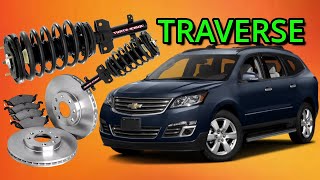
There are different part numbers for the 2009-2012 and 2013-2017 model year ranges. While they look similar, there are likely small differences in valving or mounting. It is critical to order the correct part for your specific year 🎬 Watch: A detailed walkthrough for 2009-2012 Traverse strut replacement. to ensure proper fit and performance.
Helpful Videos
Technical Specifications
OEM Part Numbers: 22902421 22902430 23239956
The key specification is ensuring you order the correct part for your model year range (2009-2012 vs. 2013-2017) and drivetrain (FWD vs. AWD), as part numbers differ.
We Have This Part in Stock


The information in this article is provided for general reference and educational purposes only. Vehicle specifications, procedures, and part compatibility can vary by production date, trim level, and region. Always consult your vehicle's factory service manual and verify part numbers before purchasing or performing repairs. Safety-critical components such as airbags, seat belts, and braking systems should be installed by a qualified professional.
- Chevrolet Traverse: