

Chevrolet Camaro Knock Sensor (2009-2021): A Complete Guide
Experiencing reduced power or a check engine light in your Camaro? A faulty knock sensor could be the problem.
- Sensor location is the biggest factor: 2010-2015 V8s are difficult (under intake), while V6 and all 2016+ models are easier (side of block).
- For 2010-2015 V8s, always replace the wiring harness with the sensors to prevent a repeat failure.
- Use high-quality brands like ACDelco or Delphi for V8 replacements to justify the high labor cost.
- A torque wrench is required for proper installation; incorrect torque will cause the new sensor to fail.
Is Your Camaro Running Rough? It Could Be the Knock Sensor


A failing knock sensor can cause noticeable problems with your Camaro's performance. Because the sensor is critical for protecting the engine, the computer will play it safe when it receives a bad signal or no signal at all. It will default to a 'safe mode' with reduced ignition timing, making your car feel sluggish and less responsive.
Symptoms of a Bad Knock Sensor
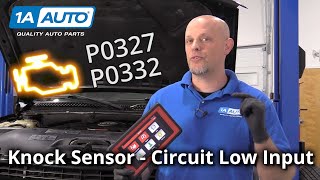
- Check Engine Light: This is the most common sign. Your Camaro will store a trouble code, most often P0327 or P0332, indicating a low circuit input from one of the sensors. 🎬 Watch: How to diagnose GM knock sensor codes P0327 and P0332.
- Reduced Engine Power: To prevent potential damage, the engine computer will enter a 'limp mode,' which significantly cuts acceleration and power.
- Poor Gas Mileage: With the ignition timing not optimized, your engine burns more fuel than necessary.
- Engine Pinging Noise: If the sensor fails completely, it can't detect real detonation. You might hear a metallic pinging or rattling sound, especially when accelerating or when the engine is under load.
V8 vs. V6 & Gen 5 vs. Gen 6: Location Matters
Where the knock sensors are located on your Camaro depends entirely on the engine and generation. This is the most important factor when planning a replacement.
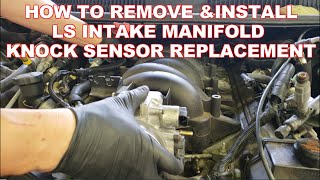
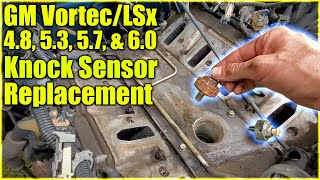
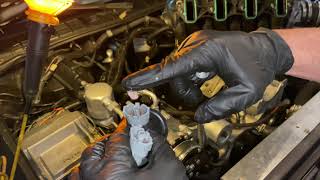
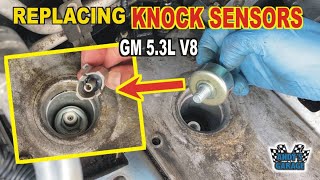
- 2010-2015 V8 (LS3, L99): The two knock sensors are located deep in the engine valley, underneath the entire intake manifold. This is a labor-intensive job that requires removing the manifold. 🎬 See this walkthrough on removing the intake manifold for sensor access.
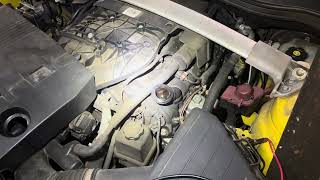
- 2010-2015 V6 (LLT, LFX): The two sensors are mounted on the exterior sides of the engine block, often near the starter and alternator. This makes them much easier to access and replace. 🎬 Watch: Step-by-step replacement for 2012-2015 Camaro V6 models.
- 2016-2021 All Engines (LTG, LGX, LT1, LT4): For the 6th generation, GM moved the sensors to the sides of the engine block for all engine types. While easier than the Gen 5 V8, access can still be tight and may require removing other components.
Choosing the Right Aftermarket Knock Sensor
When shopping for a replacement, you'll find different quality tiers. The brand you choose can make a big difference, especially if your sensors are hard to get to.
- Premium Brands (ACDelco, Delphi, NTK): ACDelco is the original equipment (OEM) supplier for GM. Delphi is also a known OEM manufacturer. These, along with NGK/NTK, are trusted to meet factory specifications for performance and durability. For a 5th Gen V8, using a premium brand is strongly recommended to avoid paying for the high labor cost a second time.
- Value Brands (Replacement): Economy brands offer a significant cost saving, which can be tempting. For an easily accessible sensor on a V6 or 6th Gen model, a value brand might be a reasonable budget choice. However, for the difficult-to-access sensors under the intake manifold, the risk of premature failure often outweighs the initial savings.
Pro Tip: Always Replace the Harness on V8 Models
If you are replacing the knock sensors on a 2010-2015 V8, you must also replace the wiring harness that connects them. This harness sits in the hot engine valley and the plastic and wires become extremely brittle over time, causing the same error codes as a bad sensor. It's a low-cost part that prevents you from having to do the entire job over again.
Known Issues: TSB for V8 Water Intrusion
General Motors issued a Technical Service Bulletin (TSB 02-06-04-023A) for V8 engines where the knock sensors are in the engine valley. Water can pool in the rear sensor cavity, causing corrosion and failure, which sets a P0332 code. The official fix is to replace the corroded sensor and apply a bead of RTV sealant to form a 'dam' that diverts water away. If you are replacing the sensors on your 2010-2015 V8, performing this step is cheap insurance against future problems.
| Part/Service | Estimated Cost |
|---|---|
| New OEM (ACDelco) | $40 - $75 per sensor |
| New Aftermarket (Replacement Brand) | $15 - $30 per sensor |
| Shop Labor | $150 - $600 |
Note: Labor costs vary significantly based on your engine. V6 and 6th Gen models will be on the lower end, while 5th Gen V8 models requiring intake manifold removal will be on the higher end.
Frequently Asked Questions
Where are the knock sensors on my Camaro?
On 2010-2015 V8 models, they are under the intake manifold. On all V6 models and all 2016-2021 models, they are on the sides of the engine block.
Should I replace both knock sensors at the same time?
Yes, it is highly recommended. If one sensor has failed due to age and heat, the other is likely not far behind. This is especially true for V8 models where the labor is the biggest part of the cost; replacing both at once saves you from a repeat repair down the road.
Do I need a special tool to replace a knock sensor?
You will need standard mechanic's tools, but the most important tool is a torque wrench. Knock sensors must be tightened to a specific torque specification (typically 15 lb-ft for older models) to function correctly. Over-tightening or under-tightening can cause false readings or damage the new sensor.
Are there any recalls for the Camaro knock sensor?
No, there have been no specific safety recalls issued by the NHTSA for knock sensor failure on the 2009-2021 Chevrolet Camaro.
Helpful Videos


Technical Specifications
OEM Part Numbers: 12623095 12729597 12692505 10456603 12589867
Typically a 2-pin female oval or square connector. The sensor is a piezoelectric crystal that generates an AC voltage signal based on engine vibrations.

The information in this article is provided for general reference and educational purposes only. Vehicle specifications, procedures, and part compatibility can vary by production date, trim level, and region. Always consult your vehicle's factory service manual and verify part numbers before purchasing or performing repairs. Safety-critical components such as airbags, seat belts, and braking systems should be installed by a qualified professional.
- Chevrolet Camaro:
- 🎬 Helpful Videos
- Is Your Camaro Running Rough? It Could Be the Knock Sensor
- Symptoms of a Bad Knock Sensor
- V8 vs. V6 & Gen 5 vs. Gen 6: Location Matters
- Choosing the Right Aftermarket Knock Sensor
- Pro Tip: Always Replace the Harness on V8 Models
- Known Issues: TSB for V8 Water Intrusion
- Frequently Asked Questions
- 🎟️ Get 5% Off