

Ram 1500 MAP Sensor Replacement Guide for 2011-2020 Models
Experiencing rough idle, poor gas mileage, or a check engine light in your Ram 1500? Your MAP sensor could be the culprit.
- A bad MAP sensor on a Ram 1500 typically causes a check engine light, rough idle, poor MPG, and hesitation.
- Replacement is very easy for DIYers, taking less than 30 minutes with basic tools.
- Before replacing, check for vacuum leaks and oil on the sensor, as these can cause similar symptoms.
- A quality aftermarket sensor is a reliable, cost-effective alternative to a more expensive OEM Mopar part.
Is Your Ram 1500 MAP Sensor Failing?

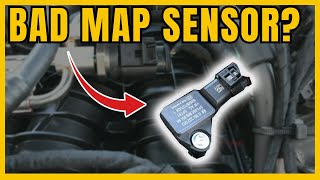
A bad MAP sensor sends incorrect information to your truck's computer, leading to a range of engine problems. Because it directly impacts the air-fuel mixture, symptoms can appear suddenly and worsen over time. Common signs include a check engine light, poor fuel economy, a rough idle, and a noticeable lack of power.
Symptoms of a Bad MAP Sensor

Look for these common signs of MAP sensor failure in your Ram 1500:
- Check Engine Light: This is the most common symptom. You'll likely see codes such as P0106, P0107 (circuit low), or P0108 (circuit high).
- Poor Fuel Economy: A faulty sensor can trick the computer into injecting too much fuel, causing the engine to run rich and burn more gas.
- Rough Idle: Your truck may shake, surge, or have fluctuating RPMs when stopped.
- Lack of Power and Hesitation: The truck may feel sluggish or hesitate during acceleration because the engine isn't receiving the correct fuel mixture.
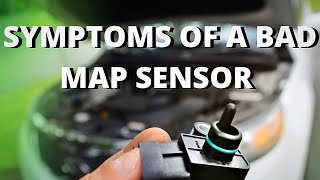
- Black Smoke from Exhaust: An overly rich fuel mixture can result in black smoke from the tailpipe, which is a sign of incomplete combustion. 🎬 Watch: A deep dive into diagnosing these 8 common symptoms.
- Stalling: In some cases, the engine may stall unexpectedly, especially at idle.
Check for Other Issues First
Before replacing the sensor, inspect for cracked or loose vacuum hoses connected to the intake manifold. A vacuum leak can cause similar symptoms and may even trigger a MAP sensor trouble code. Also, check that the sensor's electrical connector is clean and tight.
Choosing an Aftermarket MAP Sensor

When shopping for a replacement MAP sensor, you'll find both original equipment (OEM) Mopar parts and aftermarket options. For a critical sensor like this, quality is important.
- OEM (Mopar): These are the original parts from the manufacturer. They are guaranteed to fit and function correctly but come at a higher price.
- Aftermarket (Replacement Brand): A quality aftermarket part like the 'Replacement' brand offers a cost-effective solution. It is designed to meet or exceed original specifications, providing a reliable fix without the high cost of an OEM part. This is a smart choice for budget-conscious owners who still need a dependable part.
For a simple but crucial sensor like the MAP, a reputable aftermarket brand provides a good balance of value and quality. Avoid the absolute cheapest options from unknown sellers, as their calibration may not be accurate and could cause further issues.
Pro Tip: Check for Oil Contamination
When you remove the old sensor, check its tip for oil residue. Sometimes, cleaning a dirty sensor with electronics or MAF sensor cleaner can temporarily fix the problem. However, if the sensor's internal electronics have failed, cleaning won't help, and replacement is the only solution.
Cost of Replacing a Ram 1500 MAP Sensor (2011-2020)
| Part Type | Estimated Cost |
|---|---|
| New Aftermarket | $39.20 |
| New OEM (Mopar) | $60 - $150 |
| Shop Labor | $50 - $120 |
| Total DIY Aftermarket | $39.20 |
| Total Shop Replacement (OEM) | $110 - $270 |
Frequently Asked Questions

Where is the MAP sensor located on a 2011-2020 Ram 1500?
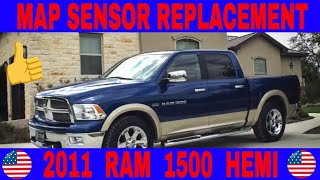
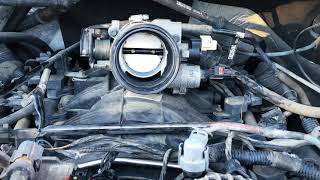
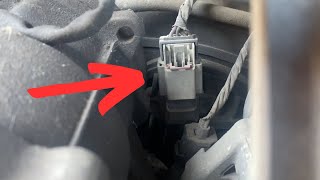
The location varies by engine. On the 3.6L V6, it's on top of the intake manifold. 🎬 See this step-by-step MAP sensor replacement for the 3.6L engine. For the 5.7L HEMI V8, it's located at the rear of the intake manifold, near the firewall. On the older 4.7L V8, it is on the front of the intake manifold.
🎬 Watch: How to replace the sensor on a 4.7L V8.Can I drive my Ram 1500 with a bad MAP sensor?
You can, but it's not recommended for long. Your truck will have poor performance, bad fuel economy, and could stall unexpectedly, which can be a safety risk. It's best to get it replaced soon.
Is replacing the MAP sensor a difficult job?
No, this is a very easy DIY job. It typically takes less than 30 minutes and only requires basic hand tools to remove the air intake tube if needed. The sensor itself usually twists out or is held by a single bolt.
Are there any recalls for the Ram 1500 MAP sensor?
As of early 2026, there are no specific NHTSA recalls for the MAP sensor on 2011-2020 Ram 1500 models. Always check the official NHTSA website with your truck's VIN for the latest recall information.
My new MAP sensor feels loose. Is that a problem?
Yes, this can be a problem. The sensor must have a tight seal with its O-ring to prevent a vacuum leak, which would cause performance issues. Some owners report that even new sensors can feel loose. Ensure the O-ring is seated correctly and the sensor is fully twisted or bolted into place.
Helpful Videos
Technical Specifications
OEM Part Numbers: 68199324AB 68199324AA 5149091AA 56041018AD 5033310AC 68371847AB 68490034AA
The MAP sensor for the 2011-2020 Ram 1500 is typically a 3-pin sensor that operates on a 5-volt reference signal from the ECU. It mounts directly to the intake manifold with either a twist-lock mechanism or a single bolt, depending on the engine and model year.

The information in this article is provided for general reference and educational purposes only. Vehicle specifications, procedures, and part compatibility can vary by production date, trim level, and region. Always consult your vehicle's factory service manual and verify part numbers before purchasing or performing repairs. Safety-critical components such as airbags, seat belts, and braking systems should be installed by a qualified professional.
- Ram 1500: