

A Guide to the Oil Pan and Gasket for the 2012-2017 Buick Verano
If you're seeing oil spots under your car, this guide will help you understand the common issues with your Verano's oil pan.
- An oil leak from the pan area is more often a failed gasket than a cracked pan.
- Always confirm the leak's source; oil from higher up can drip down and mislead you.
- Ignoring any oil leak can lead to a low oil level and catastrophic engine failure.
- Cleaning the engine block's mating surface is the most critical step for a successful, leak-free replacement.
Is Your Buick Verano Leaking Oil?
The most common reason to replace the oil pan or its gasket on a 2012-2017 Buick Verano is an oil leak. While the aluminum oil pan itself is a durable part, the gasket that seals it to the engine block is a more frequent point of failure. Over time, this gasket can become brittle and shrink from constant heat cycles, allowing oil to seep out. Physical damage from road debris or bottoming out the car can also crack the pan itself, leading to a more severe leak.
First, Confirm the Leak's Source
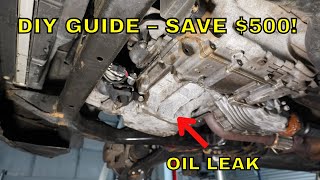
🎬 Watch: Identifying a common oil pan gasket leak on this engine.Oil from other failing seals, like the valve cover gasket or rear main seal, can drip down the engine and collect on the bottom of the oil pan. This can make it look like the oil pan is leaking when the actual problem is higher up on the engine. Before buying parts, it's wise to have a mechanic clean the engine and use a UV dye to pinpoint the exact source of the leak.
Choosing the Right Aftermarket Part
When shopping for a replacement, you will find both original equipment (OEM) and aftermarket options. For the Buick Verano, aftermarket pans are a popular, budget-friendly choice.
- OEM (Original Equipment Manufacturer): This is the same part you would get from a Buick dealer. It guarantees a perfect fit but comes at a higher price.
- Aftermarket (e.g., Replacement brand): These parts are designed to be a direct fit and function like the original. For a component like an oil pan, a quality aftermarket part is often a very practical choice. Reviews for aftermarket pans on the similar Ecotec engine are generally positive, citing good fit and value. They provide a reliable seal when installed correctly on a clean surface.
Known Issues, Recalls, and Service Bulletins
There are no direct recalls from the National Highway Traffic Safety Administration (NHTSA) for oil pan failure on the 2012-2017 Buick Verano. However, there was a recall for an optional engine block heater cord that could be damaged, which is related to the oil pan assembly on some vehicles. The more well-known issue for the 2.4L Ecotec engine is a Technical Service Bulletin (TSB) for excessive oil *consumption* (burning oil), which is an internal engine issue with the pistons and is unrelated to external leaks from the pan.
| Part/Service | Estimated Cost |
|---|---|
| New Aftermarket Oil Pan | $120 - $150 |
| New OEM Oil Pan | $260 - $280 |
| Shop Labor | $330 - $485 |
| Total Replacement Cost (Aftermarket) 🎬 See this step-by-step tutorial for replacing the oil pan yourself. | $450 - $635 |
Pro Tip: Gasket vs. Pan
In many cases, only the oil pan gasket needs replacement, not the entire pan. A gasket-only job might save you money on parts, but the labor cost will be nearly identical since the pan must be removed anyway. If your drain plug threads are stripped or the pan is damaged, you must replace the whole unit.
Frequently Asked Questions (FAQ)
Can I just tighten the oil pan bolts to stop a leak?
While it's possible for bolts to be loose, it's unlikely. Over-tightening them can damage the gasket or even crack the aluminum pan, making the leak worse. The bolts should be tightened to a specific torque specification 🎬 Watch: How to properly remove the oil pan on Ecotec engines. in a specific sequence.
What happens if I ignore a leaking oil pan?
Ignoring a leak will lead to a low engine oil level. This can cause poor lubrication, engine overheating, and eventually catastrophic engine failure, which can cost thousands of dollars to repair. It's a small problem that can become a very expensive one.
Is the oil pan the same for the 2.4L and 2.0L Turbo engines?
No, the 2.4L and 2.0L Turbo engines often use different oil pans. It is critical to verify the part fits your specific engine before ordering. Part retailers list different part numbers for the turbo and non-turbo models.
My drain plug is stripped. Do I need a whole new pan?
Often, yes. A stripped drain plug is a common reason for replacing the entire oil pan, especially on aluminum pans where repairs are difficult. While some repair kits exist, a new pan is often the most reliable long-term solution.
Helpful Videos



Technical Specifications
OEM Part Numbers: 12601240 12578194
Material: Aluminum. Gasket included with some aftermarket kits, but often sold separately. Uses a sealant (RTV) in some applications instead of a pre-formed gasket.

The information in this article is provided for general reference and educational purposes only. Vehicle specifications, procedures, and part compatibility can vary by production date, trim level, and region. Always consult your vehicle's factory service manual and verify part numbers before purchasing or performing repairs. Safety-critical components such as airbags, seat belts, and braking systems should be installed by a qualified professional.
- Buick Verano: