

A Guide to Aftermarket Brake Pads for the 2012-2018 BMW M6
Tired of constant brake dust and noise? Find the right aftermarket brake pads for your high-performance M6.
- The main reason M6 owners switch to aftermarket pads is to eliminate the heavy brake dust from OEM pads.
- Choose a ceramic pad compound (like Akebono or Powerstop Z26) for the best low-dust, quiet performance for daily driving.
- When replacing the rear pads, you MUST use a scan tool to put the electronic parking brake in 'Service Mode' to avoid damaging the calipers.
- Always replace the brake wear sensors at the same time as your brake pads.
Symptoms of Worn Brake Pads on Your M6
Your M6 is equipped with a sophisticated monitoring system. The most common sign you need new pads is a warning message in your iDrive display. However, there are other physical signs to watch for.
- Brake Warning Light: A red or yellow brake warning on your dashboard is the most direct indicator. A yellow light means replacement is due soon, while red requires immediate attention.
- Squealing or Grinding Noises: A high-pitched squeal when you apply the brakes is a common sign the pads are thin. If you hear a loud grinding or scraping sound, the pads may be completely worn away, causing metal-on-metal contact that can quickly destroy your brake rotors.
- Vibration or Pulsation: If you feel a pulsing in the brake pedal or a vibration through the steering wheel when braking, your brake rotors may be warped, often due to excessive heat. This is a good time to inspect the entire brake system.
Choosing the Right Aftermarket Brake Pads
The single biggest complaint from M6 owners about the factory brakes is the excessive amount of brake dust. The original equipment (OEM) pads provide fantastic stopping power, but their semi-metallic compound creates a thick, black dust that is difficult to clean. Aftermarket pads offer a solution by providing different materials, primarily ceramic, to solve this problem.
OEM vs. Aftermarket Quality
For the M6, OEM pads are high quality in terms of performance but poor in terms of dust and sometimes noise. Aftermarket brands often provide a better ownership experience for daily driving by drastically reducing dust and noise, sometimes with a slight trade-off in initial cold bite. For street use, a quality aftermarket ceramic pad is a significant upgrade for cleanliness and quiet operation.
Aftermarket Brand Tiers for the BMW M6
| Tier | Primary Use | Common Brands | Characteristics |
|---|---|---|---|
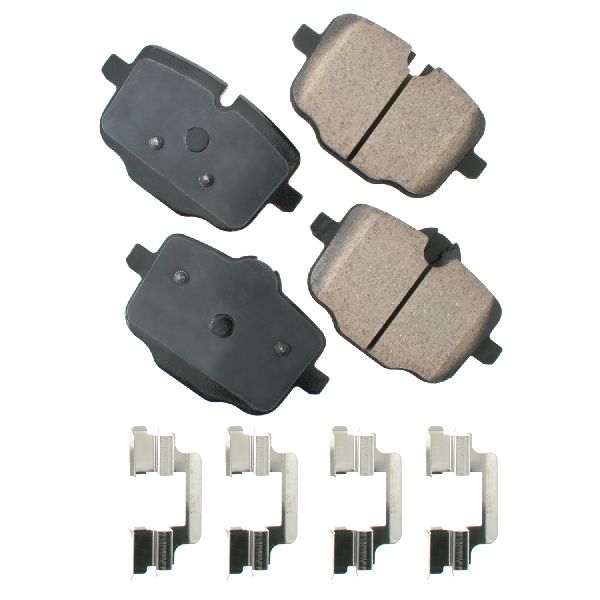
| Daily Driver / Low Dust | Street driving, commuting | Akebono, Powerstop Z23/Z26, Centric | Focuses on extremely low dust and quiet operation. Ideal for owners who want to keep their wheels clean. Stopping power is excellent for the street but may have a less aggressive initial bite than OEM. |
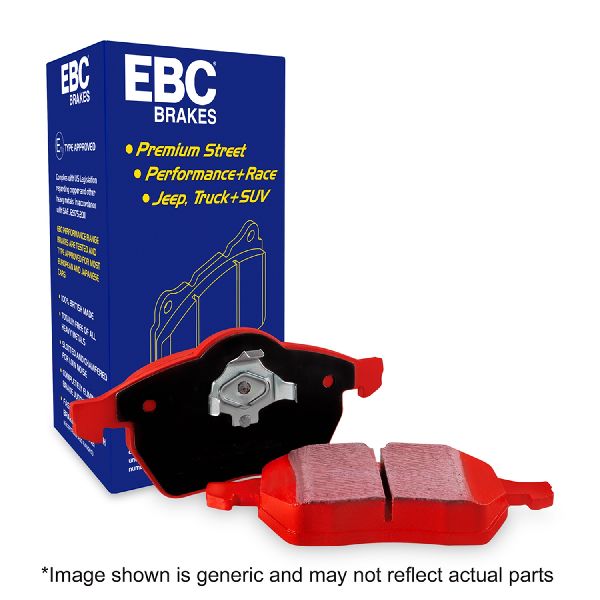
| Performance Street | Spirited driving, occasional aggressive use | EBC Redstuff, Hawk HPS, Powerstop Z26 | A great balance between strong stopping power and daily-driver comfort. Dust is significantly lower than OEM but may be slightly more than a pure daily driver pad. EBC Redstuff is a very popular choice in this category. |
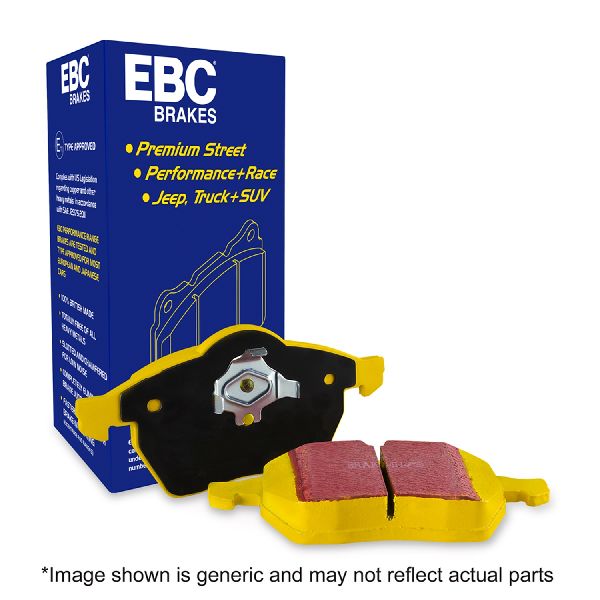
| Aggressive Street / Track | Track days, canyon carving | EBC Yellowstuff, Hawk Performance, Pagid | Designed for high-heat situations. Provides incredible stopping power but at the cost of significant dust and potential noise, especially when cold. Not recommended for a car that is only used for daily commuting. |
Known Issues and Bulletins
A common issue for the 2012-2018 M6 is a squeaking noise from the front brakes at low speeds. BMW released a Technical Service Bulletin (TSB SIB 34 06 14) to address this. The bulletin advises technicians to inspect the vibration absorbers on the brake pads and ensure correct installation, but the noise can sometimes persist even after the fix. There are no major safety recalls for the brake pads on these specific model years in the North American market.
Important Note for Rear Brake Pad Replacement
The 2012-2018 BMW M6 has an electronic parking brake (EPB). You MUST use a compatible diagnostic scan tool to put the rear brakes into "Service Mode" or "Installation Mode" before you attempt to push the caliper piston back. If you try to force the piston back without doing this, you will cause expensive damage to the electronic actuator inside the caliper. This is not an optional step.
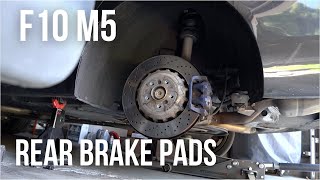
🎬 See this walkthrough for replacing rear pads with the electronic brake.Frequently Asked Questions (FAQ)
What are brake wear sensors and do I need to replace them?
Yes. Your M6 uses electronic brake wear sensors on the front and rear axles. When the brake pad wears down to a certain point, it also wears through the sensor, which completes a circuit and triggers the warning light on your dash. These are one-time-use items and must be replaced with every brake pad change to ensure the monitoring system works correctly.
🎬 Watch: How to properly replace the electronic brake wear sensor.Why do my factory BMW brakes create so much dust?
The original brake pads are a high-friction, semi-metallic compound designed for aggressive stopping power. A natural byproduct of this high-performance material is a soft, black dust that clings to wheels. Switching to a quality ceramic aftermarket pad is the most effective way to solve this issue.
Can I just replace the pads and not the rotors?
It depends. High-performance pads like those on the M6 tend to wear rotors more quickly than on a standard car. You must measure the rotor's thickness. The minimum thickness for the front rotors is 34.4mm and for the rear is 22.4mm. If your rotors are smooth, have no cracks, and are well above this minimum thickness, a pad-only replacement is possible. However, for best performance and safety, replacing pads and rotors together is recommended.
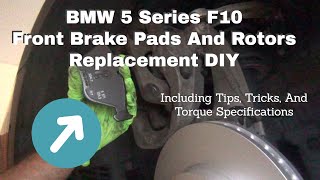
🎬 Watch: Step-by-step guide to replacing front brake pads and rotors.What's the difference between ceramic and semi-metallic pads?
Ceramic pads are made from dense ceramic material and copper fibers. They are known for being very quiet, producing a fine, light-colored dust that doesn't stick to wheels, and offering long life. Semi-metallic pads contain a high percentage of metal fibers, which gives them an aggressive initial bite and excellent heat transfer, but they are noisier and produce much more dust. The M6's OEM pads are semi-metallic, while most low-dust aftermarket solutions are ceramic.
Helpful Videos
Technical Specifications
OEM Part Numbers: 34112284869 34212284389
This vehicle uses the standard 'Blue M-Sport' brakes, not the optional M Carbon Ceramic brakes with gold calipers. The system features 6-piston front calipers and single-piston rear calipers with an integrated electronic parking brake.
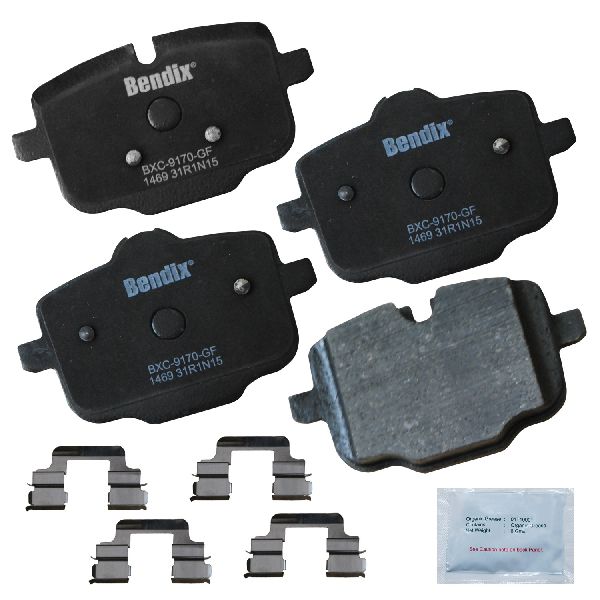
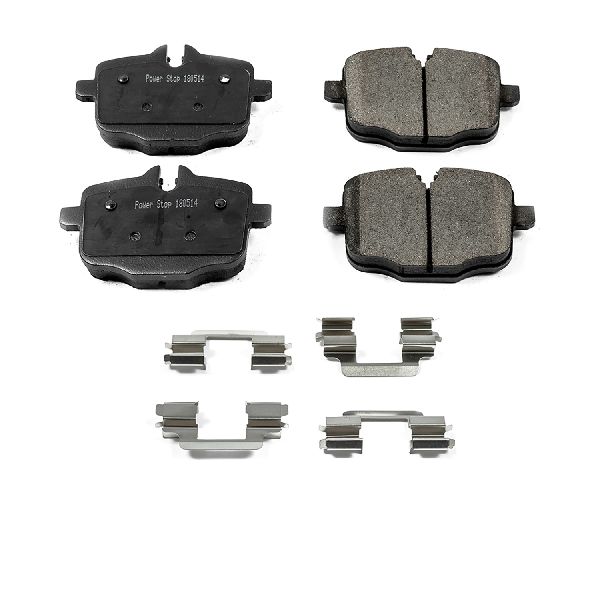
We Have This Part in Stock

The information in this article is provided for general reference and educational purposes only. Vehicle specifications, procedures, and part compatibility can vary by production date, trim level, and region. Always consult your vehicle's factory service manual and verify part numbers before purchasing or performing repairs. Safety-critical components such as airbags, seat belts, and braking systems should be installed by a qualified professional.
- BMW M6:
- 🎬 Helpful Videos
- 🛍️ Shop This Part
- Symptoms of Worn Brake Pads on Your M6
- Choosing the Right Aftermarket Brake Pads
- OEM vs. Aftermarket Quality
- Aftermarket Brand Tiers for the BMW M6
- Known Issues and Bulletins
- Important Note for Rear Brake Pad Replacement
- Frequently Asked Questions (FAQ)
- 🎟️ Get 5% Off