

Ford F-150 Ignition Knock Sensor Guide (2012-2018)
Understanding why a small sensor is a big job for your F-150's 5.0L, 3.5L, or 2.7L engine.
- Replacement is a very labor-intensive job because the sensors are under the intake manifold.
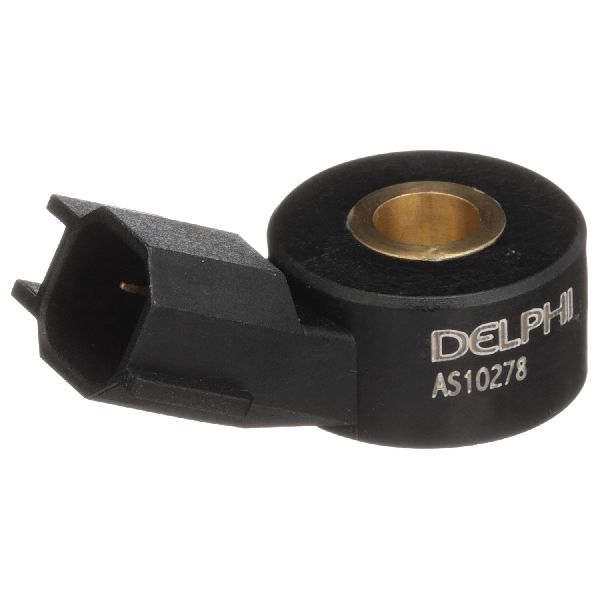
- Due to high labor costs, use a high-quality brand (like Delphi, Standard Ignition, or OEM Motorcraft) to avoid repeat repairs.
- Always replace both sensors, the wiring harness, and the intake gaskets at the same time.
- Before starting this expensive repair, have the wiring harness and connectors checked for damage or corrosion.
Is Your F-150's Knock Sensor Failing?


A bad knock sensor is more than just a Check Engine Light. Because the sensor is critical for engine protection, the truck's computer may put the engine into a 'safe mode' to prevent damage. This often results in noticeably poor performance until the issue is fixed. You can't afford to ignore the signs.
Why is This a Big Deal on the F-150?
On the 2012-2018 F-150, regardless of whether you have the 5.0L V8, 3.5L EcoBoost, or 2.7L EcoBoost, Ford placed the two knock sensors in the valley of the engine, buried underneath the entire intake manifold. This means a part that costs less than $100 requires hours of labor to access, as a mechanic must remove the manifold, fuel rails, and various connectors and hoses. This is not a simple repair.
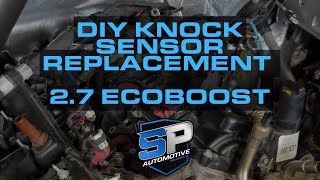
🎬 See this 2.7L EcoBoost knock sensor replacement walkthroughPro Tip: Replace Everything at Once
Because of the massive amount of labor involved, it is critical to replace both knock sensors and the wiring harness at the same time, even if only one is showing a fault code. You should also use new intake manifold gaskets to prevent future vacuum leaks. 🎬 Watch: Removing the intake manifold to access the sensors The small extra cost in parts is nothing compared to paying for the same labor all over again.
Choosing the Right Aftermarket Knock Sensor
Given the high labor cost, this is not a part where you want to save a few dollars. A cheap, low-quality sensor failing after a few months will mean paying for that expensive repair twice. Here’s a breakdown of brand quality based on owner feedback and mechanic consensus.
- Tier 1 (High Quality / OE Equivalent): Brands like Delphi and Standard Ignition (SMP) are often trusted as being OE-quality or very close. They are a reliable choice to ensure you only have to do this job once. Many owners also insist on using the original Ford Motorcraft part for peace of mind.
- Tier 2 (Reputable Aftermarket): Beck Arnley falls into this category. They often repackage parts from various manufacturers, and sometimes you might even get an OEM part in their box. However, quality can be inconsistent, so it's a slight gamble compared to Tier 1.
- Tier 3 (Use With Caution): Brands like Dorman, Walker Products, and Global Parts are generally considered budget options. While Dorman makes many useful parts, their sensors are often criticized in forums for high failure rates. For a part this difficult to access, using a budget brand is a significant risk.
Known Issues and TSBs
While no major recalls exist for this part on the 2012-2018 F-150, be aware of a few things:
- Wire Chafing: A Technical Service Bulletin (TSB 18-2367) was issued for some Ford vehicles with the 3.5L EcoBoost engine for a wire chafe condition that could cause knock sensor codes. Always inspect the wiring harness for damage before condemning the sensors.
- Water Intrusion: Some owners of newer F-150s without plastic engine covers have reported water pooling in the engine valley after car washes or heavy rain, leading to corrosion and failure of the knock sensor connectors. This is a potential issue for the 2012-2018 models as well.
- Normal Noises: For 2018 F-150s with the 5.0L V8, Ford issued TSB 19-2144 stating that a light 'diesel type' knocking sound at idle is a normal characteristic and not a fault. Don't replace parts chasing a noise the manufacturer considers normal.
| Item | Cost |
|---|---|
| New Aftermarket Knock Sensor (Each) | $22.90 - $154.28 |
| New OEM (Motorcraft) Knock Sensor (Each) | $50 - $185 |
| Shop Labor | $600 - $1,700+ |
| Total Professional Replacement | $700 - $1,900+ |
Frequently Asked Questions

Where are the knock sensors on my 2012-2018 F-150?
They are located on the engine block, in the valley between the cylinder heads. You must remove the intake manifold to see and access them.
What are the main fault codes for a bad knock sensor?
The most common codes are P0325 (Knock Sensor 1 Circuit Malfunction, Bank 1) and P0330 (Knock Sensor 2 Circuit Malfunction, Bank 2). Bank 1 is the passenger side on a Ford V8/V6.
Is this a good DIY job?
For most people, no. This is a difficult and time-consuming job that requires removing the intake manifold, fuel system components, and more. It is rated as a high-difficulty job best left to experienced mechanics.
Do I need to use a torque wrench for installation?
Yes, this is critical. The sensors must be torqued to specification, which is typically around 15 ft-lbs. Overtightening can damage the new sensor, and under-tightening can prevent it from working correctly.
Could something else cause a knock sensor code?
Yes. A damaged wire or corroded connector is a common cause. Also, severe engine issues or using the wrong octane fuel can cause real engine knock, which will make the sensor do its job and may even trigger a code if the knock is persistent. Always check the wiring first.
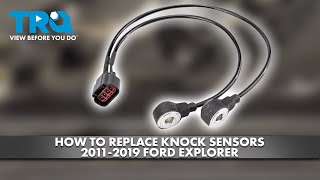
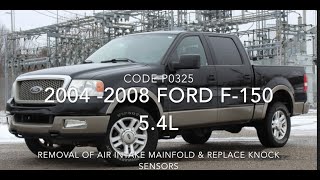
🎬 Watch: How to diagnose knock sensor codes P0330 and P0325Helpful Videos
Technical Specifications
OEM Part Numbers: ML3Z-12A699-B 12A699
Location: Engine valley, under intake manifold. Quantity per vehicle: 2. Recommended Torque: ~15 ft-lbs.
We Have This Part in Stock


The information in this article is provided for general reference and educational purposes only. Vehicle specifications, procedures, and part compatibility can vary by production date, trim level, and region. Always consult your vehicle's factory service manual and verify part numbers before purchasing or performing repairs. Safety-critical components such as airbags, seat belts, and braking systems should be installed by a qualified professional.
- Ford F-150: