

Ford Ranger Universal Joint (U-Joint) Replacement Guide for 2013-2017 Models
Fixing that clunking or vibration from your driveshaft starts with choosing the right universal joint.
- Address U-joint symptoms like clunking and vibration immediately to avoid catastrophic driveshaft failure.
- Choose greaseable aftermarket U-joints from brands like Spicer or MOOG for longer service life.
- Always measure your old U-joints (cap diameter and width) before purchasing replacements to ensure a correct fit.
- When one U-joint fails, it is best practice to replace all joints on that driveshaft at the same time.
Symptoms of a Failing Universal Joint

A bad U-joint on your Ranger will give you clear warning signs. Ignoring them can lead to driveshaft failure, which is a serious and expensive problem. Listen and feel for these symptoms:
- "Clunk" Noise: A distinct clunk or ping when you shift from drive to reverse (or vice-versa) is a classic sign. This is the sound of excessive play in the worn-out joint.
- Vibrations: A new vibration that increases with speed is a common symptom. It might feel like an out-of-balance tire, but it's often coming from the center or rear of the truck.
- Squeaking: A rhythmic, bird-chirping squeak that matches your wheel speed points to a dry, failing U-joint. This happens when the needle bearings inside have lost their grease.
Choosing the Right Aftermarket U-Joint

When replacing the U-joints on your 2013-2017 Ranger, you'll find several aftermarket options. The original factory joints are non-greaseable, meaning they are sealed for life. Many aftermarket replacements offer a grease fitting (zerk), which allows you to service them for a longer lifespan.
Aftermarket Brand Tiers
| Tier | Brands | Quality & Notes |
|---|---|---|
| Premium | Spicer, TOYO | Spicer is widely considered the gold standard and is often an OEM supplier. They are known for durability and precise fit. TOYO is also noted as a direct replacement that meets original equipment specifications. These are your best bet for heavy use, towing, or off-roading. |
| Mid-Grade | MOOG, NAPA/Precision | These brands offer a good balance of quality and price. Many owners have success with them, especially the greaseable versions which allow for regular maintenance. Quality can sometimes be inconsistent compared to premium brands, but they are a solid choice for daily driving. |
| Economy | Store Brands (e.g., Duralast) | While budget-friendly, these are best for a quick fix if you're planning to sell the truck. Their long-term durability may not match the higher-tiered brands, especially under heavy load or in harsh conditions. |
Pro Tip: Always measure your old U-joint's cap size and overall width before buying a replacement. While parts catalogs are usually accurate, variations can exist, especially on global models like the T6 Ranger. Common sizes for this generation are 27mm or 30mm cap diameters and 92mm width.
Known Issues, Recalls, and TSBs
While the 2013-2017 Ford Ranger (T6 platform) was not sold new in the North American market, it has a global history. There are no specific, widespread recalls or Technical Service Bulletins (TSBs) directly for universal joint failure on this model range. However, driveshaft-related issues on other Ford trucks have occurred. For example, a recall on different models involved a driveshaft flexible coupling that could crack, leading to vibration and potential separation. This highlights the importance of addressing any driveline vibration immediately.
Frequently Asked Questions (FAQ)

Should I get greaseable or non-greaseable U-joints?
Greaseable U-joints are the preferred choice for most owners. They allow you to push out old, contaminated grease and replace it with fresh grease, significantly extending the part's life. Non-greaseable (sealed) joints are often stronger in design because the cross is solid, but once the factory grease is gone, their life is over.
How many U-joints does my Ranger have?
A typical 2-wheel drive Ranger has two U-joints on the rear driveshaft. A 4x4 model will have these two, plus one or two more on the front driveshaft connecting the transfer case to the front differential. It's best practice to replace them all at the same time, or at least in pairs on the same shaft.
Can I replace just one bad U-joint?
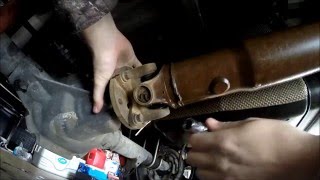
Yes, but it's not recommended. If one U-joint has failed, the others have been subjected to the same mileage and wear. Replacing all the joints on the driveshaft at the same time saves you from having to pull the shaft again in the near future. 🎬 Watch this step-by-step guide on Ford Ranger U-joint replacement. It ensures a smooth, balanced, and reliable driveline.
Do I need to balance the driveshaft after replacing U-joints?
If you carefully mark the driveshaft orientation before removal and reinstall it the same way, balancing is not usually required for a simple U-joint replacement. However, if you still have a vibration after the repair, the driveshaft may be out of balance and should be checked by a professional driveline shop.
Helpful Videos
Technical Specifications
OEM Part Numbers: AB39-4K256-AA 5141244 2322968
Common sizes include 27mm x 92mm and 30mm x 92mm. Always confirm by measuring the existing part. Both greaseable and non-greaseable types are available in the aftermarket.

The information in this article is provided for general reference and educational purposes only. Vehicle specifications, procedures, and part compatibility can vary by production date, trim level, and region. Always consult your vehicle's factory service manual and verify part numbers before purchasing or performing repairs. Safety-critical components such as airbags, seat belts, and braking systems should be installed by a qualified professional.
- Ford Ranger: